
A budget is the foundation of all financial success. It’s the difference between wondering where your money went and telling your money where to go. Yet despite its critical importance, over 60% of Americans don’t use a budget, operating their financial lives without a clear plan—like trying to build a house without blueprints or navigate to a destination without a map.
The consequences of living without a budget are costly. Americans who don’t budget are three times more likely to carry credit card debt, twice as likely to have insufficient emergency savings, and significantly less likely to achieve major financial goals like homeownership or comfortable retirement. The lack of a budget creates financial stress, missed opportunities, and a perpetual feeling of being behind financially regardless of income level.
Here’s the powerful truth: budgeting isn’t about restriction—it’s about permission and freedom. A well-designed budget doesn’t tell you what you can’t do; it shows you what you can do. It gives you permission to spend on things that matter while eliminating waste on things that don’t. It transforms vague financial anxiety into concrete action plans. Most importantly, budgeting creates wealth regardless of your income level.
You don’t need a six-figure salary to build wealth through budgeting. People earning $40,000 with disciplined budgets often accumulate more wealth than people earning $120,000 who let money slip through their fingers. The key isn’t how much you earn—it’s how intentionally you manage what you earn.
This comprehensive guide provides everything you need to create, implement, and maintain a budget that works for your unique life. You’ll learn why budgets fail and how to avoid those pitfalls, explore multiple budgeting methods to find your perfect fit, discover how to budget on any income level, master the psychology of spending, and build wealth-creating habits that compound over time.
Whether you’re living paycheck to paycheck and need immediate cash flow relief, earning comfortably but wondering where it all goes, or already financially stable but want to optimize and accelerate wealth building, this guide provides the roadmap to transform your relationship with money through intentional budgeting.
Why Most Budgets Fail (And How to Succeed)
Understanding why budgets typically fail is the first step to creating one that actually works.
The Seven Deadly Budget Sins
Sin 1: Making It Too Complicated
The mistake:
- Tracking every penny across 40+ categories
- Complex spreadsheets requiring hours monthly
- Micromanaging insignificant expenses
- Analysis paralysis preventing action
Why it fails:
Complexity creates friction. The more complicated your budget, the less likely you’ll maintain it. Life gets busy, and the 2-hour monthly budget review gets skipped, then the whole system collapses.
The solution:
Start simple with 5-10 major categories. You can always add detail later, but simplicity ensures consistency.
Sin 2: Being Unrealistically Restrictive
The mistake:
- Cutting all enjoyment spending to $0
- Allowing no margin for life’s pleasures
- Creating punishment-based budget
- Expecting perfection from day one
Why it fails:
Extreme restriction triggers rebellion. Just like crash diets, overly restrictive budgets lead to “budget binges” where you give up and overspend dramatically.
The solution:
Include guilt-free spending money. Budget for entertainment, hobbies, dining out—the things that make life enjoyable. Sustainable budgets balance today’s quality of life with tomorrow’s financial goals.
Sin 3: Forgetting Irregular Expenses
The mistake:
- Only budgeting monthly recurring bills
- Forgetting annual or quarterly expenses
- Being surprised by predictable costs
- Using credit cards for “unexpected” regular expenses
Why it fails:
Car insurance due twice yearly, holiday gifts, annual subscriptions, and car maintenance are predictable but irregular. When these aren’t budgeted, they feel like emergencies and derail your budget.
The solution:
Create sinking funds—monthly savings for irregular expenses. Divide annual costs by 12 and save that amount monthly.
Example:
- Car insurance: $1,200/year ÷ 12 = $100/month
- Holiday gifts: $600/year ÷ 12 = $50/month
- Car maintenance: $1,200/year ÷ 12 = $100/month
Sin 4: Not Involving Your Partner
The mistake:
- Creating budget alone in dual-income household
- Imposing budget on partner without input
- Not communicating about money regularly
- Having different financial priorities
Why it fails:
Budgets require household alignment. One person budgeting while the other spends freely creates resentment and failure.
The solution:
Monthly budget meetings with your partner. Both contribute to creating the budget. Both understand and agree to the plan. Both share the goal of financial success.
Sin 5: Setting It and Forgetting It
The mistake:
- Creating budget in January, never reviewing
- Not tracking actual spending against budget
- Failing to adjust when life changes
- No accountability or monitoring
Why it fails:
Life is dynamic—income changes, expenses shift, goals evolve. Static budgets become irrelevant quickly.
The solution:
Weekly quick-checks (15 minutes) and monthly detailed reviews (30-60 minutes). Adjust categories as needed. Budget is living document, not one-time exercise.
Sin 6: Not Planning for Fun
The mistake:
- All savings, no spending
- Depriving present self completely for future self
- Making budget feel like punishment
- No rewards for budget wins
Why it fails:
Humans need positive reinforcement. All delayed gratification and no immediate reward leads to abandonment.
The solution:
Budget for fun, entertainment, hobbies, and rewards. Celebrate budget milestones. Balance is key—some now, some later.
Sin 7: Giving Up After First Slip-Up
The mistake:
- Perfect execution expected
- Single overspending “ruins” entire budget
- All-or-nothing mentality
- Starting over constantly instead of adjusting
Why it fails:
Perfectionism is the enemy of progress. No one executes perfectly, especially early on.
The solution:
Expect imperfection. Overspent dining out this month? Adjust next month. Missed tracking for a week? Resume where you are. Progress beats perfection.
The Psychology of Successful Budgeting
Mindset shift required:
From: “Budget restricts my freedom”
To: “Budget creates my freedom by aligning spending with values”
From: “Budget is punishment for past mistakes”
To: “Budget is plan for future success”
From: “Budget means I can’t have what I want”
To: “Budget shows me how to get what I truly want”
From: “Budgeting is deprivation”
To: “Budgeting is optimization”
The truth about budgets and freedom:
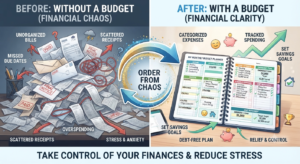
Without budget: Money controls you (react to bills, stress about spending, wonder where it went)
With budget: You control money (proactive decisions, confidence in spending, direct money toward goals)
Paradox: The more structured your budget, the more freedom you actually have. When every dollar has a purpose, you can spend guilt-free within those purposes.
Understanding Your Money: Income and Expenses Audit
Before creating a budget, you need clear understanding of your current financial reality.
Calculating Your True Income
Gross vs Net Income:
Gross income: Total earnings before deductions
Net income (take-home): What actually hits your bank account after taxes and deductions
Budget with net income only. You can’t spend money that never reaches you.
All income sources:
Primary employment:
- Salary/wages (use net after-tax amount)
- Bonuses and commissions (average if irregular)
- Overtime (only if consistent and reliable)
Side income:
- Freelance work
- Gig economy earnings (Uber, DoorDash, etc.)
- Side business revenue (minus expenses)
Passive income:
- Rental property (net after expenses)
- Dividends and interest
- Royalties or residual income
Other income:
- Alimony or child support
- Social Security or pension
- Regular gifts or family support
Irregular income:
- Tax refunds (average over year)
- Annual bonuses (average if history exists)
- Quarterly commissions
Calculate monthly average:
For salaried workers: Simple—divide annual salary by 12
For variable income:
- Add last 12 months total income
- Divide by 12 for monthly average
- Use conservative estimate (better to underestimate than overestimate)
Example variable income calculation:
Last 12 months freelance income:
Jan: $3,200, Feb: $2,800, Mar: $4,100, Apr: $3,600, May: $2,900, Jun: $3,800, Jul: $4,200, Aug: $3,400, Sep: $3,100, Oct: $4,500, Nov: $3,800, Dec: $5,200
Total: $44,600
Monthly average: $3,717
Conservative budget amount: $3,500 (slightly under average for safety)
Tracking Current Spending: The 30-Day Challenge
You can’t manage what you don’t measure. Before creating a budget, track every dollar for 30 days.
How to track:
Manual method:
- Notebook or notes app
- Write down every expense immediately
- Categorize weekly
- Total monthly
App method:
- Mint, YNAB, EveryDollar, Personal Capital
- Connect bank accounts for automatic tracking
- Review and categorize regularly
- Analyze patterns monthly
Hybrid method:
- Apps for regular bills and card purchases
- Manual logging for cash spending
- Weekly reconciliation
What to track:
Fixed expenses (same every month):
- Rent/mortgage
- Car payment
- Insurance premiums
- Subscriptions and memberships
- Loan payments
Variable expenses (change monthly):
- Utilities
- Groceries
- Gas/transportation
- Dining out
- Entertainment
- Shopping/personal care
Irregular expenses (not every month):
- Car maintenance
- Medical expenses
- Gifts
- Travel
- Home repairs
During 30-day tracking period:
Don’t change spending behavior yet—track normal patterns
Categorize everything—even small purchases
Include cash spending—often the invisible money
Note emotional spending—what triggered purchases
Analyzing Spending Patterns
After 30 days, analyze your data:
Calculate totals by category:
Housing: $______
Transportation: $______
Food (groceries + dining): $______
Utilities: $______
Insurance: $______
Debt payments: $______
Entertainment: $______
Personal care: $______
Shopping: $______
Subscriptions: $______
Miscellaneous: $______
Total monthly spending: $______
Critical questions to ask:
Where is money going that surprises you?
Most people discover “invisible” spending—$300/month on coffee, $200 on subscriptions they don’t use, $400 on impulse Amazon purchases.
What percentage goes to needs vs wants?
Needs: Housing, food, utilities, transportation, insurance, debt minimums
Wants: Entertainment, dining out, hobbies, luxuries
Which expenses align with your values and which don’t?
You might spend $200/month on streaming services you rarely watch but only $50/month on hobbies you love. Budgeting realigns spending with actual values.
Which expenses could be reduced or eliminated without impacting quality of life?
Often you’ll find spending that provides little satisfaction but significant cost—prime candidates for cutting.
Example analysis revelation:
Sarah tracked spending for 30 days and discovered:
- $340/month dining out (mostly fast food from exhaustion)
- $180/month on subscriptions (gym she never uses, streaming services overlapping)
- $120/month on convenience store purchases
- Total waste: $640/month = $7,680/year
These weren’t conscious choices—just money slipping away. Awareness created opportunity to redirect $640/month toward goals that actually mattered to her.
Creating Spending Categories That Work
Major categories (most budgets need 8-15 total):
Housing:
- Rent/mortgage
- Property taxes
- HOA fees
- Home maintenance
- Renter’s/homeowner’s insurance
Transportation:
- Car payment
- Auto insurance
- Gas
- Maintenance and repairs
- Public transit
- Parking
Food:
- Groceries
- Dining out
- Coffee shops
- Work lunches
Utilities:
- Electric
- Gas/heat
- Water/sewer
- Internet
- Phone
- Trash
Insurance:
- Health insurance
- Life insurance
- Disability insurance
- Other insurance
Debt Payments:
- Credit cards
- Student loans
- Personal loans
- Other debt
Savings:
- Emergency fund
- Retirement contributions
- Other savings goals
Personal:
- Clothing
- Personal care (haircuts, etc.)
- Medical copays and medications
- Gym/fitness
Entertainment:
- Subscriptions (streaming, etc.)
- Hobbies
- Movies, concerts, events
- Books, games
Giving:
- Charitable donations
- Gifts for others
- Religious contributions
Miscellaneous:
- Everything else
- Buffer category
- Unexpected expenses
Customize for your life:
Parents add: Childcare, kids’ activities, school expenses
Pet owners add: Pet food, vet, grooming
Students add: Tuition, books, supplies
Business owners add: Business expenses (separate from personal)
Category granularity decision:
Too broad: “Spending” = $3,000 (not useful)
Too granular: 40+ categories including “fast food,” “sit-down restaurants,” “coffee,” “work lunches” separately (too complex)
Just right: “Food” with subcategories “Groceries” and “Dining Out” (manageable and informative)
The 50/30/20 Budget Method: Simple and Effective
Perfect for beginners and those who want straightforward approach without complexity.
How 50/30/20 Works
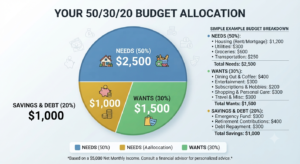
Divide after-tax income into three buckets:
50% to Needs (Essential Expenses)
Required for basic living. If you stopped paying, you’d face serious consequences.
Includes:
- Housing (rent/mortgage, utilities, insurance)
- Transportation (car payment, insurance, gas, maintenance)
- Groceries
- Minimum debt payments
- Essential insurance (health, auto, life)
- Basic clothing
- Essential personal care
Does NOT include:
- Premium cable/streaming packages
- Dining out
- New clothes beyond essentials
- Luxury transportation
30% to Wants (Discretionary Spending)
Things that enhance life but aren’t required for basic functioning.
Includes:
- Dining out and entertainment
- Hobbies and recreation
- Subscriptions (streaming, gym, etc.)
- Vacations and travel
- Shopping beyond essentials
- Upgraded phone or tech
- Premium versions of necessities
Key distinction: Groceries = need. Dining out = want. Basic phone = need. Latest iPhone = want.
20% to Savings and Extra Debt Payments
Building financial security and eliminating debt beyond minimums.
Includes:
- Emergency fund contributions
- Retirement savings (beyond employer match)
- Other savings goals
- Extra principal payments on debt
- Investments
Example 50/30/20 budget:
Monthly net income: $5,000
Needs (50% = $2,500):
- Rent: $1,200
- Utilities: $150
- Car payment: $300
- Car insurance: $100
- Gas: $150
- Groceries: $400
- Health insurance: $200
Total: $2,500
Wants (30% = $1,500):
- Dining out: $400
- Entertainment: $200
- Gym membership: $50
- Streaming services: $45
- Shopping/personal: $300
- Hobbies: $200
- Fun/miscellaneous: $305
Total: $1,500
Savings/Debt (20% = $1,000):
- Emergency fund: $400
- Retirement (401k): $300
- Extra credit card payment: $200
- Savings for vacation: $100
Total: $1,000
Advantages of 50/30/20
Simplicity:
Only three categories to manage
Easy to calculate and implement
No complex spreadsheets required
Can start immediately
Flexibility within structure:
Provides guardrails without micromanaging
Discretion within each bucket
Adaptable to different life situations
Scales to any income level
Automatic balance:
Forces mindful spending on wants
Ensures sufficient savings
Prevents need-creep (needs expanding to fill income)
Maintains quality of life while building wealth
Easy to communicate:
Partners quickly understand
No arguments about details
Clear agreed-upon framework
Objective spending limits
Adjusting 50/30/20 for Your Situation
50/30/20 is guideline, not law. Adjust based on reality:
High cost-of-living areas:
Housing alone might be 35-40% of income in expensive cities
Adjust to 60/20/20 or 55/25/20
Maintain 20% savings minimum if possible
Example: San Francisco on $6,000/month:
- 60% needs ($3,600): Rent $2,400, other $1,200
- 20% wants ($1,200): Scaled back but present
- 20% savings ($1,200): Maintained
Aggressive debt payoff mode:
Temporarily shift to 50/20/30
30% to debt elimination instead of savings
Reduce wants to accelerate debt freedom
Example: Focused debt elimination:
- 50% needs ($2,500)
- 20% wants ($1,000): Reduced temporarily
- 30% savings/debt ($1,500): Extra $500 to debt
High earners:
Often needs are well under 50%
Shift to 40/30/30 or even 35/25/40
More to savings accelerates wealth building
Example: $10,000/month income:
- 35% needs ($3,500): Housing and essentials
- 25% wants ($2,500): Comfortable lifestyle
- 40% savings ($4,000): Aggressive wealth building
Very low income:
May need 60-70% for needs
Reduce wants temporarily
Maintain minimum savings (even 10%)
Example: $2,500/month income:
- 65% needs ($1,625): Tight but covers essentials
- 25% wants ($625): Modest but present
- 10% savings ($250): Foundation for future
The key: Adjust percentages to fit reality while maintaining the principle of balanced allocation between present needs, present enjoyment, and future security.
Implementing 50/30/20
Step 1: Calculate your three bucket amounts
Monthly net income: $______
50% (Needs): $______ × 0.50 = $______
30% (Wants): $______ × 0.30 = $______
20% (Savings/Debt): $______ × 0.20 = $______
Step 2: Categorize your current expenses
Review your 30-day tracking
Assign each expense to Need, Want, or Savings/Debt
Calculate totals in each category
Compare to your target percentages
Step 3: Identify gaps and adjustments
If needs exceed 50%:
- Can you reduce housing (roommate, smaller place)?
- Can you reduce transportation (cheaper car, public transit)?
- Can you reduce utilities (conservation, cheaper plans)?
- If truly unavoidable, adjust percentages proportionally
If wants exceed 30%:
- Which wants provide least satisfaction? (Cut these)
- Which wants could be reduced without elimination?
- Which wants are actually mis-categorized needs?
- Be honest about true necessities vs luxuries
If savings below 20%:
- This is the most important bucket to protect
- Cut wants before cutting savings
- Increase income if expenses truly can’t be reduced
- Even 10% is better than 0% while working toward 20%
Step 4: Set up tracking system
Simple approach:
Three separate bank accounts or tracking categories
Manually allocate each paycheck into three buckets
Spend only from designated bucket
Advanced approach:
Budgeting app with 50/30/20 categories
Automatic categorization of transactions
Real-time tracking of bucket spending
Alerts when approaching limits
Step 5: Review and adjust monthly
First week of month: Review previous month spending
Categorize any uncategorized expenses
Calculate actual percentages achieved
Adjust current month if needed
Celebrate successes, learn from overspending
 Zero-Based Budgeting: Every Dollar Has a Job
Most detailed budgeting method—every dollar of income assigned to specific category before the month begins.
How Zero-Based Budgeting Works
The core principle:
Income – Expenses – Savings = Zero
Not “spend everything to zero” but rather “assign everything to a category” (including savings categories).
The process:
Before the month begins:
- List expected income for upcoming month
- List all expenses and savings goals
- Assign every dollar to specific category
- Ensure total assignments equal total income
- Result: Zero dollars “unassigned”
Example zero-based budget:
Income for March:
- Salary (after-tax): $4,500
- Freelance income: $800
- Total income: $5,300
Assignments:
Housing ($1,450):
- Rent: $1,200
- Renter’s insurance: $25
- Utilities: $150
- Internet: $75
Transportation ($525):
- Car payment: $275
- Car insurance: $95
- Gas: $120
- Parking: $35
Food ($650):
- Groceries: $450
- Dining out: $200
Personal ($280):
- Phone: $80
- Gym: $45
- Haircut: $40
- Clothing: $65
- Personal care: $50
Debt ($600):
- Student loan minimum: $250
- Credit card minimum: $150
- Extra credit card payment: $200
Savings ($800):
- Emergency fund: $400
- Vacation fund: $150
- Car replacement fund: $100
- Retirement (Roth IRA): $150
Entertainment ($350):
- Streaming services: $35
- Hobbies: $100
- Social activities: $150
- Books/media: $65
Giving ($150):
- Charitable donation: $100
- Friend’s birthday gift: $50
Irregular expenses ($245):
- Car maintenance fund: $100
- Medical copay fund: $75
- Annual subscription (divided by 12): $70
Miscellaneous/Buffer ($250):
- Unplanned expenses: $250
Total assigned: $5,300
Income: $5,300
Remaining: $0 ✓
Advantages of Zero-Based Budgeting
Maximum intentionality:
Every dollar has specific purpose
No money “leftover” to slip away
Conscious decisions about all spending
Forces prioritization
Proactive planning:
Budget created before month begins
Prepared for upcoming expenses
No reactive scrambling when bills due
Aligns spending with priorities in advance
Flexibility within structure:
Can adjust categories mid-month
Money can be moved between categories as needed
Not rigid if properly implemented
Responds to life’s changes
Goal acceleration:
Clear visibility into savings and goals
Easy to see impact of spending trade-offs
“If I reduce dining out $100, I can increase vacation fund $100”
Motivates conscious choices
Debt elimination power:
Every extra dollar assigned to purpose
Debt payoff is budgeted line item, not afterthought
Clear tracking of debt reduction progress
Snowball/avalanche methods easily implemented
Zero-Based Budget Challenges
Time intensive initially:
First budget takes 2-3 hours to create
Requires detail orientation
Learning curve with tools
May feel overwhelming at first
Requires monthly planning:
Can’t set-and-forget
Must budget each month before it begins
Income or expense changes require adjustments
Ongoing time commitment (1 hour monthly after initial setup)
Can be too rigid:
Some people feel micromanaged
Category perfectionism creates stress
May miss forest for trees
Potential for analysis paralysis
Variable income complexity:
Harder to assign every dollar when income fluctuates
May need to budget in waves as income arrives
Requires conservative income estimates
More complexity than steady-salary situations
Making Zero-Based Budgeting Work
Start simple:
Begin with 10-12 major categories
Add detail as you become comfortable
Don’t try to track every tiny category initially
Master the basics before advancing
Use the right tool:
YNAB (You Need A Budget):
- Designed specifically for zero-based budgeting
- “Give every dollar a job” philosophy
- Real-time tracking and adjustments
- Mobile app for on-the-go budgeting
- Cost: $14.99/month or $99/year
EveryDollar:
- Dave Ramsey’s zero-based budget app
- Free basic version available
- Premium version with bank connection: $79.99/year
- Simple, user-friendly interface
- Ramsey Baby Steps integration
Spreadsheet (free):
- Google Sheets or Excel templates
- Complete customization
- No ongoing cost
- Requires more manual work
- Many free templates available online
Build buffer into budget:
Always include “miscellaneous” or “buffer” category:
- 3-5% of income for truly unexpected items
- Prevents budget failure from small surprises
- Reduces stress about perfect categorization
Example:
$5,000 income
Buffer category: $200 (4%)
Provides cushion for imperfect predictions
Review and adjust weekly:
Weekly 15-minute check-in:
- Review spending so far this month
- Adjust remaining budget if needed
- Move money between categories as necessary
- Stay on track before end of month
Monthly 60-minute planning session:
- Create next month’s budget
- Review previous month’s results
- Analyze patterns and trends
- Adjust categories based on learning
Accept imperfection:
First 3 months are learning period
You will mis-estimate categories
You will need to adjust mid-month
This is normal and expected
The goal is progress, not perfection.
Who Zero-Based Budgeting Suits Best
Ideal for:
Detail-oriented people who enjoy tracking and analysis
Aggressive debt payers who want maximum debt elimination
Variable income earners who need tight control
Those who love their budgeting tool (YNAB enthusiasts, spreadsheet lovers)
People recovering from financial crisis who need intensive structure
Savers building toward specific goals who want clear goal tracking
Not ideal for:
People who hate detail and find it overwhelming
Those wanting simple approach (50/30/20 better)
Extremely busy individuals without time for weekly check-ins
Casual budgeters wanting basic guidelines only
Those triggered by “restriction” (may need different framing)
Success story:
Michael and Jennifer had $78,000 in debt and felt out of control.
Implemented zero-based budgeting:
- Spent 3 hours creating first budget together
- Weekly 15-minute check-ins
- Monthly planning dates
- Used YNAB app
- Every dollar assigned including “fun money”
Results after 18 months:
- Paid off $42,000 debt
- Built $8,000 emergency fund
- Stopped arguing about money
- Felt in control for first time in marriage
- “The weekly check-ins transformed our communication and our finances”
The Envelope Budgeting System: Cash-Based Control
Tactile, cash-based method providing physical and psychological control over spending.
How Envelope Budgeting Works
The classic system:
Step 1: Determine budget categories (usually 8-15)
Common envelope categories:
- Groceries
- Dining out
- Gas
- Entertainment
- Personal spending
- Clothing
- Gifts
- Miscellaneous
Step 2: Calculate monthly amount for each category
Based on your budget and tracking:
- Groceries: $400
- Dining out: $200
- Gas: $120
- Entertainment: $150
- Personal (each spouse): $100
- Clothing: $75
- Gifts: $60
- Miscellaneous: $95
Step 3: Get cash for the month
Total envelope spending: $1,200
Visit bank and withdraw $1,200 cash
Get mix of bills (twenties, tens, fives, ones)
Step 4: Stuff envelopes
Physical envelopes or envelope wallet
Label each envelope with category
Put designated cash in each envelope
Store securely at home
Step 5: Spend only from envelopes
Going to grocery store? Take groceries envelope
At restaurant? Use dining out envelope
Getting gas? Take gas envelope
Buying gift? Use gifts envelope
Step 6: When envelope is empty, stop spending in that category
Out of dining out money? Cook at home rest of month
Groceries running low? Shop carefully, use pantry items
Entertainment spent? Find free activities
Step 7: Anything left over rolls to next month or goes to goals
Groceries left $40? Add to next month or move to savings
Consistent overfunding? Reduce category next month
Consistent underfunding? Increase category next month
Modern Digital Envelope Systems
Digital envelope apps provide envelope concept without cash:
Goodbudget:
- Digital envelope budgeting app
- Sync across devices with partner
- Free version (10 envelopes)
- Plus version ($8/month or $70/year for unlimited)
- Visual envelope representation
Mvelopes:
- Comprehensive digital envelope system
- Connects to bank accounts
- Automatic transaction categorization
- Premier version $6/month
- More expensive but full-featured
YNAB (You Need A Budget):
- While zero-based, functions similarly to envelopes
- “Categories” are essentially digital envelopes
- Most popular digital envelope-style app
- $14.99/month or $99/year
Qube Money:
- Digital debit card with envelope system
- Create “qubes” (envelopes) for each category
- Activate specific qube for each purchase
- Real-time envelope tracking
- Free basic version, premium $8/month
Hybrid approach:
Use cash envelopes for categories where you overspend:
- Dining out (common overspending category)
- Entertainment
- Personal shopping
Use digital/automatic for fixed bills:
- Rent/mortgage
- Utilities
- Insurance
- Subscriptions
Best of both worlds—control where needed, convenience where possible.
Why Envelope Budgeting Works (The Psychology)
Psychological principle: Tangibility increases consciousness
Cash is physically real:
Watching cash leave wallet creates awareness
Seeing envelope empty provides concrete limit
Cannot overspend (unlike credit card)
Physical act of handing over money makes spending “real”
Study findings:
People spend 12-18% less when using cash vs cards
Cash creates psychological “pain of paying”
Digital payments abstract spending, reducing awareness
Envelopes make abstract budget concept tangible
Visual progress tracking:
See envelope fill up at month start (satisfying)
Watch it decrease with spending (awareness)
See what’s left at a glance (no calculation needed)
Full envelopes at month-end feel like winning
Natural spending limits:
Credit cards have artificial limits ($10,000+)
Envelopes have real limits (what’s physically there)
Cannot overspend without conscious decision to rob another envelope
Creates accountability partner (the empty envelope)
Gamification element:
Challenge: Make it to month end with money left
Reward: Leftover money goes to goal or rolls over
Competition: Couples can compare who stayed in budget
Achievement: Mastering a category feels like leveling up
Envelope System Challenges and Solutions
Challenge 1: Requires using cash
Modern problem:
Many people rarely use cash
Online shopping impossible with cash
Some vendors don’t accept cash
Carrying large amounts feels unsafe
Solutions:
- Hybrid approach (cash for temptation categories, digital for others)
- Digital envelope apps
- Envelope budgeting concept with debit card categories
- Cash for in-person, card for online with manual envelope deduction
Challenge 2: Inconvenient
Reality:
Must remember to bring correct envelope
May need to go home if brought wrong envelope
Cannot spontaneously spend if envelope is home
Requires planning ahead
Solutions:
- Small envelope wallet carried always
- Keep car envelope in car, grocery envelope in purse
- Partner carries different envelopes (division of responsibility)
- Relaxed enforcement (emergency borrowing from another envelope allowed occasionally)
Challenge 3: Safety and security
Concern:
Carrying significant cash feels risky
Loss or theft means lost budget
Not all neighborhoods/situations safe for cash
Solutions:
- Don’t carry all envelopes at once (only take what you need)
- Keep main envelope storage secure at home
- Use digital for unsafe situations
- Smaller amounts in each envelope
Challenge 4: Doesn’t work for all categories
Fixed bills paid automatically:
Mortgage/rent, insurance, subscriptions
These aren’t envelope-appropriate
Must be handled separately
Solutions:
- Envelopes only for variable, discretionary spending
- Pay fixed bills automatically
- Hybrid system (envelopes + auto-payments)
- Envelopes for areas needing most control
Challenge 5: Hard to buy gifts or split purchases
Scenarios:
Buying $100 gift but gifts envelope only has $60
Splitting restaurant bill with friend
Buying both groceries and household items at same store
Solutions:
- “Borrow” from another envelope and note it
- Plan gift purchases across months
- Split transaction into correct envelopes at home
- Miscellaneous envelope as overflow category
Who Envelope Budgeting Suits Best
Ideal for:
Chronic overspeenders in specific categories (dining out, shopping, entertainment)
Visual, tactile learners who need to see and touch
Cash-preferring individuals comfortable with bills and coins
Couples wanting clear, visible accountability
Those who struggled with abstract digital budgets
People seeking tight control in problematic spending areas
Debt payers who need spending guardrails
Success story:
Amanda struggled with $400-600/month dining out despite $200 budget.
Switched to envelope system:
- $200 cash in dining out envelope at month start
- When envelope empty, no more restaurants
- First month: Envelope empty on day 18
- Had to cook for 12 days
- Difficult but empowering
After 6 months:
- Consistently stayed in $200 budget
- Actually had money left over several months
- Saved $2,400+ vs previous habits
- Redirected to debt payoff
- “Physical cash made it real. I finally had control.”
For detailed explanation of [envelope budgeting implementation](link to Cluster 4, Article 5: Envelope Budgeting System), including specific category recommendations and troubleshooting, our comprehensive guide provides step-by-step instructions.

Leave a Reply