Table of Contents
- Introduction
- What is an Emergency Fund?
- Why You Absolutely Need an Emergency Fund
- How Much Should You Have in Your Emergency Fund?
- Calculating Your Personal Emergency Fund Target
- Where to Keep Your Emergency Fund
- Best Emergency Fund Accounts in 2024
- How to Build Your Emergency Fund Fast
- Emergency Fund vs. Savings Account: What’s the Difference?
- When to Use Your Emergency Fund (And When Not To)
- What to Do After Using Your Emergency Fund
- Common Emergency Fund Mistakes to Avoid
- Emergency Fund for Different Life Situations
- Frequently Asked Questions
- Conclusion
Introduction {#introduction}
Imagine this scenario: Your car breaks down on the way to work. The repair estimate? $1,200. Or your tooth cracks and needs an emergency crown—$1,500 out of pocket. Or you receive a pink slip and suddenly face unemployment.
For 63% of Americans, according to a 2024 Forbes Advisor survey, these scenarios would trigger a financial crisis. They simply don’t have enough savings to cover an unexpected $1,000 expense without resorting to credit cards, loans, or borrowing from family.
This financial vulnerability doesn’t just cost money—it costs sleep, peace of mind, and sometimes even relationships. The constant worry about “what if something goes wrong” creates a background stress that affects every area of life.
The solution? A fully funded emergency fund.
An emergency fund is your financial safety net—a dedicated pool of money set aside specifically for unexpected expenses and emergencies. It’s not for vacations, not for holiday shopping, and not for that great deal you found online. It exists for one purpose: protecting you when life throws a curveball.
In this comprehensive guide, you’ll discover:
- Exactly how much you need in your emergency fund (hint: it’s not the same for everyone)
- Where to keep this money for both safety and growth
- How to build your fund quickly, even on a tight budget
- What truly counts as an “emergency” (and what doesn’t)
- The best high-yield accounts to maximize your emergency savings
By the end of this article, you’ll have a clear, actionable plan to build financial security and eliminate the anxiety of living paycheck to paycheck.
Your journey to financial peace starts here.
What is an Emergency Fund? {#what-is}
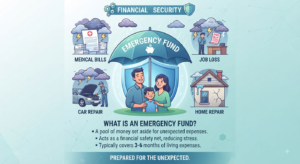 An emergency fund is a dedicated savings account containing money reserved exclusively for unexpected expenses and financial emergencies. Think of it as financial insurance you create for yourself.
Key Characteristics of an Emergency Fund:
1. Separate from Regular Savings
Your emergency fund should be in a completely separate account from your day-to-day checking and regular savings. This physical separation prevents accidental spending.
2. Easily Accessible (Liquid)
You should be able to access this money within 24-48 hours without penalties. Unlike investments or CDs with withdrawal penalties, emergency funds prioritize accessibility over returns.
3. Reserved for True Emergencies
This money has one job: protecting you from financial disasters. It’s not for planned expenses, wants, or opportunities—only genuine emergencies.
4. Fully Funded Before Aggressive Investing
Financial experts universally agree: build at least a starter emergency fund before investing heavily in the market.
What an Emergency Fund is NOT:
❌ Not an investment account – Emergency funds prioritize safety and accessibility over high returns
❌ Not a vacation fund – Planned expenses deserve their own savings category
❌ Not an opportunity fund – “This deal is too good to pass up” isn’t an emergency
❌ Not a shopping fund – Even if it’s on sale, it’s not an emergency
❌ Not retirement savings – These serve completely different purposes with different timelines
The Psychology of Emergency Funds
Beyond the practical benefits, emergency funds provide something invaluable: peace of mind.
Dr. Brad Klontz, financial psychologist and researcher, explains: “Having an adequate emergency fund is one of the strongest predictors of financial wellness and reduced money-related stress. It’s not just about the money—it’s about the psychological safety it provides.”
A 2023 study in the Journal of Financial Therapy found that people with emergency funds covering 3+ months of expenses reported:
- 52% lower financial stress
- Better sleep quality
- Improved relationship satisfaction
- Greater overall life satisfaction
- More confidence in financial decision-making
Your emergency fund isn’t just dollars in a bank—it’s confidence, security, and freedom from financial anxiety.
Why You Absolutely Need an Emergency Fund {#why-need}
If you’re tempted to skip building an emergency fund and jump straight to investing or debt payoff, understanding the “why” is crucial.
1. Life is Unpredictable (And Expensive)
 Statistics paint a clear picture of financial uncertainty:
Medical Emergencies:
- 66% of bankruptcies in the U.S. involve medical debt (American Journal of Public Health, 2024)
- Average ER visit costs $1,389 (Kaiser Family Foundation)
- Even with insurance, surprise medical bills average $750-$2,000
Vehicle Repairs:
- Average American car is 12.5 years old
- Transmission repair: $1,500-$3,500
- Engine repair: $2,500-$4,000
- Major systems tend to fail unexpectedly
Home Repairs:
- HVAC replacement: $3,000-$7,000
- Roof repair: $400-$1,500
- Plumbing emergency: $150-$800
- Water heater replacement: $900-$1,500
Job Loss:
- Average time to find new employment: 3-6 months
- Unemployment benefits replace only 40-50% of income
- Benefits take 2-4 weeks to begin
Without an emergency fund, these situations force you into bad financial decisions:
- High-interest credit card debt
- Predatory payday loans
- 401(k) early withdrawals (with penalties)
- Borrowing from family
- Selling assets at unfavorable times
2. Prevents Debt Spiral
Consider the math of emergency-related debt:
Scenario: $1,500 car repair without emergency fund
Option 1: Credit card (21% APR, minimum payments)
- If you pay minimums only: $2,447 total paid
- Time to payoff: 7 years
- Extra cost: $947 in interest
Option 2: Emergency fund
- Withdraw $1,500
- Rebuild over next 3-4 months
- Total cost: $1,500
- Extra cost: $0
The difference: $947 and years of stress
An emergency fund isn’t just about having money—it’s about avoiding expensive debt that can take years to escape.
3. Protects Your Financial Progress
Imagine this common scenario:
You’ve been aggressively paying off debt. After 18 months, you’ve paid off $12,000 and only have $5,000 left. Then your transmission dies.
Without emergency fund:
- Put $2,800 repair on credit card
- Debt jumps back up to $7,800
- Psychological defeat
- Months of progress erased
With emergency fund:
- Pay $2,800 from emergency savings
- Debt remains at $5,000
- Rebuild emergency fund over 2-3 months
- Progress maintained
Your emergency fund protects the financial progress you’ve worked so hard to achieve.
4. Enables Better Career Decisions
Job security feels different when you have 6 months of expenses saved:
Without emergency fund:
- Stuck in toxic work environment (can’t afford to quit)
- Can’t negotiate from position of strength
- Must accept first job offer, regardless of fit
- Fear prevents career risks
With emergency fund:
- Can leave unhealthy workplace if needed
- Negotiate confidently (you have time to find alternatives)
- Can be selective about opportunities
- Freedom to pursue better-fit positions
- Ability to invest in career transitions
Financial security creates career freedom.
5. Reduces Relationship Stress
Money is consistently cited as a top cause of relationship conflict. A SunTrust Bank study found that:
- 35% of couples experiencing relationship stress cite money as the primary cause
- Couples with emergency funds report 64% fewer money-related arguments
- Financial security correlates with relationship satisfaction
An emergency fund removes a major source of couple conflict by providing shared security.
6. Protects Against Economic Downturns
During the 2020 pandemic:
- 22 million Americans lost jobs in 2 months
- Those with emergency funds weathered significantly better
- Those without faced evictions, hunger, and extreme hardship
During the 2008 recession:
- Unemployment reached 10%
- Those with 6+ months saved had time to find quality positions
- Those without took desperate measures with long-term consequences
Economic uncertainty isn’t “if”—it’s “when.” Your emergency fund is protection against forces beyond your control.
How Much Should You Have in Your Emergency Fund? {#how-much}
This is the million-dollar question—or more accurately, the 3-to-12-month question. The answer depends on your specific situation.
The Standard Recommendations
Financial Expert Guidelines:
Dave Ramsey: $1,000 starter emergency fund, then 3-6 months of expenses after becoming debt-free
Suze Orman: 8-12 months of expenses (more conservative)
The Balance/NerdWallet: 3-6 months of expenses for most people
Vanguard Research: 3-6 months for dual-income households, 6-12 months for single-income
The truth? There’s no universal “right” amount. Your ideal emergency fund depends on multiple factors.
Factors That Determine Your Target Amount
1. Income Stability
Highly Stable (3-4 months):
- Government employee with tenure
- Tenured professor
- Established business with consistent revenue
- Two high-earning professionals
Moderate Stability (4-6 months):
- Corporate job in stable industry
- Dual-income household
- Specialized skills in demand
- Strong job market in your field
Variable/Unstable (6-12 months):
- Commission-based income
- Freelancer/Contractor
- Seasonal work
- Startup employee
- Single income household
- Volatile industry
- Niche specialized field (longer to find new position)
2. Number of Income Earners
Single income household: Higher target (6-12 months)
- If sole earner loses job, household income drops to zero
- No backup income source
- Greater risk requires greater cushion
Dual income household: Lower target acceptable (3-6 months)
- If one loses job, other income continues
- Built-in diversification
- Statistical unlikelihood both lose jobs simultaneously
3. Health Considerations
Excellent health, good insurance: Standard target
Chronic conditions, high deductibles, or dependents with medical needs: Add 1-2 months to target
- Higher likelihood of medical expenses
- Larger potential out-of-pocket costs
- Insurance gaps and deductibles
How long would it take to find equivalent employment?
Quick replacement (3-4 months):
- High-demand skills
- Multiple opportunities in area
- Transferable skills
- Strong network
Longer replacement (6-9 months):
- Specialized niche
- Limited opportunities in geography
- Senior-level positions
- Academic positions
Extended search (9-12 months):
- Highly specialized
- Geographic constraints
- Competitive fields
- Executive positions
5. Fixed Obligations
Higher fixed costs = larger emergency fund needed
Consider:
- Mortgage/rent amount
- Dependent care costs
- Health insurance premiums (if job loss means losing coverage)
- Debt obligations
- Medical needs
- Insurance requirements
Quick Reference Guide
| Your Situation | Recommended Target |
|---|---|
| Dual income, stable jobs, good health | 3-4 months expenses |
| Single income OR variable income | 6 months expenses |
| Self-employed/Freelancer | 6-12 months expenses |
| Single income + health concerns | 8-9 months expenses |
| Retiree (pre-Medicare) | 12-24 months expenses |
| High earner in niche field | 9-12 months expenses |
| Starting a business | 12-18 months expenses |
The Starter Emergency Fund Approach
Many financial experts recommend a two-phase approach:
Phase 1: Starter Emergency Fund ($1,000-$2,000)
- Build this FIRST, before aggressive debt payoff
- Handles small emergencies (minor car repair, urgent dental work, appliance replacement)
- Prevents derailing debt payoff progress
- Achievable quickly (creates momentum)
Phase 2: Full Emergency Fund (3-12 months)
- Build after paying off high-interest debt
- Provides complete protection
- Allows confidence and peace of mind
- Enables better financial decisions
Calculating Your Personal Emergency Fund Target {#calculator}
Let’s calculate YOUR specific emergency fund target with a step-by-step process.
Step 1: Calculate Monthly Essential Expenses
List only expenses you’d still need to pay if you lost your income:
Housing:
- Rent/Mortgage: $_______
- Property tax (if not in mortgage): $_______
- HOA fees: $_______
- Home/Renter’s insurance: $_______
Utilities:
- Electricity: $_______
- Gas/Heating: $_______
- Water/Sewer: $_______
- Internet (basic tier): $_______
- Phone (basic plan): $_______
Food:
- Groceries (lean budget): $_______
- (Skip restaurants—not essential)
Transportation:
- Car payment: $_______
- Auto insurance: $_______
- Gas (for job hunting): $_______
- Public transportation: $_______
Insurance & Healthcare:
- Health insurance premium: $_______
- Prescriptions: $_______
- Regular medical needs: $_______
- Life insurance: $_______
Minimum Debt Payments:
- Credit card minimums: $_______
- Student loan minimums: $_______
- Personal loan minimums: $_______
- Any other debt minimums: $_______
Essential Only:
- Childcare (if needed for job search): $_______
- Pet food/basic care: $_______
DO NOT INCLUDE:
- Entertainment
- Dining out
- Subscriptions (Netflix, etc.)
- Gym memberships
- Hobbies
- Clothing (except emergency replacements)
- Savings/investing
- Extra debt payments
TOTAL MONTHLY ESSENTIAL EXPENSES: $_______
Step 2: Determine Your Target Multiplier
Based on the factors we discussed, choose your multiplier:
Choose the HIGHEST number that applies to you:
- Dual income, stable, excellent health = 3 months
- Dual income, one variable income = 4 months
- Single income, stable job = 5 months
- Single income OR variable income = 6 months
- Self-employed/Freelancer = 9 months
- Health concerns or high medical costs = Add 2 months to above
- Niche specialized field = Add 2 months to above
- Single parent = Add 1 month to above
My multiplier: _______ months
Step 3: Calculate Your Full Emergency Fund Target
Monthly Essential Expenses × Target Multiplier = Emergency Fund Goal
Example Calculation:
Maria’s situation:
- Monthly essential expenses: $3,200
- Single income household
- Stable corporate job
- Good health
- Target: 6 months
Calculation: $3,200 × 6 = $19,200 emergency fund target
Your Calculation:
$_______ × _______ = $_______
(Monthly expenses) × (Multiplier) = (Emergency Fund Goal)
Step 4: Set Your Starter Fund Target
Before building your full fund, set a starter target:
Starter Emergency Fund Options:
- Minimum: $1,000
- Better: $1,500
- Ideal starter: $2,000
- One month of expenses (whichever is higher)
My starter fund target: $_______
Step 5: Create Your Timeline
To starter fund:
Current emergency savings: $_______
Starter fund target: $_______
Amount needed: $_______
Realistic monthly contribution: $_______
Months to starter fund: _______ months
To full fund (after starter):
Full fund target: $_______
Starter fund: $_______
Additional needed: $_______
Monthly contribution: $_______
Months to full fund: _______ months
Total timeline: _______ months
Where to Keep Your Emergency Fund {#where-to-keep}
Your emergency fund needs three critical characteristics:
- Safety (FDIC insured, no risk of loss)
- Accessibility (available within 24-48 hours)
- Reasonable growth (earning some interest, but not primary goal)
Where TO Keep Your Emergency Fund
1. High-Yield Savings Account ⭐ BEST OPTION for most people
Pros:
- FDIC insured up to $250,000
- Easy access (usually 1-2 business days to transfer)
- Currently earning 4.0-5.5% APY (as of 2024)
- No market risk
- Online access and management
- Often no minimum balance
- Separate from checking (prevents accidental spending)
Cons:
- Interest rates vary with Fed policy
- May have transfer limits
- Slightly delayed access (not instant like checking)
Best for: Most people building emergency funds
Top providers (2024):
- Marcus by Goldman Sachs
- Ally Bank
- American Express Personal Savings
- Discover Online Savings
- CIT Bank
Example earnings:
$10,000 emergency fund at 5.0% APY = $500 per year in interest
2. Money Market Account
Pros:
- FDIC insured
- Slightly higher interest than regular savings (typically)
- Check writing ability (limited)
- Easy access
- Often includes debit card
Cons:
- May require higher minimum balance ($1,000-$10,000)
- Limited transactions per month (typically 6)
- Interest rates comparable to high-yield savings
Best for: Larger emergency funds ($10,000+) or those wanting check-writing access
3. Money Market Mutual Fund
Pros:
- Higher yields than savings accounts (sometimes)
- Very liquid
- Low risk
Cons:
- NOT FDIC insured (though very stable)
- Can lose value (rare but possible)
- May have minimum investment
- Usually requires brokerage account
Best for: Sophisticated investors comfortable with minimal risk
4. Short-Term CD Ladder (Advanced strategy)
Pros:
- FDIC insured
- Locked-in rates
- Typically higher rates than savings
- Disciplined approach prevents spending
Cons:
- Early withdrawal penalties
- Less accessibility
- More complex to set up
- Rates may be lower than high-yield savings in 2024
How CD laddering works:
Divide emergency fund into portions with staggered maturity dates:
- $2,000 in 3-month CD
- $2,000 in 6-month CD
- $2,000 in 9-month CD
- $2,000 in 12-month CD
Every 3 months, one matures. Renew for 12 months. After 12 months, you have access to $2,000 every 3 months with no penalty.
Best for: Disciplined savers with established emergency funds who want to maximize interest
Where NOT to Keep Your Emergency Fund
❌ Regular Checking Account
Problems:
- Too easy to spend accidentally
- Virtually no interest earned
- Mental accounting doesn’t separate emergency money from regular money
- Temptation to use for non-emergencies
❌ Stock Market/Index Funds
Problems:
- Market can drop 20-40% exactly when you need the money
- Selling during downturn locks in losses
- Takes 3-5 days to access
- Defeats purpose of emergency fund (stability)
Real example: Someone with $15,000 emergency fund invested in S&P 500 in February 2020 would have seen it drop to $9,000 in March 2020—exactly when they might have needed it due to pandemic job loss.
❌ Cryptocurrency
Problems:
- Extreme volatility (can lose 50%+ in days)
- Not FDIC insured
- Can take days to convert to cash
- Platform failures and hacks
- Completely inappropriate for emergency funds
❌ Under the Mattress (Cash at Home)
Problems:
- No FDIC protection (if stolen or destroyed, it’s gone)
- Inflation erodes value
- Earns zero interest
- Fire/theft/flood risk
- Too easy to dip into
Small cash at home ($200-500) is fine for immediate emergencies when banks are closed
❌ Certificate of Deposit (Non-Laddered)
Problems:
- Early withdrawal penalties (often 3-6 months interest)
- Defeats accessibility purpose
- Current rates often lower than high-yield savings
❌ Retirement Accounts (401k, IRA)
Problems:
- 10% early withdrawal penalty (if under 59½)
- Income taxes on withdrawal
- Loses tax-advantaged growth
- Should be absolute last resort
Example cost: Withdrawing $5,000 from 401k:
- $500 penalty (10%)
- $1,100 taxes (22% bracket)
- Total cost: $1,600
- You receive only $3,400 of the $5,000
Best Emergency Fund Accounts in 2024 {#best-accounts}
[IMAGE PLACEMENT HERE]
AI Image Prompt:
“Best savings accounts comparison table, professional chart showing top 5 high-yield savings accounts with APY rates, features, and pros/cons, clean financial comparison design, trustworthy and informative style, modern banking concept”
Here are the top high-yield savings accounts for emergency funds as of 2024. Note: Rates change frequently—verify current rates before opening.
Top 5 High-Yield Savings Accounts
1. Marcus by Goldman Sachs Online Savings
APY: 5.30% (as of 2024)
Minimum Deposit: $0
Monthly Fees: $0
FDIC Insured: Yes
Pros:
- Highly competitive rate
- No fees
- No minimum balance
- Trusted major bank backing
- Easy transfers
- Excellent customer service reputation
Cons:
- No physical branches
- No checking account option
- Transfers take 2-3 business days
Best for: Straightforward emergency fund with excellent rate
2. Ally Bank Online Savings Account
APY: 5.25%
Minimum Deposit: $0
Monthly Fees: $0
FDIC Insured: Yes
Pros:
- Consistently competitive rates
- Excellent mobile app
- 24/7 customer service
- Can open checking account for faster access
- Buckets feature (organize savings into categories)
- No minimum balance
Cons:
- Slightly lower rate than some competitors
- No physical branches
Best for: Those wanting full-service online banking with checking + savings
3. American Express Personal Savings
APY: 5.30%
Minimum Deposit: $0
Monthly Fees: $0
FDIC Insured: Yes
Pros:
- Top-tier rate
- Trusted brand
- No fees or minimums
- Easy to link to external accounts
- Clean, simple interface
Cons:
- No checking account option
- Cannot deposit cash
- 2-3 day transfer times
Best for: Those prioritizing maximum interest rate
4. Discover Online Savings Account
APY: 5.25%
Minimum Deposit: $0
Monthly Fees: $0
FDIC Insured: Yes
Pros:
- Excellent rate
- Award-winning customer service
- Can open money market or CDs
- Cash back debit card available
- Long-standing reputation
Cons:
- No physical branches
- Standard transfer times
Best for: Those wanting options beyond just savings account
5. CIT Bank Savings Connect
APY: 5.05%
Minimum Deposit: $100
Monthly Fees: $0
FDIC Insured: Yes
Pros:
- Competitive rate
- Low minimum to open
- No monthly fees
- Multiple account options
Cons:
- Slightly lower rate than top competitors
- Less well-known brand
- Requires $100 to open
Best for: Those comfortable with smaller online banks
Money Market Account Options
Vanguard Cash Plus Account
APY: 5.28%
Minimum: $0
Fees: $0
Features:
- Brokerage integration
- Very competitive rate
- Check writing
- FDIC insured through partner banks
Best for: Investors who also use Vanguard for investing
Fidelity Cash Management Account
APY: 5.24%
Minimum: $0
Fees: $0
Features:
- Debit card included
- Check writing
- ATM fee reimbursements
- FDIC insured
Best for: Fidelity customers or those wanting checking-like features
How to Choose the Right Account
Ask yourself:
- Do I need a debit card or checks?
- Yes → Money market account or Ally/Discover
- No → Highest-rate savings account
- Do I have other accounts with any of these banks?
- Having checking + savings at same bank speeds transfers
- Consider Ally or Discover for full banking relationship
- How important is brand recognition?
- Want established name → Marcus (Goldman Sachs) or AmEx
- Comfortable with online-only → Any top-rated option
- Will I maintain the minimum balance?
- Check minimum requirements
- Most top accounts have $0 minimum
- How often will I need to access this money?
- Rarely → Highest rate savings
- Occasionally → Money market with check/debit access
Pro Tip: The difference between 5.25% and 5.30% on a $10,000 emergency fund is only $5/year. Don’t overthink it. Choose a reputable FDIC-insured account with a competitive rate and good customer service.
How to Build Your Emergency Fund Fast {#build-fast}
Building an emergency fund can feel overwhelming, especially if you’re starting from zero. Here are proven strategies to accelerate the process.
Strategy 1: Start with a Micro-Goal
The psychology of starting:
$10,000+ emergency fund goal feels impossible when you have $0. Break it into achievable milestones:
Milestone approach:
- $250 (Micro-emergency covered)
- $500 (Small car repair possible)
- $1,000 (Starter emergency fund complete) 🎉
- $2,500 (Quarter-way there)
- $5,000 (Halfway to moderate goal)
- $7,500 (Three-quarters)
- $10,000 (Full emergency fund complete!) 🎊
Celebrate each milestone. Momentum builds with small wins.
Strategy 2: Automate Your Savings
Manual saving fails. Automation succeeds.
Set up these automations:
Option 1: Paycheck splitting
If your employer allows, direct deposit a portion straight to emergency fund:
- 80% → Checking account
- 20% → Emergency fund savings
Option 2: Automatic transfer
Set up recurring transfer the day after payday:
- Payday: Friday
- Auto-transfer Saturday: $200 to emergency fund
Why automation works:
- Removes willpower from equation
- “Pay yourself first” mentality
- You adapt spending to what remains
- Consistency beats motivation
Research finding: A 2023 Employee Benefit Research Institute study found automated savers accumulate 6x more emergency savings than manual savers over 3 years.
Strategy 3: Redirect One Expense
Instead of cutting multiple things, redirect one significant expense entirely to emergency fund:
Examples:
- Cancel $200 car payment (pay off car) → $200/month to emergency fund
- Cut cable TV ($120/month) → To emergency fund
- Stop dining out ($300/month) → To emergency fund
- Cancel unused gym membership ($50/month) → To emergency fund
Timeline impact:
$200/month = $2,400/year
- Starter fund ($1,000): 5 months
- 3-month fund ($9,000): 3.75 years
$400/month = $4,800/year
- Starter fund ($1,000): 2.5 months
- 3-month fund ($9,000): 22 months
Strategy 4: Windfall Allocation Rule
When unexpected money comes in, allocate a significant portion to emergency fund:
Sources of windfalls:
- Tax refund
- Work bonus
- Gift money
- Inheritance
- Garage sale proceeds
- Selling unused items
- Freelance project payment
Recommended allocation:
- 50% to emergency fund
- 25% to debt (if applicable)
- 25% for something enjoyable
Example:
$2,000 tax refund:
- $1,000 → Emergency fund (major boost!)
- $500 → Extra debt payment
- $500 → Something you want
This balanced approach prevents “all or nothing” thinking while making substantial progress.
Strategy 5: Aggressive Starter Fund Push
30-Day Emergency Fund Challenge:
For one month, take extreme measures to rapidly build starter fund:
Income boosting:
- Overtime at work
- Weekend side gig
- Sell unused items (eBay, Facebook Marketplace, yard sale)
- Freelance project
- Return unused items for refunds
Expense cutting:
- No restaurant meals (30 days)
- No online shopping
- Pack all lunches
- Free entertainment only
- Pause subscriptions for one month
Realistic goal: Many people save $500-$1,500 in one focused month.
Why this works:
- Short timeframe feels achievable
- Creates momentum
- Builds confidence
- Establishes habits
- Gets you to $1,000 quickly
Strategy 6: Round-Up Programs
Use technology to save automatically with round-ups:
How it works:
- Purchase coffee for $4.50
- App rounds to $5.00
- $0.50 goes to savings
Apps offering this:
- Acorns (investment app with round-ups)
- Chime (automatic savings)
- Bank of America Keep the Change
- Qapital (customizable saving rules)
Typical results: $50-$150/month in painless savings
Not a complete strategy, but excellent supplement.
Strategy 7: The Split Deposit Method
For those struggling to save:
Week 1: 95% spending, 5% savings
Week 2: 93% spending, 7% savings
Week 3: 91% spending, 9% savings
Week 4: 90% spending, 10% savings
Gradually increase savings percentage so adjustment is gradual, not shocking.
By month 3, you might be at 20% savings rate without the pain of sudden drastic cuts.
Strategy 8: Interest and Raise Allocation
Capture increases before lifestyle adjusts:
Got a raise?
Before you adjust your lifestyle, immediately increase emergency fund contribution by at least 50% of the raise.
Example:
- Raise: $200/month
- Increase spending: $100/month
- Increase savings: $100/month
You still improve lifestyle while accelerating savings.
High-yield account interest:
Keep all interest earned in the emergency fund (reinvest automatically).
On $5,000 at 5% APY, that’s $250/year staying in the fund.
Strategy 9: No-Spend Challenges
One category, one month:
Choose one discretionary category and spend $0 for 30 days:
Options:
- No restaurants/takeout
- No clothing purchases
- No online shopping
- No entertainment spending
- No coffee shops
All money “saved” → Emergency fund
Typical results: $200-$500 saved in one month
Quick-Build Summary
Fastest path to $1,000 starter fund:
Month 1:
- Set up $200/month auto-transfer
- 30-day spending challenge (save $300)
- Sell unused items ($200)
- Round-up app ($50)
- Tax refund allocation ($250)
Total: $1,000 ✓
Track your progress visually:
Create a chart, use an app, or color in a thermometer graphic. Visual progress increases motivation by 73% according to behavioral psychology research.
Emergency Fund vs. Savings Account: What’s the Difference? {#vs-savings}
Many people confuse emergency funds with general savings. Understanding the distinction is crucial.
Emergency Fund
Purpose: Protection from financial disasters
Timeline: Indefinite (always maintained)
Accessibility: High (1-2 day access)
Growth: Secondary priority
Use Frequency: Rarely (emergencies only)
Replenishment: Immediate priority after use
Mental Category: Financial insurance
Ideal account: High-yield savings account, separate from other money
Examples of use:
- Job loss
- Medical emergency
- Major car repair
- Urgent home repair
- Emergency travel (family crisis)
General Savings Account
Purpose: Planned expenses and goals
Timeline: Specific (save for specific item/event)
Accessibility: Moderate (can wait for better moment)
Growth: Important consideration
Use Frequency: Regular (as goals are reached)
Replenishment: Based on new goals
Mental Category: Future consumption
Ideal account: Can be same or different from emergency fund, possibly higher-yield options
Examples of use:
- Vacation
- New furniture
- Holiday shopping
- Wedding
- Home down payment
- New car (planned)
Sinking Funds (Subcategory of Savings)
Purpose: Predictable irregular expenses
Timeline: Specific dates (annual, quarterly, etc.)
Examples:
- Annual insurance premiums
- Car registration
- Property taxes
- Holiday gifts
- Annual subscriptions
How they work:
- Annual car insurance: $1,200
- Divide by 12: $100/month
- Set aside $100/month
- When bill comes, money is ready
Side-by-Side Comparison
| Aspect | Emergency Fund | Savings Account | Sinking Funds |
|---|---|---|---|
| Purpose | Financial protection | Future goals | Known future expenses |
| Amount | 3-12 months expenses | Varies by goal | Exact expense amount |
| Touch Frequency | Very rare | Moderate | Regular |
| Reprioritize? | Never | Sometimes | Rarely |
| Account Type | Separate, high-yield | Can be combined | Can be same account |
| Emotion | Security/peace | Excitement | Preparedness |
Should They Be in the Same Account?
Arguments for SEPARATE accounts:
Pros:
- Mental accounting (each dollar has clear purpose)
- Prevents accidentally using emergency fund for non-emergencies
- Easier to track progress
- Protects emergency fund integrity
Best for: People who might be tempted to raid emergency fund for wants
Arguments for COMBINED account:
Pros:
- Simpler (fewer accounts to track)
- Higher total balance may earn better rates
- All savings in one place
- Less administrative overhead
Requires: Strong discipline and clear tracking system
Best for: Disciplined savers who can mentally separate purposes
Recommended approach for most people:
Account 1: Emergency Fund (Separate, untouchable)
- 3-12 months expenses
- High-yield savings
- Only for true emergencies
Account 2: Savings Goals (Can have sub-categories)
- Vacation fund
- Car fund
- Home improvement
- Sinking funds
Account 3: Checking (Daily spending)
- Regular bills and expenses
- Budgeted spending
This three-account system provides clarity while remaining manageable.
When to Use Your Emergency Fund (And When Not To) {#when-to-use}
The hardest part of having an emergency fund is knowing when to actually use it. Here’s a comprehensive guide.
✅ DEFINITELY Use Your Emergency Fund
1. Job Loss or Reduced Income
- Laid off
- Terminated
- Hours reduced significantly
- Business income drops substantially
Why it qualifies: This is exactly what emergency funds exist for—replacing income.
Action: Use as needed to cover essential expenses while job hunting. Budget carefully to extend runway.
2. Medical Emergencies
- Emergency room visit
- Urgent surgery
- Unexpected hospital stay
- Necessary dental emergency (severe pain, infection, broken tooth)
- New medical diagnosis requiring immediate treatment
Why it qualifies: Health cannot wait, and medical debt is expensive.
Action: Use emergency fund to cover deductibles, copays, and uncovered expenses. Negotiate payment plans but pay what you can upfront.
3. Essential Home Repairs
- Broken HVAC (extreme weather)
- Roof leak causing damage
- Plumbing emergency (burst pipe, sewer backup)
- Electrical hazard
- Broken water heater
- Pest infestation requiring immediate treatment
Why it qualifies: Threatens safety, habitability, or will cause worse damage if delayed.
Action: Get multiple quotes if possible, but don’t delay critical repairs.
4. Essential Vehicle Repairs
Qualifies if:
- Car is your only transportation to work
- Repair is necessary for safe operation
- Public transportation not viable alternative
Examples:
- Transmission failure
- Engine problems
- Brake failure
- Safety recalls
Doesn’t qualify if:
- You have alternative transportation
- It’s cosmetic
- Can be delayed without safety risk
5. Unexpected Essential Travel
- Family emergency (serious illness, death)
- Emergency custody issue
- Legal requirement to appear
Why it qualifies: Time-sensitive and necessary.
Action: Book economically, but don’t delay due to cost.
6. Essential Insurance Deductibles
- Car accident deductible
- Home insurance deductible (fire, storm damage)
- Medical insurance deductible
Why it qualifies: You’re covered by insurance, but must pay deductible to access coverage.
⚠️ MAYBE Use Your Emergency Fund (Situational)
1. Car Repairs (Non-Critical)
Use if:
- Only vehicle
- Need for work
- No alternative transportation
- Repair cost is within reason
Don’t use if:
- Cosmetic repair
- Can delay without safety issue
- Have alternative transportation
- Repair exceeds vehicle value
Better approach: Create a “car repair sinking fund” with monthly contributions to handle these separately.
2. Appliance Replacement
Use if:
- No reasonable alternative
- Climate extremes (AC in 110°F heat, heat in freezing cold)
- Health/safety issue (broken refrigerator, no food storage)
Don’t use if:
- Can rent/borrow temporarily
- Can live without temporarily
- Can finance 0% interest
Example: Broken washing machine probably doesn’t qualify (can use laundromat). Broken refrigerator in summer might qualify.
3. Pet Emergency
Use if:
- Life-threatening situation
- Severe suffering
- Trusted vet recommends immediate treatment
Don’t use if:
- Elective procedure
- Can be delayed
- Quality of life issue with time to save
Better approach: Consider pet insurance or dedicated pet emergency fund.
4. Legal Issues
Use if:
- Criminal charges requiring attorney
- Immediate legal threat (eviction, foreclosure)
- Child custody emergency
Don’t use if:
- Civil matter that can wait
- Can access legal aid
- Optional legal action
❌ DO NOT Use Your Emergency Fund
1. Vacations
Never. No exceptions. Vacations are wonderful but planned expenses, not emergencies.
Better approach: Create separate vacation fund.
2. Holidays and Gifts
Christmas, birthdays, and weddings happen every year. Not emergencies.
Better approach: Sinking fund ($100-150/month set aside monthly).
3. Wants and Upgrades
- New TV (even if current one broke—can wait)
- Furniture
- Clothing (except immediate need for work/interview)
- Hobby equipment
- Gadgets
Why not: These are preferences, not necessities.
4. Sales and “Great Deals”
- “50% off sale ends today!”
- “Limited time offer!”
- “Investment opportunity!”
Why not: Emergency funds are for emergencies, not opportunities.
Truth: There will always be another sale.
5. Routine Expenses
- Regular bills
- Groceries
- Gas
- Expected annual expenses (insurance premiums, registration)
Why not: These should be in your regular budget or sinking funds.
If you’re using emergency fund for routine expenses, you have a budget problem, not an emergency.
6. Helping Others
This is controversial, but important:
- Lending to friends/family
- Bailing someone out
- Covering someone else’s emergency
Why not: Protect your own oxygen mask first. If you deplete your emergency fund helping others, who helps you in your emergency?
Alternative: Help in non-financial ways or only give what you can afford to lose.
7. Debt Payment
- Extra credit card payment
- Student loan payoff
- Mortgage principal
Why not: Emergency fund takes priority over extra debt payment. Keep it intact for actual emergencies.
Exception: Once you have FULL emergency fund (3-12 months), you might choose to use excess beyond your target for debt payoff.
The Emergency Fund Decision Flowchart
Ask these questions:
Question 1: Is this unexpected?
- No → Not an emergency (should be budgeted)
- Yes → Continue
Question 2: Is this urgent (cannot wait 1-2 months)?
- No → Save up for it separately
- Yes → Continue
Question 3: Is this essential (need, not want)?
- No → Do not use emergency fund
- Yes → Continue
Question 4: Are there alternatives to using cash?
- 0% financing available → Consider that instead
- Insurance will cover it → Use insurance
- Can borrow item temporarily → Do that
- No good alternatives → Continue
Question 5: Is the cost reasonable?
- Getting multiple quotes if possible
- Not overpaying due to panic
- Necessary scope of repair/purchase
If yes to all → This qualifies as appropriate emergency fund use
The Gray Areas
Some situations aren’t clearly emergency or not:
Scenario: Car needs $800 repair, have $1,200 in starter emergency fund
Considerations:
- Do you need car for work? (Probably use fund)
- Is public transit available? (Maybe avoid using fund)
- Can you carpool temporarily? (Maybe avoid using fund)
Recommended: Use fund if truly needed, but replenish ASAP.
Scenario: Friend’s wedding destination, $1,500 to attend
Answer: Not an emergency. Save separately or politely decline.
Weddings are planned events. If invited, you have time to save. Friendship doesn’t require financial hardship.
Scenario: Appliance breaks but 0% financing available for 18 months
Recommended approach:
- Take the 0% financing
- Set up auto-payment from emergency fund monthly
- Keeps emergency fund intact for true emergencies
- No interest cost
- Better financial flexibility
When in Doubt
Ask yourself: “If I use this money, will I be vulnerable if a true emergency happens next month?”
If yes → Find alternative solution
Your emergency fund’s primary job is keeping you safe. Preserve it fiercely.
What to Do After Using Your Emergency Fund {#after-using}
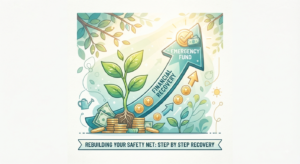 You’ve had a legitimate emergency and used your emergency fund. Now what?
Step 1: Acknowledge Success (Yes, Success!)
Your emergency fund did its job. This is exactly why you built it.
Many people feel defeated after using their emergency fund. Reframe this:
❌ “I failed—I had to use my emergency fund”
✅ “My emergency fund protected me from debt and financial disaster”
You didn’t go into debt. You didn’t borrow at high interest. You didn’t raid your retirement. You didn’t panic.
That’s financial success.
Step 2: Assess the Damage
Calculate exactly how much you withdrew:
Example:
- Emergency fund before: $8,000
- Emergency expense: $2,500
- Remaining: $5,500
- Need to rebuild: $2,500
Be specific. Write it down.
Step 3: Immediate Adjustment
Until your emergency fund is fully rebuilt:
Pause or reduce:
- Extra debt payments (pay minimums only)
- Retirement contributions (except employer match)
- Other savings goals
- Discretionary spending
Redirect to emergency fund:
- Every dollar that was going to those areas
- Focus intensity on rebuilding
Why: You’re temporarily vulnerable. Prioritize regaining protection.
Example budget shift:
Before emergency:
- Emergency fund: $200/month
- Extra debt payment: $300/month
- Vacation fund: $150/month
After emergency (rebuilding):
- Emergency fund: $650/month
- Extra debt payment: $0
- Vacation fund: $0
Step 4: Create Rebuilding Timeline
Be realistic but aggressive:
Amount to rebuild: $2,500
Monthly allocation: $500
Timeline: 5 months
Set milestone dates:
- Month 1: $500 rebuilt
- Month 2: $1,000 rebuilt
- Month 3: $1,500 rebuilt (60% restored)
- Month 4: $2,000 rebuilt (80% restored)
- Month 5: $2,500 rebuilt ✓ FULLY RESTORED
Track progress visibly.
Step 5: Identify Rebuilding Sources
Where will the money come from?
Option 1: Cut discretionary spending temporarily
- Reduce dining out
- Pause subscriptions
- Free entertainment
- Delay purchases
Option 2: Increase income temporarily
- Overtime
- Side gig
- Sell items
- Freelance project
Option 3: Redirect other savings
- Pause non-emergency savings temporarily
- Reduce (don’t eliminate) retirement contributions temporarily
Option 4: Combination approach (most effective)
- 30% from spending cuts ($150)
- 30% from redirected savings ($150)
- 40% from income increase ($200)
- Total: $500/month
Step 6: Analyze What Happened
Learning opportunity:
Ask yourself:
- Was this truly unforeseeable?
- Could I have prevented it?
- Should I budget for this differently going forward?
Examples:
Car repair emergency:
- Reflection: “Car is 12 years old, more repairs likely”
- Adjustment: Create monthly “car repair sinking fund” ($75/month)
- Result: Future car repairs don’t deplete emergency fund
Medical emergency:
- Reflection: “High deductible caused $3,000 out-of-pocket”
- Adjustment: Consider health plan change during next enrollment
- Result: Might lower deductible to reduce emergency fund impact
Job loss:
- Reflection: “6 months saved, only needed 3 months”
- Confirmation: 6-month target was correct
- Action: Rebuild to 6 months again
Step 7: Celebrate Milestones
As you rebuild, celebrate progress:
- 25% restored: Small treat
- 50% restored: Acknowledge achievement
- 75% restored: Favorite meal
- 100% restored: Meaningful celebration
Why: Positive reinforcement makes financial discipline sustainable.
Step 8: Prevent Future Same Emergencies
If your emergency was preventable:
Example: HVAC died after 20 years
Prevention strategy:
- HVAC systems last 15-20 years
- Create “home system replacement fund”
- Set aside $100/month
- In 3 years, have $3,600 for next replacement
- Reduces emergency fund impact
Example: Medical emergency due to deferred care
Prevention strategy:
- Keep up with preventive care
- Address small issues before they become emergencies
- Maintain health insurance
- Know your coverage
Not all emergencies are preventable, but some are.
Step 9: Resist New Risks Until Rebuilt
While rebuilding, be extra conservative:
Avoid:
- Taking on new debt
- Making large purchases
- Risky decisions
- Reducing insurance coverage to save money
You’re temporarily vulnerable. Act accordingly.
Step 10: Resume Normal Priorities After Restoration
Once fully rebuilt:
✓ Resume extra debt payments
✓ Return retirement contributions to previous level
✓ Restart other savings goals
✓ Relax spending slightly
Your financial plan can return to normal.
Real-Life Rebuilding Example
Sarah’s Story:
Situation:
- Had $7,500 emergency fund (5 months expenses)
- Car transmission died: $3,200 repair
- Remaining: $4,300 (less than 3 months)
Rebuilding Plan:
- Paused extra student loan payment ($250/month)
- Reduced discretionary spending ($150/month)
- Took on 4-hour/week side gig ($400/month)
- Total monthly rebuilding: $800
Timeline:
- Target to rebuild: $3,200
- Monthly contribution: $800
- Time to full restoration: 4 months
Adjustments made:
- Created “car replacement fund” ($150/month) for future car expenses
- Result: Next car issue won’t fully deplete emergency fund
Outcome:
- Emergency fund restored in 4 months
- Created better system for future
- Avoided debt completely
- Maintained financial security
Common Emergency Fund Mistakes to Avoid {#mistakes}
Learning from others’ mistakes saves you time, money, and stress.
Mistake #1: Keeping It Too Accessible
The Problem:
Emergency fund in regular checking account or easily accessible credit card.
Why it’s bad:
- Too tempting to use for non-emergencies
- Mental accounting fails
- “Emergency” becomes anything you want
- Fund never grows
Real example: Kevin kept emergency fund in checking. Over 12 months, used it for:
- Black Friday deals ($400)
- Friend’s bachelor party trip ($600)
- New TV when old one worked fine ($800)
- “Emergency” dinner out multiple times ($300)
Result: $2,100 of $3,000 gone on non-emergencies.
Solution:
Separate high-yield savings account at different bank. 1-2 day transfer time provides “pause” to assess if truly emergency.
Mistake #2: Investing It in the Stock Market
The Problem:
“I’ll earn more if I invest my emergency fund in index funds!”
Why it’s bad:
- Markets drop exactly when you need money (recessions = job losses)
- Selling in down market locks in losses
- Defeats entire purpose of emergency fund (stability)
Real example: Jennifer had $15,000 emergency fund in S&P 500 index fund.
- February 2020: $15,000
- March 2020 (pandemic): Dropped to $9,500
- Laid off in April 2020
- Had to sell at loss for living expenses
- Lost $5,500 when she needed it most
Solution:
Emergency funds belong in FDIC-insured savings, not market investments. Stability > returns.
Mistake #3: Building It Too Slowly While Carrying High-Interest Debt
The Problem:
Saving for 12-month emergency fund while paying 22% on credit cards.
The Math:
- Saving $500/month at 5% interest
- Paying 22% on $10,000 credit card debt
- You’re losing money overall
Why it’s bad:
- Paying more in interest than earning in savings
- Mathematically irrational
- Could pay off debt faster with blended approach
Better approach:
- Build $1,000-$2,000 starter emergency fund
- Attack high-interest debt aggressively
- After debt-free, build full emergency fund
Exception: If job security is very uncertain, prioritize emergency fund even with debt.
[Internal Link: Learn debt payoff strategies in our upcoming “Debt Snowball vs Debt Avalanche: Best Payoff Strategy” guide]
Mistake #4: Never Actually Using It for Real Emergencies
The Problem:
$10,000 emergency fund sits unused while putting actual emergencies on credit cards.
Why people do this:
- “Saving it for something worse”
- Fear of depleting it
- Don’t want to rebuild
- Misunderstand its purpose
Real example: Marcus had $8,000 emergency fund. Car needed $1,800 repair. Put it on credit card instead “to preserve emergency fund.”
Result: Paid $2,340 total (with interest) instead of $1,800. Made emergency fund pointless.
Solution:
Use emergency fund for actual emergencies. That’s why it exists. Then rebuild it.
Mistake #5: Treating Target as Finish Line
The Problem:
“I hit $10,000, I’m done forever!”
Why it’s bad:
- Income increases (need more in emergency fund)
- Lifestyle expenses increase
- Family situation changes
- Job changes
- Healthcare needs change
Example: Built 6-month emergency fund in 2019: $12,000
- 2024: Same $12,000, but expenses now $3,000/month instead of $2,000
- Actually only has 4 months saved
- Falsely secure
Solution:
Review emergency fund target annually. Adjust for:
- Income changes
- Expense changes
- Life situation changes
- Inflation
Mistake #6: Keeping It All in One Account
The Problem:
All $30,000 in single savings account.
Why it’s bad:
- FDIC insurance only covers $250,000 per depositor per bank
- Single point of failure (bank issues)
- Less optimal returns (could ladder some)
Better approach for large emergency funds ($50,000+):
- Split across multiple banks (FDIC protection)
- Consider short-term CD ladder for portion
- Keep most liquid portion in high-yield savings
Mistake #7: Not Telling Your Partner
The Problem:
One partner builds emergency fund without other’s knowledge.
Why it’s bad:
- Secrets damage relationships
- Partner might have different emergency threshold
- Causes conflict when discovered
- Missed opportunity for teamwork
Solution:
Financial transparency. Build emergency fund together, discuss what constitutes emergency, agree on target amount.
Mistake #8: Using It for Planned Expenses
The Problem:
“I’ll use my emergency fund for Christmas shopping and rebuild next year.”
Why it’s bad:
- Christmas happens every year (not emergency)
- Creates cycle of depletion and rebuilding
- Leaves you vulnerable during rebuilding
- Misunderstands emergency fund purpose
Solution:
Create sinking funds for predictable irregular expenses:
- Holiday fund: $100/month
- Annual insurance: $150/month
- Car registration: $30/month
Mistake #9: Building It Last
The Problem:
“I’ll build emergency fund after I:
- Pay off all debt
- Max out retirement
- Save for house
- [other goals]”
Why it’s bad:
- Emergency doesn’t wait for your timeline
- Without protection, debt happens
- Creates vulnerability
- Backwards priority order
Correct priority order:
- $1,000-$2,000 starter emergency fund
- Employer 401(k) match (free money)
- Pay off high-interest debt
- Build full emergency fund (3-12 months)
- Other financial goals
Mistake #10: Letting It Languish in Zero-Interest Checking
The Problem:
$15,000 emergency fund earning 0.01% in checking account.
Opportunity cost:
- 0.01% = $1.50/year
- 5.00% = $750/year
- Difference: $748.50 per year lost
Over 10 years: $7,485 left on the table
Solution:
Move to high-yield savings account (takes 20 minutes, earns $750/year on $15,000).
Emergency Fund for Different Life Situations {#life-situations}
Your emergency fund needs change as your life situation changes. Here’s how to adjust:
Single, Entry-Level Income ($30,000-$45,000/year)
Recommended emergency fund: 3-6 months expenses
Typical monthly expenses: $2,000-$2,500
Target emergency fund: $6,000-$15,000
Priorities:
- $1,000 starter fund (achievable quickly)
- Pay off credit card debt
- Build to 3 months ($6,000-$7,500)
- Increase to 6 months if job security uncertain
Building strategy:
- Start with $100-$150/month
- Use tax refund for boost
- Side gig income → emergency fund
- Reach starter fund in 6-10 months
Challenges:
- Lower income makes saving harder
- May have student loan debt
- Building career (less job security)
Advantages:
- Lower expenses (fewer dependents)
- Flexibility to increase income
- Can live with roommates to reduce costs
Married Dual Income, No Kids ($80,000-$120,000 combined)
Recommended emergency fund: 3-4 months expenses
Typical monthly expenses: $4,500-$6,000
Target emergency fund: $13,500-$24,000
Priorities:
- $2,000 starter fund
- Pay off high-interest debt
- Build to 3 months
- Consider 4-6 months if one income is variable
Building strategy:
- Each partner contributes $200-300/month
- Allocate bonuses 50% to emergency fund
- Can build relatively quickly with two incomes
- Reach full fund in 12-18 months
Advantages:
- Two incomes (if one loses job, other continues)
- Statistical redundancy
- Higher combined income
Risks:
- Two people = two potential job losses
- May be accumulating debt (home, cars)
- Lifestyle inflation
Special consideration: If planning to have children soon, build larger fund (6 months) to prepare for potential single-income period.
Single Parent ($45,000-$65,000)
Recommended emergency fund: 6-9 months expenses
Typical monthly expenses: $3,000-$4,000
Target emergency fund: $18,000-$36,000
Why larger fund needed:
- Single income (no backup)
- Dependents relying on you
- Childcare costs are significant
- Less flexibility to increase hours or take second job
- Medical needs for children
Building strategy:
- Start with $1,500 starter fund
- Build slowly but consistently ($150-250/month)
- Use child tax credit for major boost
- Don’t feel discouraged by high target
- Focus on $5,000 first, then $10,000, then full amount
Challenges:
- Childcare costs
- Less income flexibility
- Higher stress
- Time constraints
Support resources:
- TANF (Temporary Assistance for Needy Families)
- SNAP (food assistance)
- Childcare subsidies
- Tax credits (EITC, Child Tax Credit)
- Every bit helps toward emergency fund
Family with Children (2 parents, $100,000-$150,000)
Recommended emergency fund: 4-6 months expenses
Typical monthly expenses: $6,000-$8,500
Target emergency fund: $24,000-$51,000
Priorities:
- $2,000-$3,000 starter fund
- If debt-free, build aggressively
- Target middle range first (4 months)
- Expand to 6 months as income allows
Building strategy:
- $500-750/month allocation
- Tax refund toward fund
- One bonus per year → emergency fund
- Reach starter fund in 3-4 months
- Reach 4 months in 2-3 years
- Reach 6 months in 3-5 years
Unique considerations:
- Kids’ medical needs
- School expenses (not emergencies, but need separate fund)
- Older home might need more repair money
- Cars with higher mileage
Risk factors:
- Daycare costs (may decrease if job loss)
- Higher fixed costs (larger home, multiple cars)
- More people = more potential emergencies
Self-Employed/Freelancer ($50,000-$100,000 variable)
Recommended emergency fund: 9-12 months expenses
Typical monthly expenses: $3,500-$6,000
Target emergency fund: $31,500-$72,000
Why much larger fund needed:
- Highly variable income
- No unemployment benefits
- Client payment delays
- Industry downturns
- No employer benefits
- Must cover own health insurance
Building strategy:
- Save 30-40% of good months
- Don’t increase lifestyle with income increases
- Build over 3-5 years
- High-income months → emergency fund
- Starter fund: $3,000 (one month)
Additional considerations:
- Separate “business emergency fund” for business expenses
- “Tax fund” (30% of income set aside)
- “Irregular income buffer” (smooths cash flow)
- Health insurance emergency fund (if not included in regular expenses)
Advantages:
- Income upside potential
- Tax deductions
- Control over hours (can increase income)
Challenges:
- No safety net
- Cash flow gaps
- Difficult to predict income
Timeline:
- Year 1: Build to $10,000
- Year 2: Build to $20,000
- Year 3: Build to $30,000+
- Year 4-5: Reach full 12 months
Retiree (Pre-Medicare, 60-65 years old)
Recommended emergency fund: 12-24 months expenses
Typical monthly expenses: $4,000-$6,000
Target emergency fund: $48,000-$144,000
Why such large fund:
- No employment income
- Health insurance very expensive before Medicare
- Medical emergencies more likely
- Can’t easily “just get a job”
- May be supporting adult children
- Stock market volatility matters more
Building strategy:
- Build during working years
- Don’t reduce when retiring (increase it)
- Keep replenishing from Social Security/pension
- Separate from retirement investments
Additional considerations:
- Medical emergency fund separate from general emergency
- Long-term care considerations
- Home maintenance fund (aging home)
- Medicare gap coverage costs
High-Income Earner ($200,000+)
Recommended emergency fund: 6-12 months expenses OR $100,000, whichever is higher
Typical monthly expenses: $10,000-$20,000+
Target emergency fund: $60,000-$240,000
Why larger absolute amount:
- Lifestyle expenses are higher
- Replacement job may be harder to find
- May have expensive obligations
- More to lose in emergency
Building strategy:
- Should be able to build quickly
now 4
Leave a Reply