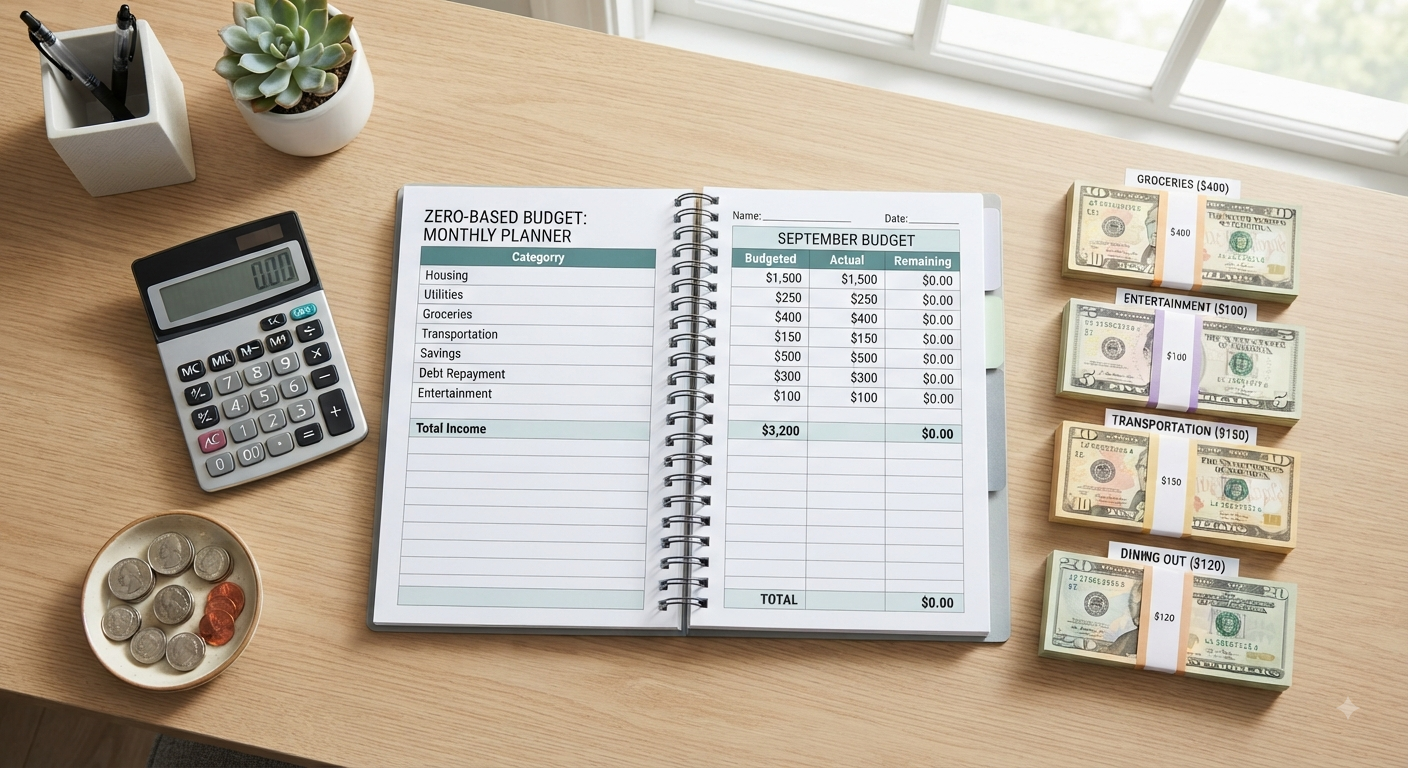
Table of Contents
- Introduction
- What is Zero-Based Budgeting?
- How Zero-Based Budgeting Works
- Zero-Based Budget vs Traditional Budgeting
- Benefits of Zero-Based Budgeting
- Step-by-Step Guide to Creating Your Zero-Based Budget
- Zero-Based Budgeting Categories to Include
- Common Challenges and How to Overcome Them
- Best Tools and Apps for Zero-Based Budgeting
- Real-Life Zero-Based Budget Examples
- Frequently Asked Questions
- Conclusion
Introduction {#introduction}
Do you ever reach the end of the month wondering where all your money went? You’re not alone. According to a 2024 survey by the National Foundation for Credit Counseling, 64% of Americans don’t know where their money goes each month. This financial fog can keep you stuck in a cycle of paycheck-to-paycheck living, preventing you from building the wealth you deserve.
Enter zero-based budgeting—a powerful money management method that gives every single dollar a job before the month even begins.
Unlike traditional budgeting methods that leave room for ambiguity, zero-based budgeting ensures that your income minus your expenses equals exactly zero. This doesn’t mean you spend everything—it means you’ve intentionally allocated every dollar to a specific purpose, including savings and investments.
In this comprehensive guide, you’ll discover everything you need to know about zero-based budgeting, from the fundamental principles to practical implementation strategies. Whether you’re struggling to save money, trying to pay off debt, or simply want more control over your finances, this budgeting method could be the game-changer you’ve been looking for.
By the end of this article, you’ll have the knowledge and tools to create your first zero-based budget and start your journey toward complete financial control.
What is Zero-Based Budgeting?
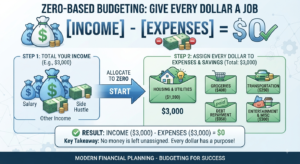 Zero-based budgeting (ZBB) is a budgeting method where you allocate every dollar of your income to specific expense categories, savings, or debt payments until you reach zero. The fundamental equation is simple:
Income – Expenses – Savings – Debt Payments = $0
This doesn’t mean you have zero dollars left in your bank account. Instead, it means that before the month begins, you’ve given every dollar a specific assignment. Nothing is left unaccounted for or available for mindless spending.
The Core Principle
Traditional budgeting often follows this pattern:
- Earn money
- Pay bills
- Spend what’s left
- Maybe save something at the end
Zero-based budgeting flips this model:
- Know exactly how much you’ll earn
- Assign every dollar to a specific purpose (including savings)
- Execute your plan
- Adjust as needed throughout the month
Origins of Zero-Based Budgeting
While popularized in personal finance circles by financial expert Dave Ramsey and the team at YNAB (You Need A Budget), zero-based budgeting actually originated in the corporate world. Texas Instruments developed this method in the 1970s, and it was later adopted by major corporations and government agencies to eliminate wasteful spending.
The beauty of this system is that it works just as effectively for household finances as it does for billion-dollar corporations.
Who Should Use Zero-Based Budgeting?
This budgeting method is particularly effective for:
Variable Income Earners
- Freelancers
- Commission-based salespeople
- Small business owners
- Gig economy workers
People Struggling with Overspending
If you constantly find yourself wondering where your money went, ZBB provides clarity and control.
Aggressive Debt Payers
When every dollar has a job, you can maximize debt payments while still covering all necessities.
Wealth Builders
People serious about building wealth use ZBB to ensure saving and investing happen first, not last.
Financial Turnaround Seekers
If you’re trying to get your finances back on track after a setback, ZBB gives you the structure you need.
How Zero-Based Budgeting Works {#how-it-works}
Let’s break down the mechanics of zero-based budgeting with a practical approach that anyone can follow.
The Basic Formula
Here’s a simplified example:
Monthly Income: $4,500
Allocations:
- Housing: $1,200
- Utilities: $200
- Groceries: $500
- Transportation: $400
- Insurance: $300
- Debt Payments: $600
- Savings: $450
- Personal Spending: $300
- Entertainment: $150
- Miscellaneous: $200
- Emergency Fund: $200
Total Allocated: $4,500
Income – Allocations = $4,500 – $4,500 = $0 ✓
Notice that the equation reaches zero, but you’ve allocated $650 toward savings and building wealth ($450 + $200 emergency fund).
The Monthly Cycle
Zero-based budgeting operates on a monthly cycle:
Before Month Starts (Days 25-30 of Previous Month):
- Project your income for the upcoming month
- List all known expenses
- Allocate remaining dollars to variable categories
- Ensure total allocations equal total income
- Review and finalize budget
During the Month (Days 1-28/30/31):
- Track all spending against budgeted amounts
- Adjust categories as needed (staying at zero)
- Make spending decisions based on remaining category funds
- Document any unexpected expenses
End of Month (Last 2-3 Days):
- Review actual vs. budgeted spending
- Identify areas of overspending or underspending
- Learn from patterns
- Prepare for next month’s budget with insights gained
Key Principles That Make It Work
1. Intentionality
Every dollar is assigned a purpose before you spend it. This prevents impulse purchases and mindless spending.
2. Flexibility Within Structure
While you plan before the month, you can adjust categories mid-month—as long as the total still equals zero.
3. Prioritization
You must decide what’s most important because you can’t allocate more than you earn.
4. Accountability
The system forces you to confront exactly how you’re using your money.
5. Proactive Planning
You make spending decisions in advance when you’re thinking clearly, not in the moment when emotions might override logic.
Zero-Based Budget vs Traditional Budgeting {#comparison}
Understanding how zero-based budgeting differs from other popular methods helps you appreciate its unique advantages.
Zero-Based Budget vs. Traditional Budget
Traditional Budgeting Approach:
- Set spending limits for categories
- Track expenses throughout month
- Whatever’s left over gets saved (maybe)
- Often leaves “unassigned” money
- Focuses on not overspending
Zero-Based Budgeting Approach:
- Assign every dollar before month begins
- Savings happens first (not last)
- No unassigned money exists
- Zero balance by design
- Focuses on intentional allocation
Key Difference: Traditional budgeting asks “How much can I spend?” Zero-based budgeting asks “What job should every dollar perform?”
Zero-Based Budget vs. 50/30/20 Budget
The 50/30/20 rule suggests:
- 50% for needs
- 30% for wants
- 20% for savings and debt
Comparison:
| Aspect | Zero-Based | 50/30/20 |
|---|---|---|
| Specificity | Exact dollar assignments | Percentage ranges |
| Flexibility | High (adjust categories) | Moderate |
| Complexity | Medium | Low |
| Effectiveness for debt payoff | Excellent | Good |
| Best for | Detail-oriented people | Budgeting beginners |
Zero-Based Budget vs. Envelope System
The envelope system involves putting cash for each category into physical envelopes.
Similarities:
- Both assign specific amounts to categories
- Both prevent overspending
- Both require planning ahead
Differences:
- Zero-based budgeting can be digital or paper
- Envelope system requires using cash
- ZBB handles all transactions; envelopes typically only for variable expenses
Which Method is Best?
There’s no universal “best” budgeting method—only the best method for YOU. Zero-based budgeting excels when:
✓ You want maximum control over your money
✓ You’re paying off debt aggressively
✓ You have variable income that changes monthly
✓ You’ve struggled with traditional budgeting
✓ You’re detail-oriented and enjoy tracking
✓ You want to maximize savings and investing
Benefits of Zero-Based Budgeting {#benefits}
The zero-based budgeting method offers numerous advantages that can transform your financial life.
1. Complete Financial Awareness
Before Zero-Based Budgeting:
“I think we spend about $600 on groceries… maybe $700? I’m not really sure.”
After Zero-Based Budgeting:
“We budgeted $550 for groceries this month and have $127 remaining with one week to go.”
This level of awareness is powerful. A 2023 study published in the Journal of Consumer Research found that people who knew exactly how much remained in specific budget categories were 67% less likely to overspend.
2. Eliminates Wasteful Spending
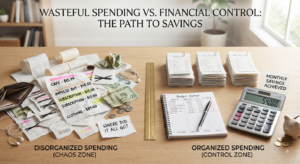
When you must justify every dollar’s purpose before the month begins, wasteful spending becomes obvious. Common areas where people discover waste include:
- Unused subscriptions ($20-$200/month average)
- Duplicate services
- Convenience purchases
- Forgotten automatic charges
- “Just because” shopping
According to research by West Monroe Partners, the average American wastes $348 per month on unused subscriptions and services. Zero-based budgeting helps you identify and eliminate these money drains.
3. Accelerates Debt Payoff
Zero-based budgeting is incredibly effective for debt elimination because:
Maximizes Debt Payments
After covering necessities, you can see exactly how much extra money you can direct toward debt.
Prevents New Debt
You can’t spend money you’ve already assigned to another category.
Creates Motivation
Watching your debt allocation shrink month by month provides psychological wins.
Real Example:
Sarah, a teacher from Ohio, used zero-based budgeting to pay off $43,000 in student loans in 33 months instead of the planned 10 years. By allocating every dollar intentionally, she found an extra $1,100 per month for debt payments—money that had previously “disappeared” into untracked spending.
4. Increases Savings Rate
Statistical Impact:
- Traditional budgeters save an average of 3-5% of income
- Zero-based budgeters save an average of 15-25% of income
- The difference: intentionality and pre-allocation
When you pay yourself first by allocating to savings before you assign spending money, saving becomes automatic rather than aspirational.
5. Reduces Financial Stress and Anxiety
Financial psychologist Dr. Brad Klontz notes: “Financial stress often stems from uncertainty, not from actual lack of money. When people know exactly where they stand financially, anxiety decreases significantly.”
Zero-based budgeting provides:
- Clear spending boundaries
- Predictable financial outcomes
- Confidence in financial decisions
- Reduced money-related arguments in relationships
6. Enables Better Financial Goal Achievement
Whether your goal is:
- Building a 6-month emergency fund
- Saving for a home down payment
- Funding a dream vacation
- Starting a business
- Retiring early
Zero-based budgeting lets you assign specific dollar amounts toward these goals each month, turning vague wishes into concrete progress.
7. Works with Variable Income
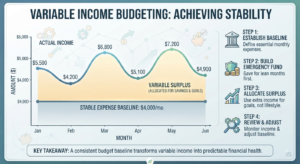
This is where zero-based budgeting truly shines. If your income varies month to month:
Month 1 Income: $3,500
- Cover necessities first
- Allocate rest to priorities
- Total allocated: $3,500
Month 2 Income: $5,200
- Cover same necessities
- Allocate extra to savings/debt/goals
- Total allocated: $5,200
You create a new budget each month based on actual income, ensuring you never spend more than you earn while maximizing high-income months.
8. Prevents “Lifestyle Creep”
Lifestyle creep (or lifestyle inflation) happens when your spending rises proportionally with your income, preventing wealth building.
Zero-based budgeting combats this by forcing you to intentionally decide what to do with extra income rather than automatically spending it.
Example:
You get a $500/month raise. With ZBB, you must decide: Will this $500 go to retirement, debt payoff, vacation fund, or lifestyle upgrades? The decision is conscious, not automatic.
Step-by-Step Guide to Creating Your Zero-Based Budget {#step-by-step}
Ready to create your first zero-based budget? Follow this detailed, actionable process.
Step 1: Determine Your Monthly Income
For Fixed Income Earners:
Simply use your consistent monthly take-home pay (after taxes and deductions).
Example: $4,200/month after taxes
For Variable Income Earners:
Option A: Conservative Estimate
Use your lowest monthly income from the past 6 months. Any extra becomes “extra money” to allocate.
Option B: Average Method
Calculate average income from previous 3-6 months.
Option C: Last Month’s Actual
Budget based on what you actually earned last month.
Multiple Income Sources:
Add together:
- Primary job(s)
- Side hustles
- Investment income
- Any other regular income
Important: Only include income you’re certain you’ll receive. Don’t budget money you hope to make.
Step 2: List All Fixed Expenses

Fixed expenses are the same amount each month and include:
Housing:
- Rent or mortgage
- HOA fees
- Property taxes (if not in mortgage)
Utilities:
- Some utilities are fixed (internet, phone)
- Others vary but you can use averages
Insurance:
- Health insurance
- Auto insurance
- Life insurance
- Renters/homeowners insurance
Debt Payments:
- Minimum credit card payments
- Student loan payments
- Car payments
- Personal loan payments
Subscriptions:
- Streaming services
- Software subscriptions
- Gym memberships
- Other monthly subscriptions
Pro Tip: Review bank statements from the past 2-3 months to ensure you don’t miss any automatic payments.
Step 3: Budget for Variable Expenses
Variable expenses change from month to month:
Food:
- Groceries
- Dining out
- Coffee shops
- Work lunches
Transportation:
- Gas
- Public transportation
- Parking
- Vehicle maintenance
- Rideshares
Personal Care:
- Haircuts
- Toiletries
- Clothing
- Dry cleaning
Healthcare:
- Copays
- Medications
- Medical appointments
Entertainment:
- Movies
- Concerts
- Hobbies
- Events
Household:
- Cleaning supplies
- Home maintenance
- Household items
For variable categories:
- Check spending from last 2-3 months
- Calculate average
- Budget that amount
- Adjust up or down based on this month’s specific needs
Step 4: Include Periodic Expenses
Periodic expenses don’t occur monthly but you should budget for them monthly:
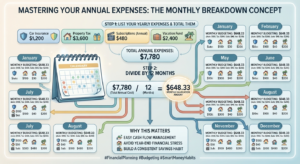 Common periodic expenses:
- Annual insurance premiums
- Car registration
- Holiday gifts
- Birthday gifts
- Annual subscriptions
- Property taxes
- HOA fees (if not monthly)
- Vehicle maintenance
- Medical deductibles
- Vacation
How to budget for periodic expenses:
Example: Car Insurance
- Annual premium: $1,200
- Monthly allocation: $1,200 ÷ 12 = $100
Set aside $100 each month in a separate savings category. When the bill comes due, the money is already there.
Gift Budget Example:
- Estimate annual gift spending: $1,500
- Monthly allocation: $1,500 ÷ 12 = $125
This prevents the December budget panic when holiday shopping hits.
Step 5: Allocate to Savings Goals
Now comes the exciting part—allocating money toward your financial goals:
Emergency Fund
If you don’t have 3-6 months of expenses saved, this should be a top priority.
Retirement
- 401(k) contributions (often deducted pre-budget)
- IRA contributions
- Other retirement savings
Short-term Goals (0-2 years):
- Vacation fund
- Vehicle down payment
- Wedding
- Home improvements
Medium-term Goals (2-5 years):
- Home down payment
- Start a business
- Career transition fund
Long-term Goals (5+ years):
- Children’s education
- Early retirement
- Rental property
Recommended minimum allocation: 20% of income to savings/goals, but adjust based on your situation.
Step 6: Assign Remaining Dollars
After covering expenses and savings, assign any remaining money to:
Option 1: Extra Debt Payment
Accelerate your debt-free journey.
Option 2: Additional Savings
Boost emergency fund or other savings goals.
Option 3: Specific Purpose
Create a category for something specific you want or need.
Option 4: Fun Money
Personal spending without guilt.
The key is that every dollar gets assigned. Nothing remains “unallocated.”
Step 7: Review and Balance to Zero
Your budget equation should look like this:
Total Income:                    $4,500

Fixed Expenses:                  $2,100
Variable Expenses:               $1,200
Periodic Expenses (monthly):       $300
Savings/Goals:                     $600
Debt Extra Payment:                $300
                                -------
Total Allocated:                 $4,500

Income - Allocated = $4,500 - $4,500 = $0 ✓
If your number doesn’t equal zero:
Positive number (money left over):
Assign it to a category until you reach zero.
Negative number (allocated more than income):
Cut expenses or adjust allocations until you reach zero.
Step 8: Track Throughout the Month
 Your budget is only effective if you track actual spending against it:
Daily or Weekly:
- Record all transactions
- Update category balances
- Check remaining amounts before purchases
Best Tracking Methods:
- Budgeting apps (YNAB, EveryDollar, Mint)
- Spreadsheets (Google Sheets, Excel)
- Paper budget planner
- Hybrid (app + weekly paper review)
Important Rule: Before making a purchase, check if money remains in that category. If not, you either:
- Don’t make the purchase
- Move money from another category (keeping total at zero)
Step 9: Adjust as Needed
Life doesn’t always follow your budget perfectly. Unexpected expenses happen:
How to handle budget-busters:
Option 1: Use buffer category
Create a “Miscellaneous” or “Buffer” category with $100-200 for small unexpected items.
Option 2: Move money between categories
If car repair costs $300 and you budgeted $100:
- Take $200 from another category (dining out, entertainment, etc.)
- Keep total at zero
Option 3: Use emergency fund
For true emergencies only (job loss, medical emergency, urgent home/car repair).
The golden rule: You can adjust categories mid-month, but income minus all allocations must still equal zero.
Step 10: Review and Improve for Next Month
Last few days of the month:
Review questions:
- Which categories were spot-on?
- Where did we overspend?
- Where did we underspend?
- What unexpected expenses occurred?
- What can we do better next month?
Use insights to improve:
- Adjust category amounts for next month
- Add new categories if needed
- Remove unused categories
- Refine your budget based on reality
The first month won’t be perfect—and that’s okay. Most people need 3-4 months to dial in their zero-based budget. Each month gets easier and more accurate.
Zero-Based Budgeting Categories to Include {#categories}
A comprehensive zero-based budget includes all areas where money flows out. Here’s a detailed category structure:
Housing & Utilities
- Rent/Mortgage
- Property tax (if not in mortgage)
- HOA fees
- Home insurance (if not in mortgage)
- Electricity
- Gas/Heating
- Water/Sewer
- Trash service
- Internet
- Cable/Streaming
- Home phone (if applicable)
- Home maintenance/repairs
- Lawn care/Snow removal
Transportation
- Car payment(s)
- Auto insurance
- Gas/Fuel
- Oil changes
- Car maintenance/repairs
- Car registration
- Public transportation
- Parking fees
- Tolls
- Rideshare (Uber/Lyft)
Food
- Groceries
- Restaurants/Dining out
- Coffee shops
- Work lunches
- Food delivery
- Meal kit services
Personal & Healthcare
- Health insurance (if not payroll deducted)
- Medical copays
- Prescriptions
- Dental care
- Vision care
- Gym membership
- Haircuts/Salon
- Toiletries
- Cosmetics
- Clothing
- Shoes
- Dry cleaning/Laundry
Insurance
- Life insurance
- Disability insurance
- Umbrella policy
- Pet insurance
- Any other insurance
Debt Payments
- Credit card minimums
- Student loan payments
- Personal loan payments
- Medical debt payments
- Any other debt
- Extra debt payment (snowball/avalanche)
Children/Pets (if applicable)
- Childcare/Daycare
- School tuition
- School supplies
- Children’s activities
- Child support/Alimony
- Pet food
- Vet visits
- Pet grooming
- Pet supplies
Entertainment & Recreation
- Subscriptions (Netflix, Spotify, etc.)
- Movies/Concerts
- Hobbies
- Sports/Activities
- Books/Magazines
- Gaming
- Events/Experiences
Giving & Donations
- Charitable giving
- Tithing/Religious offerings
- Gifts (birthday, holiday)
- Cards
Savings & Investments
- Emergency fund
- Retirement (401k, IRA)
- General savings
- House down payment
- Vacation fund
- Vehicle replacement fund
- Wedding fund
- Education savings
- Investment account contributions
Miscellaneous/Buffer
- Personal spending money (his)
- Personal spending money (hers)
- Miscellaneous/Buffer
- Bank fees
- Postage
- Professional dues
- Computer/Technology
Periodic Expenses (Monthly Allocation)
- Annual subscriptions
- Amazon Prime
- Costco membership
- Professional licenses
- Vehicle registration
- Property taxes
- Homeowner’s insurance
- Vacation/Travel
- Holiday gifts
- Home repairs
- Vehicle maintenance
Customization is Key: Not every category applies to everyone. Create categories that reflect YOUR actual spending patterns.
Common Challenges and How to Overcome Them {#challenges}
Even the best budgeting method comes with challenges. Here’s how to overcome the most common obstacles.
Challenge #1: The First Month is Overwhelming
The Problem:
Creating your first zero-based budget takes time and mental energy. You might feel overwhelmed by all the categories, calculations, and decisions.
The Solution:
Start Simple:
- Week 1: Just track spending without budgeting
- Week 2: Create basic categories (housing, food, transportation, savings)
- Week 3: Add more detailed categories
- Week 4: Refine and adjust
Use Templates:
Download zero-based budget templates to start with pre-made categories.
Give Yourself Grace:
Your first budget won’t be perfect. Expect to adjust significantly in months 2 and 3.
Time Investment:
- First budget: 2-4 hours
- Second month: 1-2 hours
- Third month onward: 30-60 minutes
Challenge #2: Variable Income Makes Planning Difficult
The Problem:
If your income varies significantly month to month, creating a budget before the month begins feels impossible.
The Solution:
Strategy 1: Budget to Your Minimum
Use your lowest monthly income from the past 6 months as your budget baseline. Anything above that becomes “extra” to allocate to priorities.
Strategy 2: Priority-Based Budgeting
Create a prioritized list:
- Housing
- Utilities
- Food
- Transportation
- Insurance
- Minimum debt payments
- Basic necessities
- Emergency fund
- Extra debt payment
- Savings goals
- Discretionary spending
Budget in priority order. If you earn less than expected, you know exactly what to cut (from the bottom up).
Strategy 3: Two-Budget System
- Create a “minimum budget” for low-income months
- Create a “full budget” for normal months
- Use whichever applies based on actual income
Challenge #3: Unexpected Expenses Break the Budget
The Problem:
The car needs a $600 repair, but you only budgeted $100 for car maintenance this month.
The Solution:
Prevention:
Build a realistic “Miscellaneous” or “Buffer” category ($100-300/month) for smaller unexpected items.
Create sinking funds for predictable irregular expenses:
- Car maintenance: $100/month
- Medical expenses: $75/month
- Home repairs: $100/month
When Unexpected Expenses Hit:
Option 1: Adjust Other Categories
Move money from flexible categories (entertainment, dining out, personal spending) to cover the emergency.
Example:
- Car repair needed: $600
- Budgeted: $100
- Need: $500 more
- Take $200 from dining out
- Take $150 from entertainment
- Take $100 from clothing
- Take $50 from miscellaneous
Option 2: Use Emergency Fund
For true emergencies, this is exactly what your emergency fund is for. Use it, then rebuild it.
Option 3: Split Across Months
If possible, pay part now and part next month (though be cautious with this approach).
Challenge #4: Budget Doesn’t Match Reality
The Problem:
You keep going over in certain categories no matter how carefully you plan.
The Solution:
Track First, Then Budget:
If your grocery budget never works:
- Track actual spending for 2-3 months
- Calculate real average
- Budget that amount (not wishful thinking)
Face Reality:
Your budget should reflect reality, not punishment. If you realistically spend $600 on groceries, budget $600 (then look for ways to reduce if desired).
Adjust Other Areas:
If groceries need more, reduce in areas that matter less to you.
One Category at a Time:
Don’t try to cut spending in every category simultaneously. Focus on one area per month.
Challenge #5: Partner Doesn’t Want to Budget
The Problem:
You’re excited about zero-based budgeting, but your partner sees it as restrictive or controlling.
The Solution:
Reframe the Conversation:
- Don’t present it as restriction—present it as achieving shared goals faster
- Focus on what you both WANT (vacation, new car, financial security)
- Show how budgeting helps you get there
Include Personal Spending:
Budget “fun money” for each partner—no questions asked about how it’s spent. This preserves autonomy within the structure.
Start with Small Wins:
Begin with one or two categories you both agree need work, not a complete financial overhaul.
Make It Collaborative:
- Schedule monthly “budget dates” (with wine/coffee)
- Ask for input on categories and amounts
- Share decision-making equally
- Celebrate progress together
Lead by Example:
If your partner isn’t ready, start budgeting your portion of shared expenses. Results often speak louder than words.
Challenge #6: Keeping Up with Tracking
The Problem:
You start strong but lose steam mid-month. Transactions pile up unrecorded.
The Solution:
Daily Micro-Habits:
- Record transactions immediately (in line at store, in car after shopping)
- Set phone reminder: “Log spending” at 8 PM daily
- Make it take less than 2 minutes
Automate What You Can:
- Link bank accounts to budgeting app
- Use apps that auto-categorize transactions
- Review and adjust rather than manual entry
Weekly Money Dates:
Set a recurring 15-minute appointment with yourself to review the week’s spending.
Simplify Categories:
If you have too many categories, consolidate. Better to track 10 categories consistently than 30 sporadically.
Accountability Partner:
Share weekly updates with a friend also budgeting, or join online budgeting communities.
Challenge #7: Feeling Restricted or Deprived
The Problem:
The budget feels like a financial diet—restrictive and joyless.
The Solution:
Mindset Shift:
A budget isn’t a restriction—it’s permission to spend on what you’ve deemed important.
Build in Fun:
- Always include entertainment category
- Budget for small luxuries that matter to you
- Don’t cut everything you enjoy
Focus on Values:
You’re not restricting spending—you’re aligning spending with what you truly value.
Example:
Instead of “I can’t afford to eat out,” try “I’m choosing to allocate this money to my vacation fund because travel matters more to me than restaurant meals.”
Celebrate Wins:
When you reach a savings milestone or pay off a debt, celebrate (within budget)!
Freedom Through Boundaries:
Paradoxically, having spending boundaries creates freedom because you know exactly what you can spend guilt-free.
Best Tools and Apps for Zero-Based Budgeting {#tools}
The right tool makes zero-based budgeting significantly easier. Here are the top options:
Digital Apps
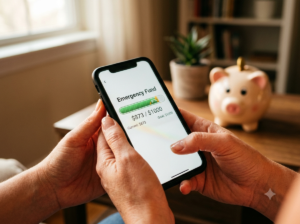 1. YNAB (You Need A Budget)
Best for: Serious budgeters committed to the zero-based method
Features:
- Built specifically for zero-based budgeting
- “Give every dollar a job” philosophy
- Real-time syncing across devices
- Goal tracking
- Detailed reports
- Educational resources
Pros:
- Gold standard for zero-based budgeting
- Excellent mobile app
- Strong community support
- Regular updates and improvements
Cons:
- Subscription cost: $14.99/month or $99/year
- Steeper learning curve
- May be overkill for simple budgets
Best for: People serious about budgeting who want sophisticated features
2. EveryDollar
Best for: Dave Ramsey followers and budgeting beginners
Features:
- Clean, simple interface
- Free version available
- Zero-based budgeting methodology
- Bank connection (paid version)
- Debt payoff tracking
Pros:
- Very intuitive and easy to learn
- Free version is functional
- Great for beginners
- Aligns with Baby Steps method
Cons:
- Free version requires manual entry
- Paid version needed for bank syncing ($79.99/year)
- Fewer features than YNAB
Best for: Budgeting newcomers or those following Dave Ramsey’s plan
3. Goodbudget
Best for: Envelope budgeting fans who want digital version
Features:
- Digital envelope system
- Zero-based approach
- Syncs across devices
- Debt tracking
- Free version available
Pros:
- Free version includes 10 envelopes
- No bank connection required (privacy benefit)
- Great for couples (syncs across devices)
- Simple envelope concept
Cons:
- Manual transaction entry
- Limited envelopes on free version
- Less sophisticated than YNAB
Best for: People who like the envelope concept but want digital convenience
4. Mint
Best for: People wanting free automatic tracking (can be adapted for ZBB)
Features:
- Completely free
- Automatic transaction import
- Budget creation
- Bill tracking
- Credit score monitoring
Pros:
- Free forever
- Easy setup
- Automatic categorization
- Comprehensive financial overview
Cons:
- Not specifically designed for zero-based budgeting
- Ads and product recommendations
- Less control than dedicated ZBB apps
Best for: Budget-conscious users who want free, automated tracking
Spreadsheet Templates
Google Sheets/Excel Options:
Pros:
- Completely customizable
- Free (if using Google Sheets)
- Full control over categories and format
- Can create your perfect system
Cons:
- Requires setup time
- Manual entry and calculation
- No automatic bank sync
- No mobile app (unless using Google Sheets)
Where to find templates:
- Vertex42.com (free Excel templates)
- Google Sheets template gallery
- Personal finance blogs
- Create your own from scratch
Paper-Based Systems
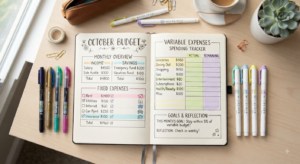 Best for: Tactile learners who process better with pen and paper
Options:
- Budget Mom’s Budget By Paycheck workbook
- Clever Fox Budget Planner
- DIY bullet journal budget
- Printable templates
Pros:
- No screen time required
- Concrete, tangible tracking
- Customizable to your style
- Studies show writing aids retention
Cons:
- No automatic calculations
- Can’t sync across devices
- Must keep paper secure
- Risk of loss
Best for: People who prefer analog systems or want to reduce screen time
Real-Life Zero-Based Budget Examples {#examples}
Seeing real budgets helps clarify how zero-based budgeting works in practice. Here are three detailed examples:
Example 1: Single Person, Entry-Level Income
Monthly Take-Home Income: $2,800
HOUSING & UTILITIES
- Rent: $800
- Renters insurance: $15
- Electricity: $60
- Internet: $50
Subtotal: $925
TRANSPORTATION
- Car payment: $250
- Auto insurance: $120
- Gas: $150
- Car maintenance fund: $50
Subtotal: $570
FOOD
- Groceries: $280
- Restaurants/Eating out: $100
Subtotal: $380
PERSONAL & HEALTH
- Health insurance: $150 (after employer contribution)
- Gym membership: $30
- Haircuts: $25
- Toiletries/Personal care: $40
- Clothing: $50
Subtotal: $295
DEBT PAYMENTS
- Student loan minimum: $180
- Credit card minimum: $50
- Extra debt payment: $100
Subtotal: $330
SAVINGS
- Emergency fund: $100
- Retirement (Roth IRA): $100
Subtotal: $200
ENTERTAINMENT & MISC
- Subscriptions (Netflix, Spotify): $25
- Entertainment/Fun: $50
- Personal spending money: $40
- Miscellaneous/Buffer: $35
Subtotal: $150
PERIODIC EXPENSES (Monthly Allocation)
- Annual expenses fund: $50
Subtotal: $50
TOTAL ALLOCATED: $2,900
Wait—that’s $100 over budget!
Adjustments needed:
- Reduce eating out to $75 (-$25)
- Reduce entertainment to $35 (-$15)
- Reduce clothing to $30 (-$20)
- Reduce personal spending to $25 (-$15)
- Reduce extra debt payment to $65 (-$35)
ADJUSTED TOTAL: $2,800
Income – Expenses = $2,800 – $2,800 = $0 ✓
Example 2: Married Couple with Children
 Monthly Combined Take-Home Income: $6,500
HOUSING & UTILITIES
- Mortgage: $1,400
- Property tax: $250
- Homeowners insurance: $100
- HOA fees: $75
- Electricity: $140
- Gas/Heating: $80
- Water/Sewer: $60
- Trash: $25
- Internet: $70
- Streaming services: $35
Subtotal: $2,235
TRANSPORTATION
- Car payment 1: $320
- Car payment 2: $0 (paid off)
- Auto insurance (2 cars): $180
- Gas (combined): $300
- Car maintenance fund: $150
Subtotal: $950
FOOD
- Groceries: $750
- Restaurants/Date nights: $150
Subtotal: $900
CHILDREN
- Daycare: $800
- Kids’ activities: $100
- School supplies/fees: $40
- Children’s clothing: $80
Subtotal: $1,020
PERSONAL & HEALTH
- Health insurance: $300 (family plan, after employer)
- Medical copays/prescriptions: $100
- Gym membership: $45
- Haircuts (family): $60
- Toiletries/Personal care: $80
- Adult clothing: $70
Subtotal: $655
DEBT PAYMENTS
- Credit card minimum: $75
- Student loan payment: $250
- Extra debt payment: $200
Subtotal: $525
SAVINGS & INVESTMENTS
- Emergency fund: $200
- Retirement (401k already deducted from paycheck)
- Kids’ college fund: $150
- House repair fund: $100
- Vacation fund: $150
Subtotal: $600
INSURANCE
- Life insurance (2 policies): $80
Subtotal: $80
ENTERTAINMENT & MISC
- Entertainment/Family fun: $100
- Hobbies: $50
- His personal spending: $75
- Her personal spending: $75
- Miscellaneous/Buffer: $100
Subtotal: $400
GIVING
- Charitable giving/Tithing: $100
- Gifts (birthdays, holidays): $35
Subtotal: $135
TOTAL ALLOCATED: $6,500
Income – Expenses = $6,500 – $6,500 = $0 ✓
Notes on this budget:
- 401(k) contributions already deducted from paycheck (additional $500/month)
- Effective savings rate: 23% ($600 + $500 retirement + $200 debt extra = $1,300)
- Emergency fund target: $20,000 (reached in Month 3, now contributing to other goals)
Example 3: Freelancer with Variable Income
This Month’s Projected Income: $4,200
(Last month was $5,800; month before was $3,400)
Strategy: Budget based on lowest recent income ($3,400), then allocate extra.
ESSENTIAL BUDGET (Based on $3,400 minimum)
HOUSING & UTILITIES
- Rent: $950
- Renters insurance: $18
- Electricity: $70
- Internet (business expense): $80
Subtotal: $1,118
TRANSPORTATION
- Car payment: $0 (paid off)
- Auto insurance: $110
- Gas: $120
- Car maintenance fund: $80
Subtotal: $310
FOOD
- Groceries: $350
- Eating out: $80
Subtotal: $430
BUSINESS EXPENSES
- Software subscriptions: $85
- Professional development: $50
- Business supplies: $40
- Quarterly tax savings (1/3 of income): $1,133
Subtotal: $1,308
PERSONAL & HEALTH
- Health insurance: $320 (self-employed)
- Medical/Dental: $75
- Gym: $35
- Personal care: $60
Subtotal: $490
DEBT PAYMENTS
- Credit card minimum: $45
Subtotal: $45
SAVINGS (Minimum)
- Emergency fund: $50
- Irregular income buffer: $100
Subtotal: $150
ENTERTAINMENT & MISC
- Entertainment: $40
- Personal spending: $50
- Miscellaneous: $59
Subtotal: $149
MINIMUM BUDGET TOTAL: $3,400
ADDITIONAL INCOME ALLOCATION ($4,200 – $3,400 = $800)
Priority 1: Extra quarterly tax savings = $267
Priority 2: Boost emergency fund = $200
Priority 3: Extra debt payment = $150
Priority 4: Retirement (IRA) = $100
Priority 5: Vacation fund = $50
Priority 6: Extra fun money = $33
TOTAL ALLOCATED: $4,200
Income – Expenses = $4,200 – $4,200 = $0 ✓
Notes on variable income approach:
- Essential budget covers all needs even in lowest-income month
- Extra income gets allocated by priority
- Irregular income buffer smooths cash flow between payments
- Quarterly tax savings critical for self-employed (roughly 30% of gross)
Frequently Asked Questions {#faq}
Q: What if I can’t get to zero—I’m always in the negative?
A: If your income minus necessary expenses equals a negative number, you have three options:
- Increase income (side hustle, second job, freelancing)
- Decrease expenses (find roommate, downsize housing, reduce discretionary spending)
- Both (most effective approach)
This situation means you’re spending more than you earn—unsustainable long-term. Zero-based budgeting reveals this reality so you can address it.
Q: How do I budget for irregular income like freelance work?
A: Three strategies:
1. Budget to your minimum: Use lowest monthly income from past 6 months as your baseline.
2. Average method: Calculate 3-6 month average and budget to that.
3. Priority-based: Create prioritized expense list and fund in order based on actual income.
Also maintain an “irregular income buffer” category—extra savings to smooth cash flow gaps.
Q: Can I use zero-based budgeting if I’m paid biweekly?
A: Absolutely! Two approaches:
Method 1: Monthly budget, track by paycheck
- Create monthly budget totaling all income
- Track which expenses come from which paycheck
- Some months you’ll have 3 paychecks—allocate extra to priorities
Method 2: Budget by paycheck
- Create separate budget for each paycheck
- Assign expenses to specific paycheck
- Requires more planning but provides clarity
Q: What’s the difference between zero-based budgeting and zero-sum budgeting?
A: These terms are essentially synonymous. Both mean:
- Every dollar is assigned a purpose
- Income minus all allocations equals zero
- Nothing is left unassigned
Different personal finance educators use different terminology, but the concept is identical.
Q: Do I need to use an app, or can I do this with paper and pen?
A: You absolutely can use paper! Zero-based budgeting existed long before apps. Paper budgeting works well if you:
- Prefer tangible tracking
- Want to avoid screen time
- Enjoy the act of writing
- Process information better on paper
The key is consistency, not the medium.
Q: How do I handle months where income is higher than normal (bonuses, tax refunds, etc.)?
A: Create a budget specifically for that extra money, just like you would regular income:
Example: $2,000 bonus
- Extra debt payment: $800
- Emergency fund boost: $600
- Vacation fund: $300
- Home improvement: $200
- Fun/Celebration: $100
Total: $2,000 (equals zero)
Don’t let “extra” money disappear into regular spending without a plan.
Q: Should I include my retirement contributions in my zero-based budget?
A: Yes! Include all money movement:
If deducted from paycheck before you receive it:
- Note it at top of budget
- Budget with take-home amount
- Example: “$5,000 gross – $500 401k – $800 taxes = $3,700 to budget”
If you contribute from take-home pay:
- Include as regular budget category
- Allocate specific amount monthly
- Treat like any other “expense”
Q: How often should I update my budget?
A:
Before each month: Create next month’s budget
Throughout month: Track spending daily or weekly
End of month: Review and learn for next month
Your budget is a living document. Adjust categories mid-month as needed while keeping total at zero.
Q: What if my partner/spouse doesn’t want to budget?
A:
- Start by budgeting your personal portion
- Show results over 2-3 months
- Frame as “spending plan” not “budget”
- Emphasize what you CAN do, not restrictions
- Include generous “fun money” category for each person
- Make budget meetings short and positive
- Focus on shared goals you both want
Often, seeing results converts skeptics better than conversations.
Conclusion {#conclusion}
Zero-based budgeting is more than just a financial technique—it’s a complete mindset shift about how you relate to money. By giving every single dollar a specific job before the month begins, you transform from passive money manager to intentional wealth builder.
The core principles that make zero-based budgeting so effective:
✓ Complete visibility into where every dollar goes
✓ Intentional allocation rather than reactionary spending
✓ Flexibility to adjust while maintaining control
✓ Accountability that prevents money from “disappearing”
✓ Goal achievement through specific, regular allocations
Yes, zero-based budgeting requires more effort than simply hoping things work out. The first month takes time. You’ll need to track diligently. You’ll make mistakes and adjustments.
But the payoff is extraordinary:
- Financial stress decreases dramatically
- Savings increase without feeling restrictive
- Debt disappears faster
- Financial goals become achievable rather than aspirational
- You gain complete confidence about your financial situation
Remember these key implementation points:
- Your first budget won’t be perfect—give yourself 3-4 months to dial it in
- Track actual spending against your plan—the budget is only effective if you follow it
- Adjust as needed mid-month, but always keep the total at zero
- Include fun money—budgeting isn’t punishment, it’s permission
- Review and improve each month based on what you learn
The difference between your current financial reality and the financial future you dream about isn’t complicated—it’s simply giving every dollar a job and following through.
Your action steps for this week:
- Calculate your exact monthly take-home income
- List all your fixed expenses
- Review last month’s bank statements to identify variable spending
- Choose your tracking method (app, spreadsheet, or paper)
- Create your first zero-based budget for next month
The journey to complete financial control begins with a single month, a single budget, and a single commitment: that every dollar you earn will have a purpose.
You now have the knowledge. You have the tools. You have real-life examples.
The only thing left is to take action.
Your financial transformation starts the moment you give your first dollar a job. Make that moment now.
Leave a Reply