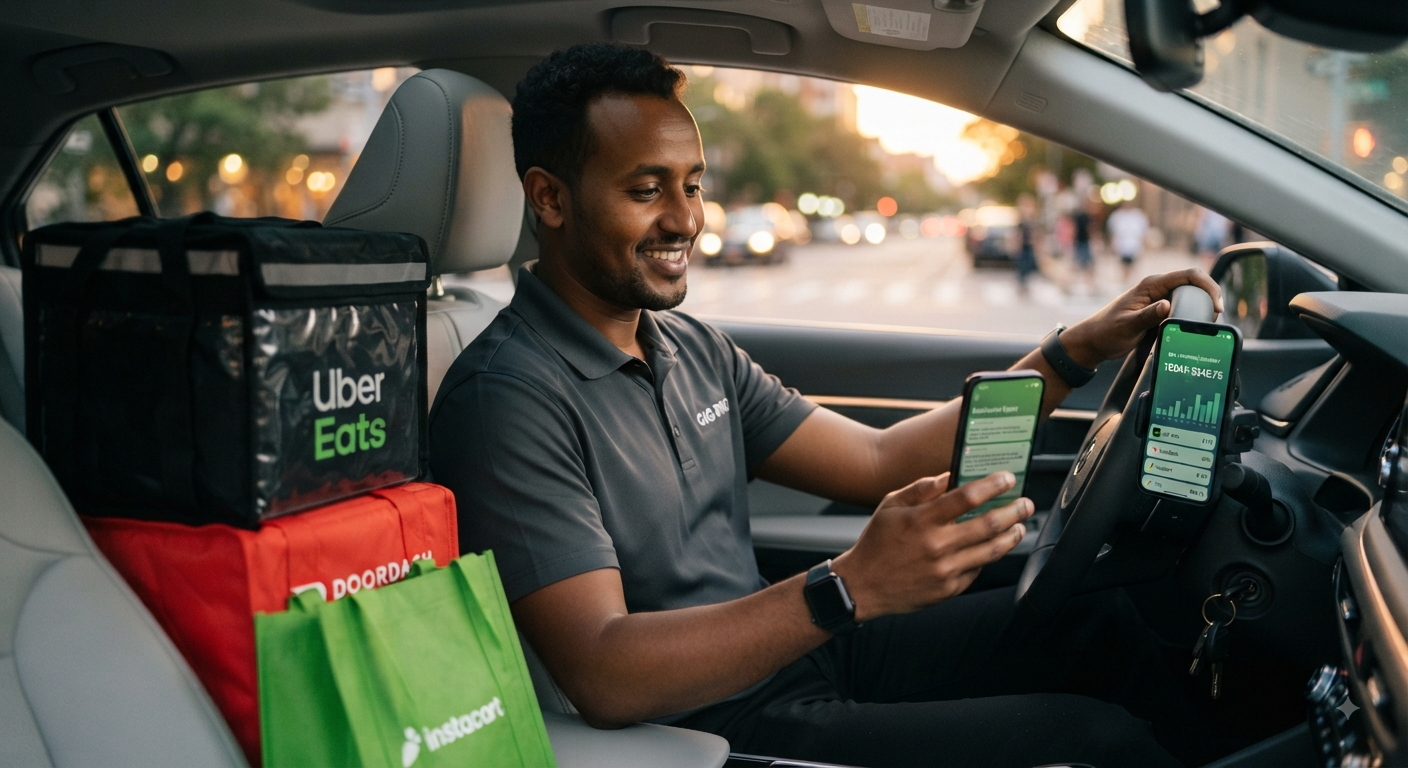
Table of Contents
- Introduction
- What is the Gig Economy?
- The Gig Economy Landscape in 2025
- How Much Can You Really Make?
- Rideshare Platforms: Uber & Lyft
- Food Delivery: DoorDash, Uber Eats, Grubhub
- Grocery Delivery: Instacart & Shipt
- Package Delivery: Amazon Flex & Others
- Task-Based Gigs: TaskRabbit & Handy
- The Multi-App Strategy
- Maximizing Your Hourly Rate
- Tax Strategies for Gig Workers
- Vehicle Maintenance & Expenses
- Staying Safe in the Gig Economy
- Avoiding Common Gig Worker Mistakes
- Success Stories & Earnings Breakdowns
- Is the Gig Economy Right for You?
- Frequently Asked Questions
- Conclusion
Introduction {#introduction}
The gig economy promised freedom: work when you want, be your own boss, make good money on your schedule. For millions of Americans, it’s delivered—but not without knowing the strategies that separate those making minimum wage from those earning $25-40/hour.
The reality of gig work in 2025:
- 36% of U.S. workers participate in the gig economy (Pew Research)
- Median gig worker earnings: $500-$2,000/month part-time
- Top earners: $4,000-$8,000/month working smart, not just hard
- The difference between struggling and thriving: strategy
Here’s what most new gig workers get wrong:
- Running one app only (leaving money on the table)
- Not tracking mileage and expenses (paying too much tax)
- Accepting every order (killing their hourly rate)
- Ignoring peak times (working when earnings are lowest)
- Poor vehicle maintenance (expensive breakdowns)
The brutal truth: If you just turn on DoorDash and accept whatever comes, you’ll make $12-15/hour. But if you implement the strategies in this guide, you can consistently make $25-40/hour doing the same work.
In this comprehensive guide, you’ll learn:
How to choose the right gig platforms for your situation, maximize earnings through multi-apping, identify the most profitable hours and zones, minimize expenses and taxes, protect yourself and your vehicle, and build sustainable gig income.
Whether you’re supplementing income with 10 hours/week or going full-time at 40+ hours, this guide gives you the blueprint to maximize every hour you work.
Let’s turn your gig work into serious income.
What is the Gig Economy? {#what-is}
The gig economy refers to a labor market characterized by short-term contracts, freelance work, and temporary positions rather than permanent jobs. In the context of app-based work, it means earning money through on-demand platforms that connect workers with customers.
Key Characteristics
1. Flexibility
Work when you want, where you want, for as long or short as you want.
2. Independent Contractor Status
You’re self-employed, not an employee (important tax implications).
3. App-Based
All work comes through smartphone applications.
4. Immediate Payment
Many platforms offer instant or daily cash-out options.
5. No Boss
You accept or decline work at your discretion.
Gig Work vs. Traditional Employment
| Aspect | Traditional Job | Gig Work |
|---|---|---|
| Schedule | Fixed by employer | You choose |
| Income | Predictable salary/hourly | Variable by effort |
| Benefits | Health, 401k, PTO | None (you provide) |
| Taxes | W-2, withheld | 1099, quarterly estimated |
| Job Security | Can be laid off | Always available work |
| Equipment | Employer provides | You provide (car, phone) |
| Boss | Yes | No |
| Location | Usually fixed | You choose |
Types of Gig Work
Transportation
Moving people from point A to point B
Delivery
Moving items from businesses to customers
Tasks/Services
Completing specific jobs or projects
Specialized
Using professional skills on-demand
The Gig Economy Landscape in 2025 {#landscape}
Understanding the current market helps you choose the right platforms and strategies.
Market Size & Growth
By the numbers:
- 78 million Americans have done gig work
- 36% of workers participate in gig economy currently
- Gig economy generated $455 billion in 2024
- Expected to reach $600 billion by 2027
- 16% annual growth rate
Post-pandemic shifts:
- Delivery surged 300% during 2020-2021
- Stabilized but remains 140% above pre-pandemic levels
- Hybrid model common (gig + traditional job)
Major Platform Categories
Rideshare (People)
- Uber
- Lyft
Food Delivery
- DoorDash (market leader, 59% market share)
- Uber Eats (24% market share)
- Grubhub (11% market share)
- Postmates (owned by Uber Eats)
Grocery Delivery
- Instacart
- Shipt
- Amazon Fresh
Package Delivery
- Amazon Flex
- Roadie
- GoShare
Task Services
- TaskRabbit
- Handy
- Thumbtack
Platform Market Share (2025)
Food delivery:
- DoorDash: 59%
- Uber Eats: 24%
- Grubhub: 11%
- Other: 6%
Rideshare:
- Uber: 74%
- Lyft: 26%
This matters: More market share = more orders = less waiting
Current Trends
What’s hot:
Grocery delivery demand
- Aging population wants delivery
- Busy professionals value time
- Higher tips than food delivery
- Less competitive than food delivery currently
Multi-aping becoming standard
- Running 2-3 apps simultaneously
- Accept best offer
- Maximize earnings per hour
Electric vehicles
- Gas savings significant
- Lower maintenance
- Some platforms offer EV incentives
Specialized delivery
- Medical supplies
- Cannabis (legal states)
- Alcohol delivery
- Premium earnings
What’s declining:
Pure rideshare without delivery
- Insurance costs rising
- Wear and tear high
- Most drivers also do delivery now
Low-tip acceptance
- Customers who don’t tip wait longer
- Drivers selective about orders
- Platforms adjusting algorithms
Economic Factors Affecting Gig Work
Positive for gig workers:
Inflation
- Delivery fees increased (higher earnings)
- People still ordering (demand steady)
- Less price-sensitive on convenience
Labor shortage
- Fewer drivers = more demand
- Higher per-order pay
- Better promotions/bonuses
Gas price stabilization
- Not as volatile as 2022
- Predictable expense planning
Challenges for gig workers:
Increased competition
- More people need extra income
- More drivers on platforms
- Have to be strategic about when/where
Platform fee changes
- Some platforms increasing fees
- Cuts into earnings
- Need to be selective
Vehicle costs
- Cars expensive (new and used)
- Maintenance costs up
- Makes vehicle choice critical
Regulatory Environment
Independent contractor status:
- Ongoing legal battles (Prop 22 in California)
- Some states considering employee classification
- Would change gig economy dramatically
Current status (most states):
- Gig workers are independent contractors
- No minimum wage guarantee
- No benefits required
- Flexibility maintained
What this means for you:
- Understand you’re self-employed
- Plan for taxes, insurance, retirement yourself
- Flexibility is trade-off for benefits
How Much Can You Really Make? {#earnings}
Let’s cut through the marketing hype and look at real earnings data.
Average Earnings by Platform (2025)
Per-hour estimates (before expenses):
Rideshare:
- Uber: $18-35/hour
- Lyft: $17-32/hour
- Varies dramatically by market and time
Food Delivery:
- DoorDash: $15-28/hour
- Uber Eats: $14-26/hour
- Grubhub: $13-25/hour
Grocery Delivery:
- Instacart: $15-30/hour
- Shipt: $14-28/hour
Package Delivery:
- Amazon Flex: $18-25/hour (fixed rate blocks)
Task Services:
- TaskRabbit: $20-50/hour (skill-dependent)
- Handy: $15-35/hour
Important: These are BEFORE expenses (gas, maintenance, taxes)
The Real Hourly Rate Formula
What platforms show you: Gross earnings per hour
What actually matters: Net earnings after expenses
True hourly rate calculation:
Gross earnings – Gas – Maintenance – Depreciation – Taxes = Net hourly rate
Example: Door Dash
Gross: $25/hour × 4 hours = $100
Gas: (60 miles × $0.15/mile) = -$9
Maintenance: ($0.10/mile × 60) = -$6
Depreciation: ($0.15/mile × 60) = -$9
Total expenses: -$24
Net before tax: $76 ($19/hour)
Taxes (25%): -$19
Net after tax: $57 ($14.25/hour)
Your true rate is often 40-50% less than gross.
Earnings by Experience Level
New gig worker (Month 1-3):
- Learning routes, apps, strategies
- Accepting too many low offers
- Poor time/zone choices
- Average: $12-18/hour net
Intermediate (Month 4-12):
- Understanding peak times
- More selective on orders
- Better navigation
- Average: $16-24/hour net
Experienced (Year 2+):
- Multi-apping mastered
- Zone optimization
- Expense minimization
- Average: $20-35/hour net
The difference between beginner and expert: strategy, not just time.
Part-Time vs. Full-Time Earnings
Part-time (10-15 hours/week):
- Focus on peak hours only
- Can be more selective
- Higher per-hour rate
- $800-1,800/month typical
Full-time (40+ hours/week):
- Must work some slower periods
- More total income but lower per-hour
- Expenses higher
- $3,000-6,000/month typical
Market Variation
Earnings vary dramatically by location:
High-earning markets:
- New York City: $25-40/hour possible
- San Francisco: $25-38/hour
- Los Angeles: $22-35/hour
- Chicago: $20-32/hour
- Miami: $20-30/hour
Medium markets:
- Denver: $18-28/hour
- Austin: $18-26/hour
- Seattle: $20-30/hour
- Phoenix: $16-25/hour
Lower markets:
- Small cities/rural: $12-20/hour
- Less density = more driving
- Fewer orders
- Lower tips
Your zip code matters more than platform choice.
Peak vs. Off-Peak Earnings
Peak times (2-3x normal rate):
- Lunch: 11:30am-1:30pm
- Dinner: 5:30pm-8:30pm
- Weekend nights: 6pm-11pm
- Special events (sports, concerts)
- Bad weather (rain, snow)
Off-peak (50-70% normal rate):
- Mid-morning: 9am-11am
- Mid-afternoon: 2pm-5pm
- Late night after 10pm
- Monday-Tuesday generally slower
Example earnings difference:
Tuesday 10am-12pm (off-peak):
- 4 deliveries × $6 average = $24
- $12/hour
Friday 6pm-8pm (peak):
- 7 deliveries × $9 average = $63
- $31.50/hour
Smart workers focus on peak hours only if part-time.
Realistic Monthly Earnings Scenarios
Scenario 1: College student, part-time
- 12 hours/week (peak hours only)
- $24/hour average (gross)
- 48 hours/month × $24 = $1,152
- After expenses (~30%): $806/month
Scenario 2: Side hustle, evenings/weekends
- 20 hours/week (mostly peak)
- $22/hour average
- 80 hours/month × $22 = $1,760
- After expenses: $1,232/month
Scenario 3: Full-time gig worker
- 40 hours/week (mix of peak and slow)
- $20/hour average
- 160 hours/month × $20 = $3,200
- After expenses: $2,240/month
Scenario 4: Full-time multi-apper (optimized)
- 45 hours/week (strategic)
- $28/hour average (multi-app strategy)
- 180 hours/month × $28 = $5,040
- After expenses: $3,528/month
Income Consistency
The feast or famine reality:
- Great week: $1,200
- Average week: $800
- Slow week: $500
- Must budget for variability
Factors affecting weekly income:
- Weather (rain = more orders, snow = fewer)
- Events in your city
- Holidays (Christmas busy, July 4 slow)
- Competition (school breaks = more drivers)
- Platform promotions and bonuses
Smart gig workers:
- Track income daily
- Identify patterns
- Plan for slow periods
- Build financial buffer
Rideshare Platforms: Uber & Lyft {#rideshare}

Detailed breakdown of maximizing rideshare earnings.
Platform Overview
Uber
- Market leader (74% market share)
- More ride requests
- Better surge pricing
- Uber Comfort, Uber XL, Uber Black options
Lyft
- 26% market share
- Generally friendlier brand image
- Power zones (similar to surge)
- Lyft Lux, Lyft XL options
Most drivers run both simultaneously
Requirements
Vehicle requirements:
- 15 years old or newer (varies by market)
- 4-door sedan, SUV, or minivan
- Pass vehicle inspection
- Insurance and registration current
Driver requirements:
- 21+ years old (most markets)
- Valid driver’s license (1+ years)
- Clean driving record
- Pass background check
- No DUIs, felonies
Insurance:
- Personal auto insurance
- Rideshare endorsement recommended
- Platforms provide coverage during rides
How Rideshare Pay Works
Base components:
- Base fare: $1-3 (varies by market)
- Time rate: $0.15-0.40 per minute
- Distance rate: $0.70-1.50 per mile
- Surge/Prime time: 1.2x to 5x multiplier during high demand
- Tips: Customer discretion (20-30% tip)
Example ride:
- 12-minute ride
- 6 miles
- Normal pricing
- Base: $2.00
- Time: 12 min × $0.25 = $3.00
- Distance: 6 mi × $1.00 = $6.00
- Total: $11.00
- Customer tips $3
- Total payout: $14.00
Uber/Lyft take 25-30% commission
Surge Pricing Strategy
What causes surge:
- High demand, low driver supply
- Events ending (concerts, sports)
- Airport rushes
- Bad weather
- Weekend nights
- Holiday periods
How to maximize surge:
1. Position strategically
- Near event venues 30 min before end
- Downtown on weekend nights
- Airports during peak arrival times
2. Wait for surge
- Don’t accept ride just before surge hits
- Turn off app, wait 5 minutes
- Surge often develops
3. Avoid surge traps
- Surge at stadium = traffic nightmare
- May not be worth time
- Calculate actual earnings per hour
4. Chase persistent surge, not temporary
- Temporary (5 min): Usually dissipates before arrival
- Persistent (30+ min): Worth positioning for
Peak Times for Rideshare
Best earning times:
Weekend nights (highest earnings):
- Friday 7pm-3am
- Saturday 7pm-4am
- Surge common, longer rides, tips
Weekday commutes:
- Morning: 6:30am-9:30am
- Evening: 4:30pm-7:30pm
- Predictable, shorter rides
Airport runs:
- Morning flights: 4am-8am
- Afternoon arrivals: 2pm-6pm
- Long rides, good fares
Special events:
- Concerts (arrive 30 min before end)
- Sports games (position strategically)
- Festivals
- Conference centers
Avoid:
- Tuesday-Wednesday mid-day (dead)
- Sunday daytime (slow)
- 2am-5am except weekend nights (too slow)
Vehicle Optimization
Best vehicles for rideshare:
Fuel efficiency (priority):
- Toyota Prius (50 mpg) – most popular
- Honda Civic (35 mpg)
- Toyota Camry Hybrid (50 mpg)
- Nissan Leaf (electric, no gas costs)
Higher-tier (Uber Comfort, XL):
- Toyota Highlander
- Honda Pilot
- Tesla Model 3 (electric + premium)
The math:
- Gas costs are largest expense
- 40 mpg vs. 25 mpg = $200-400/month savings
- Over 1 year = $2,400-4,800 savings
Vehicle cleanliness critical:
- Clean interior = better ratings
- Better ratings = more ride requests
- Vacuum daily
- No smoking
- Air freshener
- Wipe surfaces
Maximizing Tips
Strategies that work:
1. Great first impression
- Greeting: “Hi [name], heading to [destination]?”
- Confirm route preference
- Offer water/gum
2. Temperature and music
- Ask preference
- “Temperature okay? Music okay or would you prefer quiet?”
3. Phone chargers
- Provide Lightning and USB-C cables
- Passengers appreciate this
4. Conversation calibration
- Read passenger cues
- Some want to chat, some want silence
- Don’t force conversation
5. Smooth driving
- No hard braking
- Take turns gently
- Avoid potholes
6. Route communication
- “I’ll take [route], should get us there in [time]”
- Use GPS but know area
Tip rate impact:
- Poor service: 10-15% tip rate
- Good service: 25-35% tip rate
- Excellent service: 40-50% tip rate
On 30 rides/day, 10% tip rate difference = $15-30 extra daily
Safety Tips
Passenger safety:
- Verify passenger name before starting trip
- End trip only after passenger exits safely
- Trust your instincts (cancel if uncomfortable)
- Keep doors locked until passenger verified
Personal safety:
- Don’t share personal information
- Dashcam recommended (front and interior)
- Keep pepper spray accessible
- Drive in well-lit areas when possible
- Report inappropriate behavior immediately
Platform safety features:
- Share ride status with trusted contacts
- Emergency button in app
- Two-way ratings (you rate passengers too)
Realistic Earnings
Part-time (15 hours/week, peak times only):
- $23/hour average (including surge and tips)
- 60 hours/month × $23 = $1,380
- Expenses (gas, maintenance): -$345 (25%)
- Net: $1,035/month
Full-time (40 hours/week, strategic hours):
- $21/hour average (mix of peak and normal)
- 160 hours/month × $21 = $3,360
- Expenses: -$1,008 (30%)
- Net: $2,352/month
Full-time optimized (45 hours/week, peak focused + multi-app):
- $26/hour average
- 180 hours/month × $26 = $4,680
- Expenses: -$1,404 (30%)
- Net: $3,276/month
Pros & Cons
Pros:
- Highest per-ride earnings (vs. delivery)
- Tips often generous
- Meet interesting people
- Can be social/fun
- Good for extroverts
Cons:
- Wear and tear on vehicle highest
- Passengers occasionally difficult
- Late night = drunk passengers
- Insurance costs high
- Safety concerns
- Cleaning maintenance constant
When to Choose Rideshare
Good fit:
- You enjoy people interaction
- You have fuel-efficient vehicle
- You’re comfortable driving at night
- Your market has good demand
- You can handle occasional difficult passengers
Not ideal:
- You’re introverted (delivery better)
- You have gas-guzzler vehicle
- You’re uncomfortable with strangers in car
- You want completely solo work
Food Delivery: DoorDash, Uber Eats, Grubhub {#food-delivery}
The most popular gig work category. Detailed optimization strategies.
Platform Comparison
DoorDash (59% market share)
Strengths:
- Most orders (largest customer base)
- Best zone coverage
- Top Dasher program (priority access)
- Transparent pay model
Weaknesses:
- Oversaturated in some markets
- Lower base pay recently
- Acceptance rate pressure
Pay structure:
- Base pay: $2-10 (distance/desirability)
- Tips: Customer sets (shown upfront)
- Peak pay: +$1-5 during busy times
- Average: $6-9 per delivery
Uber Eats (24% market share)
Strengths:
- Can combine with Uber rideshare
- Good in urban markets
- Upfront pricing shown
- Premium customers (higher tips)
Weaknesses:
- Fewer orders than DoorDash in most markets
- Takes 25% of tip (included in total shown)
- Less peak pay
Pay structure:
- Base + trip supplement + tip
- Average: $5-8 per delivery
- Less transparent than DoorDash
Grubhub (11% market share)
Strengths:
- Used to pay best (declining now)
- Still good in some markets
- Scheduled blocks (guaranteed hourly minimum in some areas)
- Partnership with Amazon (trying to increase market share)
Weaknesses:
- Fewest orders
- Market share declining
- Not available everywhere
Pay structure:
- Base + mileage + time + tip
- Average: $5-8 per delivery
- Varies widely by market
The Order Acceptance Strategy
The most critical decision: which orders to accept
Never accept blindly. Every order should meet minimum criteria.
Minimum Acceptance Criteria
The $1.50-2 per mile rule:
- Order pays $6, distance 4 miles = $1.50/mile
- Order pays $8, distance 4 miles = $2.00/mile
Accept: Orders $2+/mile
Decline: Orders under $1.50/mile (usually)
Why:
- You drive TO restaurant + TO customer
- 4-mile delivery = 8 miles total (back to zone)
- Must factor round-trip
Example analysis:
Bad order:
- Pay: $6
- Miles: 7
- Per mile: $0.86
- Time: 25 minutes with return
- Hourly: $14.40 – DECLINE
Good order:
- Pay: $12
- Miles: 4
- Per mile: $3.00
- Time: 18 minutes with return
- Hourly: $40 – ACCEPT
Peak Pay Strategy
What is peak pay:
- Extra $1-5 per delivery during high demand
- Usually dinner rush, bad weather
- DoorDash shows peak pay zones on map
Peak pay appears:
- Dinner rush: +$1-3
- Late night weekend: +$2-4
- Severe weather: +$3-6
- Super Bowl Sunday: +$4-7
Strategy:
- Don’t log on until peak pay starts
- Position in peak pay zone before it starts
- Stay online entire peak period
- Decline non-peak-pay orders to stay in zone
Example:
- Normal: $7 average per delivery
- With $3 peak pay: $10 average per delivery
- 5 deliveries/hour × $3 = $15 extra/hour
- 4 hours peak = $60 extra
Multi-Apping Food Delivery
Running multiple apps simultaneously = highest earnings
The strategy:
- Turn on DoorDash, Uber Eats, and Grubhub
- Accept best order from any platform
- Pause other apps while delivering
- Complete delivery
- Unpause all apps
- Accept next best order
Benefits:
- Cherry-pick best orders across all platforms
- Less waiting between orders
- Higher acceptance standard (can decline more)
- 30-50% higher earnings than single app
Example hourly comparison:
DoorDash only:
- Wait for orders: 15 minutes
- 3 deliveries per hour
- Average $7 each
- $21/hour
Multi-app (DD + UE + GH):
- Minimal waiting (always an order available)
- 4-5 deliveries per hour (accept only good ones)
- Average $9 each (higher standard)
- $36-45/hour
The difference: $15-24/hour more
Advanced Multi-App Tactics
Stacking orders (careful):
- Accept order from DoorDash
- If Uber Eats offers order in same direction, accept
- Deliver both
- ONLY if: Same direction, both customers get hot food
Zone positioning:
- Identify overlap zones (all 3 apps busy)
- Position there during peak
- Maximum order flow
Time-based app switching:
- Lunch: DoorDash usually busiest
- Dinner: Uber Eats picks up
- Late night: Grubhub sometimes best
- Learn your market patterns
Restaurant Selection
The hidden time-killer: restaurant wait time
Fast restaurants (always ready):
- Chipotle (usually ready)
- Chick-fil-A (efficient)
- McDonald’s (fast)
- Chain restaurants with dedicated pickup areas
Slow restaurants (avoid):
- Local restaurants (inconsistent)
- Fancy sit-down places (slow)
- Restaurants always backed up
- Any restaurant making you wait 10+ min regularly
Build mental blacklist:
- Track which restaurants waste your time
- Decline their orders
- Your time = your money
The 5-minute rule:
- If waiting longer than 5 minutes, unpause other apps
- Accept another order if good one comes
- Or unassign original order (impact acceptance rate)
Hotspot Strategy
What are hotspots:
- Areas app shows high order demand
- Red/busy zones on map
Truth about hotspots:
- Somewhat accurate
- But also where app sends drivers to spread them out
Better strategy:
- Find your own hotspots through experience
- Near cluster of popular restaurants
- High-income neighborhoods (better tips)
- Business districts during lunch
Example personal hotspot:
- 1-mile radius with 15 restaurants
- Wealthy neighborhood nearby
- Orders constantly available
- Average $8-11 per delivery
Peak Time Optimization
Best food delivery times:
Lunch rush (11am-1:30pm):
- Office orders (weekdays)
- Quick turnaround
- $15-25/hour
Dinner rush (5pm-9pm):
- Highest volume
- Best tips
- Peak pay common
- $25-40/hour possible
Late night (9pm-12am, weekend):
- Still decent demand
- Peak pay often
- Less traffic
- $18-28/hour
Avoid:
- 2pm-5pm (dead zone)
- After midnight (not worth it usually)
- Sunday-Monday (slowest)
Weather Opportunities
Bad weather = high earnings:
Rain:
- Fewer drivers
- More customers ordering
- Peak pay +$1-3
- Tips often higher
Snow/ice:
- Peak pay +$3-6
- Far fewer drivers
- Demand very high
- Can make $40-60/hour
- Safety risk – drive carefully or skip
Heat waves:
- More delivery orders
- Moderate peak pay
- Keep water, AC running
Strategy:
- Monitor weather forecast
- Plan to work during bad weather
- Have proper tires, wipers, safety gear
Tips to Increase Tips
Yes, you can influence tips:
1. Communication
- Text when grabbing order: “Got your order, heading your way!”
- Text if delayed: “Restaurant running a bit behind, should be there in 10 min”
- Updates = better tips
2. Food protection
- Hot bag usage (customers can tell)
- Keep drinks upright
- Careful driving (don’t shake food)
3. Delivery instructions
- Follow precisely
- “Hand to me” = hand to them (don’t just leave)
- “Leave at door” = photo, text confirmation
4. Professionalism
- Don’t smoke in car (food absorbs smell)
- Don’t eat customer’s food (duh, but happens)
- Dress decently (not pajamas)
5. Extra touches
- Include napkins/utensils if restaurant forgot
- Knock gently (don’t bang)
- Place bag neatly at door
Tip difference:
- Sloppy delivery: $0-2 tip
- Professional delivery: $4-8 tip
- On 30 deliveries/day = $120-180 extra per day
Realistic Earnings
Part-time (12 hours/week, peak times, multi-app):
- $27/hour average
- 48 hours/month × $27 = $1,296
- Expenses (gas, maintenance): -$324 (25%)
- Net: $972/month
Full-time (40 hours/week, strategic, multi-app):
- $24/hour average
- 160 hours/month × $24 = $3,840
- Expenses: -$1,152 (30%)
- Net: $2,688/month
Full-time optimized (45 hours/week, peak focused, multi-app master):
- $30/hour average (cherry-picking)
- 180 hours/month × $30 = $5,400
- Expenses: -$1,620 (30%)
- Net: $3,780/month
Pros & Cons
Pros:
- No passengers (solo work)
- Less vehicle wear than rideshare
- Flexible schedule
- Multi-app opportunities
- Simple, straightforward work
- Can listen to podcasts/music
Cons:
- Inconsistent pay
- App dependency (algorithm changes)
- Vehicle expenses
- No benefits
- Standing/walking to doors (physical)
- Occasional app crashes
- Customer scams (report food not delivered)
When to Choose Food Delivery
Good fit:
- You prefer solo work
- You want maximum flexibility
- You’re comfortable with tech/apps
- You can handle income variability
- You enjoy driving/exploring
Not ideal:
- You need guaranteed income
- You have gas-guzzler vehicle
- You’re not comfortable with apps
- You want human interaction
Grocery Delivery: Instacart & Shipt {#grocery-delivery}
Higher pay potential but more work per order.
Platform Overview
Instacart
- Market leader in grocery delivery
- Partnerships with most major chains
- Two roles: Full-service shopper (shop + deliver) or In-store shopper (just shop)
- Most gig workers do full-service
Shipt
- Target-owned platform
- Partnerships with Target, CVS, Petco, others
- Generally better tips than Instacart
- Smaller market share
How Grocery Delivery Works
Full-service shopping process:
- Accept batch (order)
- Drive to store
- Shop items (find, scan, replace out-of-stock items)
- Checkout (use company card)
- Load car
- Drive to customer
- Deliver to door
- Receive payment and tip
Time per order: 45-90 minutes typically
Pay Structure
Instacart:
- Batch payment: $7-15 base (varies by items, distance, difficulty)
- Heavy pay: Extra for heavy items (water, cat litter)
- Mileage: Included in batch payment
- Tips: Customer sets (can adjust after delivery)
- Promotions: Bonus for completing X batches
Shipt:
- Similar structure
- Generally slightly higher base pay
- Tips usually better (Target customers more affluent)
Average per batch: $15-35 including tip
Batch Selection Strategy
What makes a good batch:
Items:
- 20-40 items ideal
- Under 20 = lower pay for time
- Over 60 = too time-consuming
Distance:
- Store to customer under 5 miles
- Long distance eats time
- Calculate per-mile rate
Tip amount:
- Minimum 10% tip
- Preferably 15-20%
- Pre-tip visible (can increase/decrease after)
Store familiarity:
- Stores you know = faster shopping
- Unknown store = wasted time finding items
The $25/hour rule:
- Calculate estimated time (shop + drive + deliver)
- Batch must pay at least $25/hour equivalent
Example:
Bad batch:
- Pay + tip: $18
- 80 items (large)
- 8 miles to customer
- Estimated time: 90 minutes
- Hourly: $12 – DECLINE
Good batch:
- Pay + tip: $32
- 35 items
- 3 miles to customer
- Estimated time: 65 minutes
- Hourly: $29.50 – ACCEPT
Shopping Efficiency
Speed = earnings in grocery delivery
Tactics to shop faster:
1. Learn store layouts
- Shop same stores repeatedly
- Memorize sections
- Know shortcuts
2. Organize app list
- Rearrange items by aisle
- Don’t shop in app order (zigzag wastes time)
3. Substitution strategy
- If item out of stock, suggest similar immediately
- Message customer: “Out of X, can I get you Y instead?”
- Don’t wait for response on small items (similar size/price)
- Wait for approval on expensive items
4. Checkout efficiency
- Self-checkout often faster (if not huge order)
- Bagging while scanning saves time
- Group customer’s items separately if multi-order
5. Avoid peak shopping times
- Weekday mornings = empty stores
- Weekend afternoons = packed (slower shopping)
Shopping speed benchmarks:
- Beginner: 100 seconds per item
- Intermediate: 60 seconds per item
- Expert: 40 seconds per item
30 items:
- Beginner: 50 minutes
- Expert: 20 minutes
- 30-minute difference = can do 2x orders
Multi-Order Batches
Double/triple batches:
- Instacart combines 2-3 customer orders
- Shop all at once
- Deliver to multiple addresses
Pros:
- Higher total pay
- More efficient than single orders
Cons:
- More complex (keep items separate)
- More time
- If one customer tips poorly, drags down average
Strategy:
- Accept doubles if both tips are good
- Decline if one tip is $0-2
- Triples rarely worth it (too complex)
Heavy Order Pay
Orders with heavy items get extra pay:
- Water cases
- Soda cases
- Cat litter
- Dog food
- Large item orders
Heavy pay bonus: $5-15 extra
Strategy:
- Heavy orders can be lucrative if close
- But consider physical toll
- Apartment stairs with 10 water cases = not worth $8 extra
Peak Times
Best grocery delivery times:
Sunday morning (9am-12pm):
- Biggest order day
- Highest tips
- Most batches available
Weekday mornings (8am-11am):
- Good batches
- Empty stores (fast shopping)
Late afternoon (4pm-6pm):
- Dinner prep orders
- Moderate volume
Avoid:
- Weekend evenings (fewer orders)
- Late night (no batches)
- Mid-week afternoons (slow)
Customer Communication
Communication increases tips:
1. Greeting
- “Hi [name], I’m [your name] and I’ll be shopping your order today!”
- Sets professional tone
2. Substitutions
- “They’re out of X brand, would you like Y brand instead?”
- Photo of options
- Wait for response (don’t substitute without asking)
3. Checkout
- “Just checked out, heading your way!”
4. Delivery
- “Delivered to your front door, have a great day!”
- Photo of delivery
Over-communication better than under-communication
Tip Adjustment Reality
Customers can change tip after delivery:
- Increase (rare but happens)
- Decrease (if poor service)
- Remove completely (if items missing/wrong)
To protect tips:
- Communicate about substitutions
- Deliver on time
- Follow delivery instructions
- Handle items carefully
- Don’t mix up multi-order deliveries
Tip baiting:
- Customer puts high tip to get quick shopper
- Then reduces/removes tip after delivery
- Unfortunately happens
- Report to platform if egregious
Realistic Earnings
Part-time (12 hours/week, peak times):
- 8-10 batches/week
- Average $25 per batch
- $200-250/week = $800-1,000/month
- Expenses: -$200-250
- Net: $600-750/month
Full-time (40 hours/week, strategic):
- 35-45 batches/week
- Average $26 per batch
- $910-1,170/week = $3,640-4,680/month
- Expenses: -$1,092-1,404
- Net: $2,548-3,276/month
Pros & Cons
Pros:
- Higher pay per order than food delivery
- Tips usually good (percentage of order total)
- Less driving (more time at store)
- Can be good exercise
- Customers generally appreciative
Cons:
- Physically demanding (heavy items, stairs)
- Time per order longer (less hourly if slow shopper)
- Out-of-stock items frustrating
- Shopping in crowded stores stressful
- Perishable items (must deliver quickly)
When to Choose Grocery Delivery
Good fit:
- You’re efficient at grocery shopping
- You don’t mind physical work
- You prefer fewer, higher-paying orders
- You know local stores well
- You’re organized
Not ideal:
- You’re slow at shopping
- You have physical limitations
- You want quick, simple deliveries
- You’re impatient (dealing with substitutions)
Package Delivery: Amazon Flex & Others {#package-delivery}
Package delivery offers consistent pay and structured blocks.
Amazon Flex Overview
What it is:
- Deliver Amazon packages in your own vehicle
- Work in “blocks” (pre-scheduled shifts)
- 2-4 hour blocks typical
- Fixed pay per block
Requirements:
- 21+ years old
- Mid-size sedan or larger
- Smartphone (iPhone 6S or newer, Android equivalent)
- Pass background check
- Valid license and insurance
How Amazon Flex Works
Block system:
- Open app during “offering” times
- Available blocks appear
- Accept block (first-come, first-served)
- Show up at warehouse at block start time
- Pick up pre-sorted packages (20-50 typically)
- Deliver using app navigation
- Return undeliverable packages
- Block ends, paid for full block time
Fixed pay regardless of speed:
- Finish early = paid for full block
- Run late = still paid same amount
Pay Structure
Base pay:
- $18-25/hour (varies by market)
- Fixed at time of accepting block
- Not influenced by number of packages
Surge blocks:
- During high demand or bad weather
- $25-40/hour
- Sometimes 2x normal rate
Example blocks:
Standard 3-hour block:
- Pay: $54 ($18/hour)
- 30 packages
- If you finish in 2 hours, still get $54
Surge 4-hour block:
- Pay: $120 ($30/hour)
- 40 packages
- Same work, higher pay (demand-based)
Block Strategy
When blocks are offered:
- Varies by location
- Usually 24-48 hours in advance
- Same-day blocks if not filled
Surge strategy:
- Don’t accept low-rate blocks
- Wait for surge pricing
- Check app frequently (blocks appear suddenly)
- Bad weather = surge blocks
- Holidays = surge blocks
Bot controversy:
- Some drivers use bots to auto-grab blocks
- Against Amazon policy
- Risk of deactivation
- Manual grabbing still possible but need fast reflexes
Route Optimization
Amazon provides route but not always optimal:
Tactics:
- Review full route at warehouse before leaving
- Reorganize packages by delivery order
- Use app’s built-in route or your own judgment
- Group nearby deliveries
- Deliver heavy packages first (free up space)
Package organization:
- Front seat: Next 5 deliveries
- Back seat: Next 10
- Trunk: Remaining packages
- Reorganize at midpoint
Speed matters:
- Finish early = free time (paid already)
- Build reputation for fast delivery = better standing
Package Types
Standard packages:
- Boxes and envelopes
- Front door/porch delivery
- Photo proof required
Amazon Fresh/Prime Now:
- Groceries
- 1-2 hour delivery windows
- Higher pay
- Temperature-sensitive
Whole Foods:
- Grocery delivery
- Usually good tips
- Similar to Instacart
Delivery Tips
Efficiency tactics:
1. Apartment strategies
- Call customer if can’t access building
- Follow in behind resident (politely)
- Take all packages for building in one trip
2. Scanning as you go
- Scan next package while driving to stop
- Saves time at each stop
3. Parking
- Don’t overthink parking
- Quick stops (hazards on if needed)
- Most important: keep moving
4. Navigation
- Use Waze or Google Maps if Amazon nav poor
- Learn your delivery areas
- Develop mental map
5. Photo proof
- Take quickly
- Don’t spend time framing perfect shot
- Just clear evidence of delivery location
Weather & Challenges
Bad weather blocks:
- Higher pay (surge)
- Fewer drivers accepting
- More difficult but more profitable
Rural routes:
- Longer distances between stops
- Harder to finish early
- May not be worth standard rate
- Wait for surge on rural routes
Urban routes:
- More stops, less driving
- Can finish very early
- Parking challenges
- Best for standard rate blocks
Realistic Earnings
Part-time (2 blocks/week):
- 2 blocks × 3 hours = 6 hours
- $20/hour average
- $120/week = $480/month
- Expenses: -$96 (20%)
- Net: $384/month
Part-time optimized (4 surge blocks/week):
- 4 blocks × 3.5 hours = 14 hours
- $28/hour average (surge focus)
- $392/week = $1,568/month
- Expenses: -$314
- Net: $1,254/month
Full-time (30-35 hours/week blocks):
- Difficult to get this many blocks consistently
- $22/hour average mix
- $660-770/week = $2,640-3,080/month
- Expenses: -$660-770
- Net: $1,980-2,310/month
Pros & Cons
Pros:
- Fixed pay (know what you’ll make)
- Finish early = extra free time
- No customer interaction (mostly)
- No tipping uncertainty
- Straightforward work
- Consistent when you get blocks
Cons:
- Competitive to get blocks (bot problem)
- Physical (carrying packages)
- Apartment deliveries time-consuming
- Can’t see route before accepting
- Deactivation risk if too many packages not delivered
- Inconsistent block availability
When to Choose Amazon Flex
Good fit:
- You want predictable pay
- You prefer structured blocks vs. on-demand
- You’re efficient at deliveries
- You don’t mind physical work
- You can be flexible with scheduling (grab blocks when available)
Not ideal:
- You want consistent hours (blocks competitive)
- You hate apartment deliveries
- You’re not fast at deliveries
- You prefer customer interaction
Task-Based Gigs: TaskRabbit & Handy {#task-based}
Different from delivery—using skills for various tasks.
Platform Overview
TaskRabbit
- General task marketplace
- Furniture assembly, moving, handyman, cleaning, etc.
- Set your own rates
- Get hired for specific tasks
Handy
- Home cleaning and handyman services
- Fixed pricing (less control)
- Scheduled jobs
- Background checked professionals
TaskRabbit Deep Dive
Popular task categories:
- Furniture assembly (IKEA, etc.) – most common
- Moving help
- Handyman services
- Mounting (TV, shelves)
- Cleaning
- Yard work
- General help
How it works:
- Create profile, set skills and rates
- Set availability
- Clients post tasks or browse Taskers
- You’re notified of potential tasks
- Accept task
- Complete work
- Get paid
Setting your rate:
- You choose hourly rate
- $20-80/hour depending on skill
- Higher rates for specialized skills (electrical, plumbing)
- Lower rates for general help (moving boxes)
TaskRabbit takes 15% commission
Rate Strategy
Beginner rates:
- Start competitive (lower end)
- Build reviews
- Raise rates after 10-20 positive reviews
Experienced rates:
- Furniture assembly: $40-60/hour
- Handyman: $50-80/hour
- Moving help: $30-50/hour
- Cleaning: $30-50/hour
Elite status:
- Top Taskers in category
- Can charge premium (20-30% above average)
- Get priority placement
Building Your Profile
Critical elements:
1. Professional photo
- Headshot, smiling, approachable
- Not selfie, not sunglasses
2. Detailed skills list
- List all relevant skills
- More skills = more task notifications
3. Description
- Experience and expertise
- Tools you have
- Your approach to work
4. Reviews
- First 5 reviews critical
- Ask satisfied clients to review
- Respond professionally to all reviews
Task Selection
Good tasks:
- Clear scope (detailed description)
- Reasonable client expectations
- In your skill zone
- Payment makes sense for time
Red flags:
- Vague descriptions
- Client wants quote before seeing job
- Unrealistic expectations
- Location too far
Example good task:
- “Assemble IKEA dresser, 6 drawers, have all tools”
- Time estimate: 1.5 hours
- Your rate: $50/hour
- Payment: $75
Example bad task:
- “Help with some assembly, moving, and other stuff”
- Unknown time
- Scope creep likely
- Decline or message for clarity first
Tools & Equipment
Basic toolkit required:
- Power drill
- Screwdriver set
- Level
- Tape measure
- Allen wrenches
- Hammer
For assembly specialists:
- Electric screwdriver
- Rubber mallet
- Various bits
- Furniture dolly
Investment: $100-500 for good toolkit
Realistic Earnings
Part-time (10 hours/week):
- $45/hour average (furniture assembly)
- 40 hours/month × $45 = $1,800
- TaskRabbit fee (15%): -$270
- Tools/gas: -$90
- Net: $1,440/month
Full-time (35 hours/week):
- $50/hour average (experienced, multiple skills)
- 140 hours/month × $50 = $7,000
- TaskRabbit fee: -$1,050
- Expenses: -$350
- Net: $5,600/month
Pros & Cons
Pros:
- High hourly rate potential
- Use existing skills
- Variety of work (not repetitive)
- Build real skills
- Meet clients (networking)
- Flexible schedule
Cons:
- Physical work
- Need tools/equipment
- Inconsistent demand
- Travel between jobs (unpaid time)
- Difficult clients occasionally
- Liability concerns (damage, injury)
When to Choose Task-Based Gigs
Good fit:
- You’re handy/skilled
- You enjoy variety
- You want higher hourly rates
- You’re comfortable with client interaction
- You have basic tools
Not ideal:
- You lack handyman skills
- You want simple, no-thought work
- You can’t invest in tools
- You prefer driving/delivery
The Multi-App Strategy {#multi-app}
The secret to maximizing earnings: never rely on just one platform.
Why Multi-Apping Works
Single app problems:
- Waiting for orders (dead time)
- Can’t be selective (need to maintain acceptance rate)
- Platform down = no income
- Algorithm changes hurt you
Multi-app benefits:
- Always have an order available
- Choose best order from multiple options
- Less downtime
- Platform independence
- 30-50% higher hourly earnings
Best App Combinations
For delivery:
- Combo 1: DoorDash + Uber Eats + Grubhub
- All food delivery, maximum order flow
- Best for peak hours
- Combo 2: DoorDash + Instacart
- Mix food and grocery
- Different peak times (complement each other)
- Combo 3: Uber (rides + eats)
- Seamless switching
- Different income streams
For tasks:
- Combo: TaskRabbit + Handy
- Different client pools
- Fill schedule gaps
Multi-App Rules
The cardinal rules:
1. Never accept overlapping jobs
- Don’t accept delivery from App A while delivering for App B
- Unless: Going exact same direction AND both get food on time
2. Pause apps when active
- Delivering for DoorDash? Pause Uber Eats
- Prevents double-booking
- Unpause after delivery
3. Have minimum standards for ALL apps
- Just because you’re multi-apping doesn’t mean accept bad orders
- Maintain $1.50-2/mile minimum across all platforms
4. Master one app first
- Learn DoorDash thoroughly
- Then add second app
- Don’t overwhelm yourself starting with 3 apps
Multi-App Logistics
Phone setup:
- Mount phone on dashboard
- Split screen or quick app switching
- Notifications enabled for all apps
- Charger always plugged in (battery drain)
App management:
- Turn on all apps
- Wait for offers
- Accept best offer (decline others)
- Pause other apps
- Complete delivery
- Unpause all apps
- Repeat
Time management:
- Check all apps every 30-60 seconds
- Quick decision-making critical
- Don’t overthink—accept or decline fast
Advanced Stacking
What is stacking:
- Taking 2 orders simultaneously
- Delivering both
- Only if: Same direction, both on time
Safe stacking scenarios:
Example 1:
- DoorDash: Restaurant A to Customer 1 (3 miles north)
- Uber Eats: Restaurant B to Customer 2 (2.5 miles north, near Customer 1)
- Both restaurants ready in 5 minutes
- Accept both, deliver both
Dangerous stacking:
- Opposite directions
- One restaurant slow (other food gets cold)
- Customers too far apart
Violation risks:
- Contract violation if late
- Bad rating
- Customer complaints
- Potential deactivation
Only stack if you’re confident both deliveries succeed
Platform-Specific Strategies
DoorDash:
- Has “Top Dasher” program (early access to scheduling)
- Requires 70% acceptance rate
- Not worth it if multi-apping (you’ll decline more)
- Ignore Top Dasher, cherry-pick orders
Uber Eats:
- Shows total payout upfront
- Can decline without penalty
- Perfect for multi-app selective strategy
Grubhub:
- Scheduled blocks (guarantee minimum in some markets)
- Can help fill gaps between peak times
- Less volume but sometimes higher pay
Instacart:
- Longer time commitment per order
- Use during slow food delivery times
- Or as primary with food delivery as filler
Multi-App Earnings Example
Scenario: Friday 5pm-9pm (4 hours)
DoorDash only:
- 12 deliveries × $7 average = $84
- $21/hour
Multi-app (DD + UE + GH):
- 16 deliveries (selecting best from all 3 apps)
- Average $9 each (higher standard)
- $36/hour
Difference: $60 extra in 4 hours
Over 20 hours/week: $300 extra/week = $1,200/month
Managing Multiple 1099s
Tax consideration:
- Each platform sends separate 1099
- More paperwork
- Need to track income from each
- Use app like Stride or Everlance
Not a problem, just requires organization
When to Single-App
Times single app works:
- During extreme peak (one app has constant orders)
- Platform-specific promotions
- Learning new platform
But generally: Multi-app = significantly higher earnings
Maximizing Your Hourly Rate {#maximize-rate}
Beyond multi-apping, strategic decisions that compound earnings.
Peak Time Focus
If you can only work limited hours:
Work ONLY peak times:
- Lunch: 11am-1:30pm
- Dinner: 5:30pm-9pm
- Weekend nights: 6pm-midnight
Example:
- Work 12 hours/week (peak only)
- Average $30/hour (peak rate)
- $360/week = $1,440/month
vs.
- Work 12 hours/week (random times)
- Average $18/hour (off-peak)
- $216/week = $864/month
Difference: $576/month for same hours worked
Zone Selection
All zones are not equal:
Good zones:
- Wealthy neighborhoods (higher tips)
- Dense restaurant areas
- Business districts (lunch)
Bad zones:
- Sparse restaurants (lots of driving)
- Low-income areas (lower tips, nothing wrong with area, just tip economics)
- Far from your home (dead miles getting there)
Find your golden zone:
- Track earnings by area
- Identify 2-3 zones with best pay
- Only work those zones
- Reject orders taking you out of zone
Order Selectivity
Acceptance rate doesn’t matter (except Top Dasher)
Be ruthlessly selective:
- Decline low-pay orders
- Decline long-distance
- Decline problem restaurants
- Your time = your money
Example:
Driver A (accepts everything):
- Acceptance rate: 90%
- 5 deliveries/hour
- Average $6 each
- $30/hour gross
Driver B (selective):
- Acceptance rate: 40%
- 4 deliveries/hour (more waiting but better orders)
- Average $10 each
- $40/hour gross
Selectivity = higher hourly rate
Dead Time Elimination
Every minute not earning is money lost:
Strategies:
1. Position strategically between orders
- Don’t drive home
- Stay in hotspot
- Ready for next order
2. Decline orders taking you away from hotspot
- $8 order, 6 miles into suburbs = $8 then 6 miles back (empty)
- True earning: $8 for 20+ minutes = $24/hour
- Better: Wait 3 minutes for $7 order in zone = $7 for 12 minutes = $35/hour
3. Multi-app during slow periods
- Turn on all apps
- Increases chances of orders
4. Know when to call it
- If slow for 30+ minutes, go home
- Don’t waste gas idling
Expense Minimization
Your true rate = gross – expenses
Biggest expenses:
1. Gas (30-40% of expenses)
- Get fuel-efficient vehicle
- Use GasBuddy app (find cheapest gas)
- Costco/Sam’s Club membership (cheaper gas)
- Consider hybrid/EV
2. Maintenance (25-30% of expenses)
- DIY oil changes ($30 vs. $70)
- Rotate tires yourself
- Preventive maintenance prevents expensive repairs
3. Vehicle depreciation (20-25%)
- Buy used, not new (let someone else take depreciation hit)
- Higher mileage car okay if reliable (already depreciated)
4. Insurance (10-15%)
- Shop insurance annually
- Rideshare/delivery endorsement required
- Don’t cheap out (risk not worth it)
Vehicle Choice Impact
Vehicle comparison (same 1,000 miles/week gig work):
Gas guzzler (20 mpg):
- 50 gallons/week × $3.50 = $175/week gas
- $700/month gas
- Maintenance: $200/month
- Total: $900/month expenses
Hybrid (50 mpg):
- 20 gallons/week × $3.50 = $70/week gas
- $280/month gas
- Maintenance: $120/month (less wear)
- Total: $400/month expenses
Difference: $500/month = $6,000/year
The right vehicle can add $6,000/year to your pocket
Seasonal Strategy
Earnings vary by season:
High earning seasons:
- December (holidays)
- Tax refund season (March-April)
- Summer (vacations, events)
- Bad weather periods
Slow seasons:
- January (broke from holidays)
- September (back to school)
- Mid-summer heat
Strategy:
- Work more during high-earning seasons
- Take breaks during slow seasons (or supplement with other work)
Promotion Maximization
Platforms offer promotions:
- Peak pay
- Quest bonuses (complete X deliveries, earn $Y)
- Referral bonuses
- Guaranteed earnings
Maximize promotions:
- Track promo schedule (usually predictable)
- Plan work around promotions
- Complete quest challenges if math works out
- Don’t chase promotions into slow hours (calculate real rate)
Example quest:
- “Complete 25 deliveries Friday-Sunday, earn $50 bonus”
- 25 deliveries × $7 = $175 base
- Bonus: $50
- Total: $225
- Time: 10 hours
- $22.50/hour
Worth it? Depends on your usual rate and if you’d work anyway
Tax Strategies for Gig Workers {#taxes}
Critical topic most gig workers ignore until tax time.
Understanding Your Tax Situation
You’re self-employed:
- No taxes withheld from gig pay
- You owe income tax + self-employment tax
- Quarterly estimated taxes required (if owing $1,000+)
Self-employment tax:
- 15.3% (Social Security + Medicare)
- On top of income tax
- Covers both employer and employee portions
Total tax burden:
- Self-employment tax: 15.3%
- Federal income tax: 10-37% (depends on bracket)
- State income tax: 0-13% (depends on state)
Rough estimate: 25-40% of net income goes to taxes
Tracking Mileage (Critical)
Standard mileage deduction (2024): $0.67/mile
Every mile while working is deductible:
- Drive to hotspot
- Between deliveries
- Returning home after last delivery
- To/from gas station during work
- To/from car wash for gig work
NOT deductible:
- Commute from home to start work (first trip)
- Personal errands
- Commute home after work (last trip)
Tracking methods:
1. Automatic apps (best):
- Stride (free, most popular)
- Everlance
- MileIQ
- Tracks automatically, generates reports
2. Manual log:
- Note odometer start/end each shift
- Acceptable but tedious
Example impact:
Annual gig driving: 20,000 miles
Deduction: 20,000 × $0.67 = $13,400
Tax savings (25% bracket): $3,350
NOT tracking mileage = giving away $3,000+
Other Deductions
What you can deduct:
Vehicle expenses (if not using standard mileage):
- Gas
- Oil changes
- Repairs
- Car washes
- Depreciation
Note: Can’t deduct both mileage AND actual expenses. Choose one.
Standard mileage usually better and simpler.
Phone:
- Portion used for gig work (usually 30-50%)
- $80/month × 50% = $40/month = $480/year deduction
Phone accessories:
- Mount
- Charger
- External battery
Hot bags:
- Insulated delivery bags
- Coolers
Supplies:
- Hand sanitizer
- Napkins for customers
- Pens
Clothing:
- If required uniform
- Not regular clothes
Fees:
- Background checks
- Vehicle inspections
- Parking (for deliveries)
- Tolls (work-related)
Apps/Software:
- Mileage tracking apps
- Tax software
- Music subscriptions (for work)
Quarterly Estimated Taxes
If you expect to owe $1,000+ annually:
Must pay quarterly:
- April 15
- June 15
- September 15
- January 15
How much to pay:
Simple method:
- Set aside 25-30% of net income each week
- Pay quarterly
- Adjust based on actual tax bracket
Example:
- Gig income: $3,000/month
- Expenses: -$900
- Net: $2,100
- Set aside (28%): $588/month
- Quarterly payment: $1,764
Penalties for not paying:
- IRS charges penalties + interest
- Can be $500-1,000+ if significantly underpaid
Tax Software
Best for gig workers:
1. TurboTax Self-Employed ($119)
- Handles Schedule C (business income)
- Tracks quarterly taxes
- Imports from gig platforms
- Mileage tracking integration
2. H&R Block Premium ($85)
- Similar features
- Slightly cheaper
3. FreeTaxUSA ($15 state, free federal)
- Budget option
- Manual entry
DIY vs. CPA:
- Simple situation (just gig work): DIY software fine
- Complex (other businesses, property, investments): CPA worth it
Tax Tips
1. Keep receipts
- Photo immediately
- Store in Google Drive/Dropbox
- Organize by month
2. Separate bank account
- Business checking for gig income
- Makes tracking easier
- Looks more professional if audited
3. Track income by platform
- Each platform sends 1099
- Reconcile with your tracking
- Catch errors
4. Don’t skip filing
- Even if you didn’t make much
- Establishes record
- Avoid penalties
5. Consider incorporation
- If making $50k+ from gig work
- LLC or S-Corp can save on taxes
- Consult CPA
Tax Deduction Example
Annual gig earnings: $45,000
Without deductions:
- Income: $45,000
- Self-employment tax: $6,885
- Income tax (22% bracket): $9,900
- Total tax: $16,785
- Take-home: $28,215
With deductions:
- Gross income: $45,000
- Mileage (20,000 mi × $0.67): -$13,400
- Phone: -$480
- Hot bags/supplies: -$200
- Apps: -$120
- Net income: $30,800
- Self-employment tax: $4,709
- Income tax (22% bracket): $6,776
- Total tax: $11,485
- Take-home: $33,515
Difference: $5,300 more in pocket
Tracking deductions = thousands saved
Vehicle Maintenance & Expenses {#vehicle}
Your vehicle is your income source. Maintain it.
Preventive Maintenance
Critical regular maintenance:
Oil changes:
- Every 5,000 miles (or manufacturer recommendation)
- DIY: $30
- Shop: $70
- Neglect = engine damage ($3,000-8,000)
Tire rotation:
- Every 7,500 miles
- DIY: Free (if you have jack)
- Shop: $20-40
- Extends tire life 20-30%
Tire replacement:
- Every 40,000-60,000 miles
- Cost: $400-800 (set of 4)
- Don’t cheap out (safety + fuel economy)
Brake pads:
- Every 30,000-50,000 miles
- Cost: $150-400
- Catch early (avoid rotor damage)
Air filter:
- Every 15,000 miles
- DIY: $15
- Shop: $30-50
- Improves fuel economy
Transmission fluid:
- Every 60,000 miles
- Cost: $150-250
- Prevents transmission failure ($3,000-5,000)
Tracking Maintenance
Use app or spreadsheet:
- Log all maintenance
- Track mileage at each service
- Set reminders for next service
- Helps with tax deductions
Recommended: Car Minder app (free)
Fuel Economy Tips
Driving habits:
- Gentle acceleration (aggressive = 10-30% worse MPG)
- Coast to stops
- Maintain steady speed
- Use cruise control on highway
Vehicle maintenance:
- Proper tire pressure (check monthly)
- Clean air filter
- Remove excess weight from car
- Regular oil changes
Route optimization:
- Avoid traffic (wastes gas idling)
- Combine errands
- Plan efficient routes
Impact:
- Good habits: 30 MPG
- Bad habits: 22 MPG
- On 1,000 miles/week: $50-70/week difference
When to Quit Gig Work (Vehicle)
Red flags:
- Major repair costs exceeding $2,000
- Frequent breakdowns
- Unsafe to drive
- Failed inspection (can’t be fixed reasonably)
Decision framework:
Vehicle value: $3,000
Repair needed: $2,500
Options:
- Repair ($2,500) + continue gig work
- Sell as-is ($1,000), buy different car
- Stop gig work, use for personal only
Consider:
- How long will repair last?
- Can you afford to be without vehicle during repair?
- Is it time for different vehicle?
Don’t throw good money after bad
Insurance Considerations
Types needed:
Personal auto insurance:
- Required by law
- Covers personal use
Rideshare/delivery endorsement:
- $10-30/month extra
- Covers you while delivering
- Many drivers skip (risky)
Commercial insurance:
- If doing gig work full-time
- More expensive ($200-400/month)
- Comprehensive coverage
What platforms provide:
Rideshare (Uber/Lyft):
- Coverage while passenger in car
- Limited coverage while waiting for ride
- Nothing while offline
Delivery:
- Very limited coverage
- Often only covers restaurant’s food
- Your vehicle damage = your problem
Reality:
Many gig workers operate with just personal insurance (against terms of service, risk of denied claim)
Recommendation:
Get rideshare endorsement minimum ($10-30/month) for peace of mind
Staying Safe in the Gig Economy {#safety}
Safety should never be compromised for earnings.
Delivery Safety
General precautions:
1. Trust your instincts
- Sketchy area/situation = decline order
- No delivery worth your safety
- Report concerns to platform
2. Be aware of surroundings
- Park in lit areas
- Don’t leave car running/unlocked
- Lock doors immediately after entering car
- Have phone accessible
3. Night delivery safety
- Flashlight for dark addresses
- Don’t enter customer homes
- Stay on porch/doorway
- Scan for threats before exiting car
4. Apartment/complex safety
- Don’t follow strangers into buildings
- Use customer’s code or call
- Avoid isolated stairwells
- Trust gut if building feels unsafe
5. Customer interaction
- “Hand it to me” orders: Have phone recording (don’t notify, just for protection)
- Maintain professional distance
- Don’t enter homes
- If customer inappropriate, report and leave
Vehicle Safety
Avoid breakdowns:
- Regular maintenance (covered above)
- Don’t run gas too low
- Carry emergency kit:
- Jumper cables
- Tire iron/jack
- Flashlight
- First aid kit
- Water
- Phone charger
If breakdown occurs:
- Pull off road safely
- Hazards on
- Call roadside assistance
- Don’t accept help from strangers (use AAA or insurance roadside)
Scam Awareness
Common gig worker scams:
1. Fake support calls
- Scammer calls claiming to be platform support
- Asks for password or sensitive info
- Platform NEVER asks for password via phone
- Hang up, report
2. Customer “cancel” scam (delivery)
- Customer claims they cancelled order
- Asks you to cancel on your end
- They keep food and money
- Always verify through app
3. Cash orders (rideshare)
- Passenger claims app not working
- Offers cash payment
- Often short-changes or doesn’t pay
- Only accept rides through app
4. “Owe money” scam
- Text/email claiming you owe money to platform
- Link to fake website
- Steal login credentials
- Never click links in unexpected messages
Health & Wellbeing
Physical health:
Sitting/driving hazards:
- Back pain (get lumbar support)
- Eye strain (blue light glasses)
- Posture issues (regular stretching)
Recommendations:
- Stretch every 2 hours
- Get out of car between orders
- Proper seat adjustment
- Hydrate regularly
Food/bathroom:
- Pack healthy snacks
- Avoid fast food every shift
- Use restaurant bathrooms (ask politely)
- Gas station restrooms
Mental health:
- Gig work can be isolating
- Join gig worker communities (Reddit, Facebook groups)
- Set boundaries (don’t work 7 days/week)
- Take days off
Burnout prevention:
- Vary your gigs (delivery + tasks)
- Don’t work exhausted (accidents happen)
- Have hobbies outside gig work
- Track income to see progress (motivating)
Weather Safety
Dangerous conditions:
Rain:
- Slow down
- Increase following distance
- Avoid standing water
- Turn on headlights
Snow/Ice:
- Decline deliveries if roads unsafe
- Your safety > any promotion
- Have proper tires
- Carry ice scraper, blanket
Extreme heat:
- Stay hydrated
- Air conditioning running (yes, costs gas, but prevents heat stroke)
- Take breaks in shade
When to stop working:
- Conditions unsafe
- You feel unwell
- Visibility too poor
- Roads impassable
No delivery is worth an accident
Avoiding Common Gig Worker Mistakes {#mistakes}
Learn from others’ expensive lessons.
Mistake #1: Not Tracking Mileage
The error:
Forgetting to log miles all year, losing $3,000-5,000 in deductions
The fix:
- Download Stride or similar app TODAY
- Turn on automatic tracking
- Review weekly to ensure it’s working
Mistake #2: Accepting Every Order
The error:
- Accepting $3 order for 8 miles
- Destroying hourly rate
- Wasting time and gas
The fix:
- Set minimum standards ($1.50-2/mile)
- Decline bad orders without guilt
- Track your actual earnings by order type
- Learn which orders are profitable
Mistake #3: Working Only One App
The error:
Sitting in parking lot waiting 10 minutes between orders
The fix:
- Add second app minimum
- Run simultaneously
- Choose best offer
- Drastically reduce dead time
Mistake #4: Ignoring Expenses
The error:
“I made $800 this week!” (ignoring $250 in gas/expenses)
The fix:
- Calculate true net hourly rate
- Track all expenses
- Know your real earnings
- Budget based on net, not gross
Mistake #5: No Tax Planning
The error:
Spending all earnings, owing $5,000 at tax time with no money saved
The fix:
- Set aside 25-30% every payment
- Pay quarterly estimated taxes
- Track deductions
- Don’t spend tax money
Mistake #6: Wrong Vehicle
The error:
Using gas-guzzler truck getting 15 MPG for deliveries
The fix:
- Calculate cost per mile
- Consider fuel-efficient vehicle
- Run the math on monthly gas costs
- Switch vehicles if possible
Mistake #7: Skipping Maintenance
The error:
Ignoring check engine light, leading to $3,000 repair
The fix:
- Follow maintenance schedule
- Address issues early (cheaper)
- DIY simple maintenance
- Budget for vehicle expenses
Mistake #8: Working Random Hours
The error:
Working Tuesday 2pm-5pm (slowest time), making $10/hour
The fix:
- Focus on peak times
- Work when demand is highest
- Track your earnings by time of day
- Optimize schedule
Mistake #9: No Strategy or Tracking
The error:
Just “winging it” without analyzing what’s working
The fix:
- Track hourly earnings by:
- Platform
- Time of day
- Day of week
- Zone
- Analyze monthly
- Optimize based on data
Mistake #10: Burning Out
The error:
Working 70+ hours/week, hating gig work, quitting
The fix:
- Set sustainable schedule
- Take days off
- Variety (mix gigs)
- Remember why you’re doing this
- It’s a means to an end, not forever (unless you want it to be)
Success Stories & Earnings Breakdowns {#success}
Real gig workers, real numbers.
Success Story #1: Maria – Full-Time Multi-Apper
Background:
- Age 29, lost corporate job during pandemic
- Needed income immediately
- Started DoorDash, expanded to multi-app strategy
Strategy:
- DoorDash + Uber Eats + Grubhub + Instacart
- Works 45 hours/week
- Focus on peak times (lunch + dinner + weekend)
- Drives 2015 Prius (50 MPG)
- Ruthless about order selection ($2/mile minimum)
Monthly breakdown:
- Gross earnings: $6,200
- Gas (1,200 miles/week @ 50 MPG): -$504
- Maintenance budget: -$200
- Phone: -$40
- Net before taxes: $5,456
- Taxes set aside (28%): -$1,528
- Net after taxes: $3,928/month
Key to success:
“I treat this like a real job. I track everything, work peak times only, and never accept orders under $2/mile. Multi-apping changed everything—I went from $18/hour on DoorDash alone to $32/hour running all four apps.”
Success Story #2: James – Weekend Warrior
Background:
- Full-time teacher
- Wanted extra $1,000/month for debt payoff
- Limited to evenings and weekends
Strategy:
- Uber + Lyft rideshare
- Friday/Saturday nights only (8pm-2am)
- Focuses on surge pricing
- Targets bar districts and events
Monthly breakdown (4 weekends):
- Hours: 24 (6 hours × 4 weekends)
- Gross: $720 (average $30/hour with surge)
- Gas: -$60
- Net before taxes: $660
- Taxes (set aside 25%): -$165
- Net after taxes: $495/month
Plus:
- Minimal hours (24/month)
- Works around teaching schedule
- On track to pay off $15k debt in 2 years
Key to success:
“I only work when surge pricing is active. I’d rather work 6 hours at $30/hour than 12 hours at $18/hour. Quality over quantity.”
Success Story #3: David – Task Specialist
Background:
- Age 45, handy skills from home ownership
- Laid off from manufacturing
- Pivoted to TaskRabbit
Strategy:
- TaskRabbit furniture assembly specialist
- Built reputation with 100+ 5-star reviews
- Charges $55/hour (above market rate)
- Works 30 hours/week
Monthly breakdown:
- Hours: 120/month
- Rate: $55/hour
- Gross: $6,600
- TaskRabbit fee (15%): -$990
- Gas/tools: -$300
- Net before taxes: $5,310
- Taxes (30%): -$1,593
- Net after taxes: $3,717/month
Key to success:
“I became THE furniture assembly guy in my area. I invested in quality tools, watched YouTube videos to get faster, and delivered exceptional service. Now I can charge premium rates and stay booked.”
Success Story #4: Sarah – Grocery Delivery Pro
Background:
- Age 33, stay-at-home mom
- Needed flexible income around kids’ schedules
- Started Instacart
Strategy:
- Instacart only (knows stores inside-out)
- Shops only stores she’s familiar with
- Works 20 hours/week (while kids in school)
- Focus on efficiency (averages 50 seconds per item)
Monthly breakdown:
- Batches: 40/month
- Average per batch: $28
- Gross: $1,120
- Gas: -$168
- Net before taxes: $952
- Taxes (25%): -$238
- Net after taxes: $714/month
Plus:
- Completely flexible (drops/adds hours as needed)
- Home by 3pm for kids
- Exercise (walking stores)
Key to success:
“I shop the same three stores. I know exactly where everything is. I’m so fast now that I can do batches other shoppers won’t touch because they’d take too long. Speed is money in grocery delivery.”
Earnings Reality Check
Common thread in success stories:
- Strategy, not just hours
- Specialization
- Track everything
- Know their numbers
- Treat it like a business
What separates success from struggle:
- Successful: $25-35/hour net
- Struggling: $12-18/hour net
- Difference: Knowledge, strategy, execution
Is the Gig Economy Right for You? {#right-for-you}
Final assessment to determine if gig work fits your situation.
When Gig Work Makes Sense
✅ You’re a good fit if:
Financial situation:
- Need income quickly (can start within 1 week)
- Need flexible extra income (not full-time job)
- Have 3-month emergency fund (cushion for slow periods)
- Can handle income variability
Lifestyle:
- Want control over schedule
- Comfortable being alone (delivery)
- Don’t need social interaction from work
- Like driving/being on the go
Personality:
- Self-disciplined
- Detail-oriented (tracking expenses)
- Can handle rejection (bad tips, declined orders)
- Proactive problem-solver
Resources:
- Reliable vehicle (preferably fuel-efficient)
- Smartphone
- Auto insurance
- Clean driving record
Goals:
- Temporary income (between jobs, paying off debt)
- Supplement primary income
- Test entrepreneurship (self-employment)
- Build savings for specific goal
When to Avoid Gig Work
❌ Not a good fit if:
Financial situation:
- Need guaranteed income (bills due)
- Can’t afford vehicle repairs
- No financial cushion
- Poor credit (affects insurance costs)
Lifestyle:
- Need consistent 9-5 structure
- Value coworker relationships
- Want to separate work from personal life completely
Personality:
- Need external motivation (boss)
- Struggle with organization
- Can’t handle uncertainty
- Avoid confrontation (customer issues)
Resources:
- Unreliable vehicle
- Poor driving record
- No smartphone or data plan
Goals:
- Want career advancement
- Need health insurance from employer
- Building resume for traditional employment
- Prefer team environment
The Ideal Gig Worker Profile
Most successful gig workers:
- Age 25-45 (insurance rates, energy levels)
- Own fuel-efficient vehicle (fully paid or manageable payment)
- Treat gig work as actual business
- Track everything meticulously
- Strategic about when/where they work
- Multi-app from day one
- Have specific financial goal (not just “make money”)
- Plan to do gig work for 6-24 months (not forever)
Alternative Paths
If gig work isn’t right, consider:
For flexibility:
- Remote customer service jobs (scheduled but from home)
- Freelancing (skills-based, covered in separate article)
For quick income:
- Selling items you own
- One-time gigs (moving jobs, yard work)
- Temporary staffing agencies
For long-term:
- Traditional employment with benefits
- Build online business (longer timeline)
- Develop skills for higher-paying work
[Internal Link: Explore alternatives in “Best Side Hustles: Make Extra Money on Your Schedule“]
Frequently Asked Questions {#faq}
Q: How much can I realistically make my first month?
A: Realistically, $800-1,500 for part-time (15-20 hours/week), $2,000-3,500 for full-time (40 hours/week). First month you’re learning, so earnings are lower. By month 3-4, expect 20-30% higher earnings as you optimize.
Q: Do I need a new car to do gig work?
A: No. Most platforms accept cars 15 years old or newer. Many successful gig workers drive 10-year-old Priuses. Reliability matters more than newness. A well-maintained 2010 Civic beats a problematic 2020 car.
Q: Can I do gig work with a full-time job?
A: Yes, 64% of gig workers have another job. Work evenings (5-9pm) and weekends. Many earn $800-1,500/month working 15-20 hours/week around their job. Just ensure you’re not too tired (safety risk).
Q: What’s the best app for beginners?
A: DoorDash for delivery (most orders, easiest to understand). Uber for rideshare (most rides). Start with one, master it, then add second app within 4-8 weeks.
Q: How do I handle taxes if I’ve never been self-employed?
A:
- Download Stride app (tracks mileage automatically)
- Set aside 25-30% of net income each week
- Pay quarterly estimated taxes (April, June, September, January)
- Use TurboTax Self-Employed at tax time ($119, handles everything)
- Track all expenses (gas, phone, supplies)
Q: Is it worth it if I have a gas-guzzler?
A: Probably not. If your vehicle gets under 20 MPG, your gas costs will eat 40-50% of earnings. Consider: borrowing more efficient vehicle, renting hybrid through Hertz/Lyft, or doing task-based gigs instead (less driving).
Q: Can I make $5,000/month doing gig work?
A: Yes, but requires: working 45-50 hours/week, multi-apping, strategic peak time focus, fuel-efficient vehicle, and top-tier markets. Not easy, but achievable. Expect 6-month ramp-up to reach this level.
Q: What if I get into an accident while delivering?
A: This depends on your insurance:
- With rideshare/delivery endorsement: Your insurance covers (with deductible)
- Without: Insurance may deny claim (you were working, not personal use)
- Platform coverage: Very limited, usually doesn’t cover your vehicle
Get rideshare endorsement. Costs $10-30/month, saves you if accident happens.
Q: How do I get more orders?
A:
- Multi-app (turns on more order flow)
- Work peak times (more demand)
- Position in busy zones
- Maintain high ratings (better priority)
- Accept enough orders to stay active (don’t decline 20 in a row)
Q: Can I write off my car payment?
A: No, you can’t deduct the car payment itself. But you CAN deduct:
- Mileage (standard $0.67/mile covers gas, maintenance, depreciation)
- OR actual expenses (gas, oil, repairs, depreciation) if you track everything
- Choose one method, not both. Mileage is usually simpler and better.
Q: What if a customer doesn’t tip?
A: You’ll see tip amount before accepting (DoorDash, Uber Eats show total payout). If it’s too low, decline. For rideshare, you don’t see tip until after, but tips show up within 24 hours. Can’t do much about it except maintain high ratings to encourage tips.
Q: Should I quit my job to do gig work full-time?
A: Generally no, unless:
- You have 6-month emergency fund
- You’ve done gig work part-time for 3+ months (know you can earn enough)
- You don’t need health insurance from employer (or have alternative)
- You’ve calculated taxes and expenses (not just gross income)
- You have specific plan (debt payoff, save for business, temporary situation)
Better: Reduce to part-time job + gig work, test before fully quitting.
Q: How long does approval take?
A:
- Background check: 3-10 days usually
- Vehicle inspection (if required): Same day
- Fastest approval: DoorDash, Uber Eats (often 3-5 days)
- Slowest: Instacart (can take 2 weeks)
Apply to multiple platforms simultaneously to start earning faster.
Q: Can I bring my kids with me while delivering?
A: Platform policies vary:
- Delivery (DoorDash, Uber Eats): Technically against policy, but many parents do it (car seat required)
- Rideshare: Absolutely not (safety, insurance, customer experience)
- Instacart/grocery: Against policy
Reality: Many delivery drivers do bring kids in car seat, but it’s at your own risk (insurance, platform deactivation risk).
Q: What’s the best time to start gig work?
A: Now. Don’t wait for “perfect time.” But if you want to optimize:
- Best months: March-May (tax refund season), November-December (holidays)
- Worst months: January (post-holiday broke), September (back-to-school)
Start during good months, build experience, survive slow months.
Conclusion {#conclusion}
The gig economy offers genuine opportunity to earn $2,000-6,000/month on your own schedule. But success requires strategy, not just effort.
The key differentiators between struggling and thriving:
Struggling gig workers ($12-18/hour):
- Run one app only
- Accept every order
- Work random times
- Don’t track expenses
- Unprepared for taxes
- Wrong vehicle for the job
Thriving gig workers ($25-40/hour):
- Multi-app strategically
- Cherry-pick best orders
- Focus on peak times
- Track everything meticulously
- Plan for taxes quarterly
- Optimize vehicle choice
The difference: $500-1,500/month for the same hours worked.
Your action plan to start:
Week 1: Preparation
- Apply to 3-4 platforms (DoorDash, Uber Eats, Grubhub, Instacart)
- Download Stride app (mileage tracking)
- Vehicle inspection if required
- Set up separate checking account for gig income
Week 2: First earnings
- Start with one app (master it)
- Work 10-15 hours (learn the ropes)
- Track every mile
- Set aside 28% for taxes
Week 3-4: Optimization begins
- Add second app
- Start multi-apping
- Identify peak times in your market
- Calculate true hourly rate
- Adjust strategy
Month 2-3: Refinement
- Add third app if beneficial
- Develop your “golden zones”
- Build minimum acceptance criteria
- Pay first quarterly estimated tax
- Optimize schedule based on data
Month 4+: Mastery
- Consistently hitting earnings goals
- Efficient routes and timing
- Tax system working smoothly
- Sustainable schedule
- Clear path to financial goal
Remember why you’re doing this:
Gig work is a tool, not a destination. Whether you’re:
- Paying off debt
- Building emergency fund
- Saving for a goal
- Between jobs
- Supplementing income
- Testing self-employment
Keep your “why” front and center. It’s what sustains you through slow days, difficult customers, and the occasional frustration.
The gig economy isn’t perfect:
- Income variability is real
- No benefits or security
- Vehicle wear and tear
- Weather dependency
- Platform algorithm changes
But it offers something increasingly rare:
- True flexibility
- Income control (work more = earn more)
- No boss or office politics
- Quick start (earning within days)
- Valuable business skills
For the right person, in the right situation, with the right strategy—gig work can be a powerful financial tool.
Final thoughts:
Track everything. Multi-app always. Be selective with orders. Plan for taxes. Maintain your vehicle. Work peak times. Protect your safety. Have an exit plan.
Your car, your rules, your income.
Now get out there and maximize your earnings.
Leave a Reply