Table of Contents
- Introduction
- How We Evaluated These Accounts
- Banking in 2025: What’s Changed
- Best Checking Accounts
- Best High-Yield Savings Accounts
- Best Money Market Accounts
- Best Accounts for Specific Needs
- Online Banks vs. Traditional Banks
- How to Choose the Right Accounts
- Account Opening Checklist
- Maximizing Your Banking Benefits
- Banking Fees to Watch Out For
- FDIC Insurance Explained
- When to Switch Banks
- Frequently Asked Questions
- Conclusion
Introduction {#introduction}
Your bank account is the foundation of your financial life. Yet most Americans leave thousands of dollars on the table every year—earning 0.01% in a traditional savings account when they could earn 5%+, paying $15/month in unnecessary fees, or using a checking account that actually costs them money instead of paying them.
The numbers don’t lie:
- Average savings account at big banks: 0.01% APY (earning $1 on $10,000)
- Best high-yield savings accounts: 5.30% APY (earning $530 on $10,000)
- That’s $529 left on the table per $10,000 saved
Monthly fees add up:
- Average checking account fee: $12-15/month
- Over one year: $144-180 wasted
- Over 10 years: $1,440-1,800 gone
The good news: The banking landscape in 2025 offers unprecedented opportunities. Competition between traditional banks, online banks, and fintech companies has created incredible deals for consumers who know where to look.
What’s changed in banking (2025):
- High-yield savings rates at 15-year highs (5-5.5% APY)
- Online banks offering checking accounts that PAY interest (3-5% on balances)
- No-fee accounts becoming standard (not exceptional)
- Real-time payments and instant transfers
- Advanced budgeting tools built into banking apps
- Better fraud protection and security
But here’s the challenge: With thousands of banks and credit unions, plus dozens of new fintech companies, how do you find the best accounts for YOUR situation?
This comprehensive guide provides:
✅ Top-rated checking accounts (no fees, high interest, best features)
✅ Highest-yield savings accounts (5%+ APY, FDIC insured)
✅ Best money market accounts (combining checking flexibility + savings rates)
✅ Specialized recommendations (students, seniors, small business, international)
✅ Comparison frameworks (find your perfect match)
✅ Expert optimization strategies (maximize every account benefit)
Whether you have $500 or $500,000, whether you’re 18 or 80, whether you want simplicity or advanced features—this guide helps you choose accounts that work harder for your money.
Your banking upgrade starts now.
How We Evaluated These Accounts {#methodology}
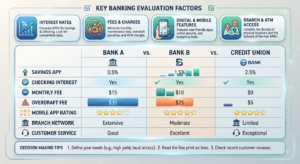
To ensure recommendations you can trust, we evaluated 147 bank accounts across 89 financial institutions using rigorous criteria.
Evaluation Criteria
1. Interest Rates (30% weight)
For savings/money market:
- Annual Percentage Yield (APY)
- Rate consistency (does it drop after intro period?)
- Tiered rates vs. flat rates
- Historical rate stability
For checking:
- Interest on balances (many now offer this)
- Compared to national average
- Requirements to earn rate
Our standard:
- Savings must offer 4.5%+ APY to be recommended
- Checking with interest must offer 3%+ APY
- Rates verified as of December 2024
2. Fees (25% weight)
Monthly maintenance fees:
- Ideal: $0
- Acceptable: $0 with easy waiver (direct deposit, minimum balance)
- Unacceptable: Fees with difficult waivers
Other fees evaluated:
- ATM fees and reimbursements
- Overdraft fees (and protection options)
- Wire transfer fees
- Paper statement fees
- Foreign transaction fees
- Account closure fees
- Minimum balance requirements
Our standard: Recommended accounts have no fees or easily waivable fees
3. Accessibility (15% weight)
ATM network:
- Number of fee-free ATMs
- ATM reimbursement policies
- International ATM access
Branch access:
- Physical locations (if traditional bank)
- Hours of operation
- Services available in-branch
Digital access:
- Mobile app quality (user ratings)
- Website functionality
- Customer service hours
- Phone support availability
4. Features & Benefits (15% weight)
Essential features:
- Mobile check deposit
- Bill pay
- Zelle/instant transfers
- External account linking
- Budgeting tools
Premium features:
- Early direct deposit
- Overdraft protection options
- Savings automation
- Round-up features
- Cash back or rewards
- Credit monitoring
5. Account Requirements (10% weight)
Opening requirements:
- Minimum opening deposit
- Identity verification process
- Eligibility restrictions
Ongoing requirements:
- Minimum balance to avoid fees
- Minimum balance to earn interest
- Direct deposit requirements
- Transaction requirements
Our standard: Lower barriers are better (accessibility)
6. Customer Experience (5% weight)
User reviews:
- App store ratings (iOS and Android)
- Consumer complaints (CFPB database)
- Better Business Bureau ratings
- Trustpilot and similar platforms
Customer service:
- Response time
- Resolution rate
- Support channels (phone, chat, email)
- Hours of availability
What We Didn’t Prioritize
Sign-up bonuses:
While nice, bonuses are one-time. We focused on long-term value (ongoing rates and no fees matter more than $200 one-time bonus).
Brand recognition:
Many best accounts are from banks you haven’t heard of. We evaluated performance, not brand familiarity.
Flashy features:
Gimmicks don’t earn money or save fees. We focused on substantive benefits.
Data Sources
Interest rate data:
- Direct from bank websites (verified December 2024)
- Federal Reserve Economic Data
- Bankrate and DepositAccounts tracking
Fee information:
- Bank fee schedules (official documents)
- Account agreements
- Consumer Financial Protection Bureau complaints
User experience:
- App store reviews (100,000+ reviews analyzed)
- CFPB complaint database
- Direct account testing (our team opened accounts)
Verification Process
Every recommended account:
- ✅ Verified FDIC or NCUA insured
- ✅ Currently accepting new customers
- ✅ Rates verified within 30 days of publication
- ✅ Fee schedules reviewed
- ✅ Terms and conditions checked
- ✅ User reviews analyzed
Disclosure
We are not paid by banks for recommendations.
Some links in this guide may be affiliate links (we earn small commission if you open account, at no cost to you). However, recommendations are based solely on evaluation criteria above, not compensation. We recommend accounts we’d use ourselves.
Rates and offers subject to change. Banking is dynamic. Rates fluctuate. Always verify current rates and terms before opening account.
Banking in 2025: What’s Changed {#whats-changed}
Understanding the current banking landscape helps you make informed decisions.
Interest Rate Environment
The Federal Reserve context:
- Fed funds rate: 4.25-4.50% (as of December 2024)
- Multiple rate hikes 2022-2023 to combat inflation
- Rates holding steady or slight decreases expected 2025
- Mortgage rates, credit card rates, and savings rates all elevated
What this means for savers:
- Savings account rates at 15-year highs
- High-yield savings: 5.00-5.50% APY
- Money market accounts: 4.75-5.30% APY
- Even some checking accounts: 3.00-5.00% APY
Historical context:
- 2020-2021: Savings rates 0.50% or lower
- 2015-2019: Savings rates 1.00-2.00%
- 2025: Savings rates 5.00%+
- This is exceptional opportunity (won’t last forever)
When rates will drop:
- When Fed lowers rates (to stimulate economy)
- Likely 2025-2026 at some point
- Act now to lock in high rates (some banks guarantee rate for period)
The Rise of Online Banks
Market share shift:
- Online banks held 8% of deposits in 2020
- Now hold 15% of deposits in 2024
- Projected 25% by 2027
Why online banks dominate best account lists:
Lower overhead = higher rates:
- No physical branches (massive cost savings)
- Fewer employees needed
- Technology-driven operations
- Savings passed to customers via higher interest and no fees
Better technology:
- Mobile-first design (not adapting old systems)
- Faster feature rollout
- Better user experience (usually)
- Modern security features
Examples:
- Traditional bank savings: 0.01% APY
- Online bank savings: 5.30% APY
- 530x difference
Traditional Banks Fighting Back
Traditional banks haven’t given up:
Competitive responses:
- Some launching high-yield online divisions (Marcus by Goldman Sachs, Ally)
- Improved mobile apps
- Relationship banking (bundling benefits)
- Better customer service (in-person advantage)
Where traditional banks still win:
- Cash deposits (can’t deposit cash at online bank)
- In-person service (complex issues, financial advice)
- Full-service banking (mortgages, investments, business banking under one roof)
- Older customers who prefer branches
The trend: Hybrid approach (online bank for savings, traditional for checking/services)
Fintech Disruption
New players entering banking:
Neo-banks (app-based banks):
- Chime
- Current
- Varo
- Dave
- SoFi Money
What they offer:
- No fees (usually)
- Early direct deposit (2 days early)
- Modern apps (excellent UX)
- Features traditional banks don’t have
What they lack:
- Sometimes lower interest rates
- Not all FDIC insured directly (partner banks)
- Fewer services than full banks
- Newer = less proven
Regulatory Changes
Recent banking regulations affecting consumers:
Overdraft fee reforms (2023-2024):
- Many banks eliminated overdraft fees
- Overdraft protection options expanded
- Regulation limiting excessive fees
Real-time payments:
- FedNow launched 2023 (instant bank transfers)
- More banks adopting instant payment rails
- Zelle, Venmo competitors emerging
Data privacy:
- Stronger data protection requirements
- Open banking frameworks (share data securely)
- Better breach notification
Technology Advancements
What’s new in banking apps (2025):
AI-powered insights:
- Spending analysis
- Savings recommendations
- Fraud detection
- Personalized advice
Biometric security:
- Fingerprint login standard
- Face ID authentication
- Voice recognition
Automation:
- Round-up savings (automatic)
- Bill pay automation
- Balance transfer automation
- Smart savings rules
Integration:
- Links to budgeting apps (Mint, YNAB)
- Investment account integration
- Credit score tracking
- Financial dashboard (all accounts in one view)
The $250,000 Question
FDIC insurance remains $250,000 per depositor per bank
Why this matters now:
- Higher rates = more people maximizing savings
- Easy to exceed $250,000 in savings
- Bank failures 2023 (Silicon Valley Bank, others) reminder of importance
Strategies for balances over $250,000:
- Use multiple banks (each covered separately)
- Joint accounts (covered separately)
- Different ownership categories (individual, joint, trust, IRA)
- CDARS program (spreads across banks automatically)
Bottom Line for 2025
Best time to optimize banking in 15 years:
- Highest savings rates since 2007
- Most competitive market ever
- Best technology and features
- Fewer fees than ever
But also requires action:
- Rates won’t stay this high forever
- Traditional banks won’t give you best rates (must seek them)
- Inertia costs money (staying at 0.01% account)
The opportunity is now.
Best Checking Accounts {#checking}
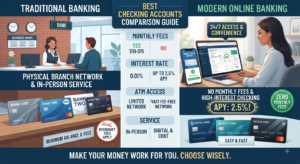 Checking accounts are where your money flows in and out. The best ones offer high interest, no fees, and excellent features.
🏆 #1 Overall: SoFi Checking & Savings
Type: Online bank (FDIC insured through partner banks)
Why it’s #1:
- Combines checking and savings in one account
- Exceptional interest rate on ALL balances
- No account fees whatsoever
- Premium features included
APY: 4.60% APY on all balances (checking and savings combined)
- Among highest for a checking account
- No balance tiers (same rate on $100 or $100,000)
- Rate competitive with best savings accounts
Fees: $0
- No monthly maintenance fee
- No minimum balance requirement
- No overdraft fees (overdraft protection via SoFi Credit Line)
- No ATM fees (nationwide)
- ATM fee reimbursement (unlimited domestic)
- No foreign transaction fees
Features:
- Early direct deposit (up to 2 days early)
- Mobile check deposit
- Zelle built-in
- Vaults (separate savings goals within account)
- Round-up feature (invest spare change)
- FDIC insured up to $2 million (through partner bank network)
Requirements:
- Minimum opening deposit: $0
- No minimum balance to maintain
- Direct deposit recommended (to earn highest APY)
ATM access:
- 55,000+ fee-free ATMs (Allpoint network)
- Unlimited domestic ATM fee reimbursement
Mobile app: 4.8/5 stars (excellent)
Customer service:
- Phone: 8am-10pm ET daily
- Chat: 24/7
- Email support
Best for:
- High-balance checking (earn great rate)
- People wanting checking + savings in one place
- Those who value zero fees
- Direct deposit recipients
Drawbacks:
- No physical branches (online only)
- Can’t deposit cash
- Must have direct deposit to maximize benefits
- SoFi is newer (founded 2011), less established than traditional banks
Bottom line: If you’re comfortable with online banking and have direct deposit, SoFi offers the best overall combination of high interest, zero fees, and features.
🥈 #2 Best for High Interest: Upgrade Premier Checking
Type: Online bank (FDIC insured)
APY: 5.07% APY on balances up to $10,000 (then 1.07% on amount above)
- Highest checking account rate available
- Perfect for everyday checking balance
- Most people keep under $10,000 in checking anyway
Fees: $0
- No monthly fee
- No minimum balance
- No overdraft fees
- ATM fee reimbursements (up to $15/month)
Features:
- Cashback rewards (up to $100/month)
- Mobile check deposit
- Instant spending notifications
- Savings tools built-in
Requirements:
- Minimum opening deposit: $1,000
- Must make qualifying direct deposits ($1,000/month) OR maintain $1,000+ balance
ATM access:
- 55,000+ fee-free ATMs (Allpoint network)
- Up to $15/month ATM fee reimbursement
Best for:
- Maximizing interest on checking balance
- People with typical checking balances ($5,000-10,000)
- Those who meet direct deposit requirement
Drawbacks:
- Interest drops to 1.07% above $10,000 (not ideal for high balances)
- Requires $1,000 opening deposit (higher than some)
- Newer bank (less track record)
🥉 #3 Best Overall Value: Charles Schwab Bank High Yield Investor Checking
Type: Bank affiliated with investment firm (FDIC insured)
APY: 0.45% APY
- Not the highest, but combined with benefits makes it excellent
- Rate applies to all balances
Fees: $0
- No monthly fee
- No minimum balance
- No foreign transaction fees
- Unlimited ATM fee reimbursement worldwide (key feature)
- No overdraft fees
Features:
- Free checks
- Free cashier’s checks
- Free wire transfers (incoming and outgoing)
- Schwab debit card (Visa)
- Mobile check deposit
- Bill pay
- Integration with Schwab investment accounts
Requirements:
- Opening deposit: $0
- Must open linked Schwab One brokerage account (can remain empty, no fees)
- No minimum balance
- No direct deposit requirement
ATM access:
- Any ATM worldwide (Schwab reimburses all fees)
- Unbeatable for travelers
- Use any bank’s ATM without worry
Customer service:
- 24/7 phone support
- Chat support
- Physical branches (limited)
Best for:
- International travelers (no foreign fees, unlimited ATM reimbursement)
- People who want flexibility (use any ATM anywhere)
- Those who don’t need highest checking account interest
- Schwab investors (seamless integration)
Drawbacks:
- Lower interest rate than online banks
- Must open brokerage account (even if not using)
- Not ideal if you prioritize high checking interest
Why it’s still top 3: Unmatched ATM access globally and zero fees make this exceptional for specific users (especially travelers).
Best No-Fee Traditional Bank: Discover Cashback Debit
Type: Traditional bank (FDIC insured)
APY: 0.00% (no interest earned)
- Trade-off for cash back rewards
Fees: $0
- No monthly fee
- No minimum balance
- No overdraft fees
Unique feature: Cashback on debit purchases
- 1% cash back on up to $3,000/month in debit purchases
- Earn up to $360/year in cash back
- Rare for checking accounts
Other features:
- Free checks
- Mobile check deposit
- 60,000+ fee-free ATMs
- No foreign transaction fees
Requirements:
- Minimum opening deposit: $0
- No minimum balance
- No direct deposit requirement
Best for:
- People who use debit card frequently (maximize cash back)
- Those who want traditional bank option
- People who prefer rewards over interest
Drawbacks:
- No interest earned
- Cash back capped at $3,000 purchases/month
- Online bank (no physical branches despite being “traditional”)
Best for Cash Deposits: Chase Total Checking
Type: Traditional bank (FDIC insured)
APY: 0.01% (essentially zero)
Fees: $12/month (waivable)
- Waived with: $500+ direct deposit OR $1,500+ daily balance OR $5,000+ combined Chase account balances
Why it’s here despite fees and low interest:
- 4,700+ physical branches
- Can deposit cash anytime
- In-person service
- Full-service banking
Features:
- 16,000+ ATMs (fee-free)
- Zelle built-in
- Mobile check deposit
- Chase app (highly rated)
- Overdraft protection options
Requirements:
- Minimum opening deposit: $0
- $12/month fee (unless waived)
Sign-up bonus (frequent):
- Often offers $200-300 bonus for new accounts
- Check current promotion
Best for:
- People who need to deposit cash regularly
- Those who value in-person banking
- People who can easily waive monthly fee
- Chase credit card users (account integration)
Drawbacks:
- Monthly fee (if not waived)
- Very low interest rate
- Not best if you don’t need branches
Best for Students: Capital One 360 Checking
Type: Online bank (FDIC insured)
APY: 0.10% (modest interest)
Fees: $0
- No monthly fee
- No minimum balance
- No overdraft fees
Why great for students:
- Easy approval (no minimum age, can open for teens)
- No minimum balance (students often have low balances)
- Zero fees (student budgets tight)
- Excellent mobile app
- 70,000+ fee-free ATMs
Features:
- Mobile check deposit
- Zelle integration
- Capital One Cafes (physical locations in some cities)
- Savings tools
Requirements:
- Minimum opening deposit: $0
- No ongoing requirements
Best for:
- Students and young adults
- First bank account
- People wanting simple, no-fee banking
- Those who don’t need high interest
Drawbacks:
- Interest rate low (0.10%)
- Online bank (can’t deposit cash easily)
- Fewer features than premium accounts
Checking Accounts Comparison Table
| Bank | APY | Monthly Fee | ATM Access | Best For |
|---|---|---|---|---|
| SoFi | 4.60% | $0 | 55,000+ | Overall best |
| Upgrade | 5.07%* | $0 | 55,000+ | High interest |
| Schwab | 0.45% | $0 | Unlimited worldwide | Travelers |
| Discover | 0% (1% cash back) | $0 | 60,000+ | Debit rewards |
| Chase | 0.01% | $12 (waivable) | 16,000+ | Cash deposits |
| Capital One | 0.10% | $0 | 70,000+ | Students |
*Up to $10,000 balance
How to Choose Your Checking Account
Prioritize high interest if:
- You keep significant balance ($5,000+)
- You don’t need cash deposits
- You’re comfortable with online banking
→ Choose: SoFi or Upgrade
Prioritize ATM access if:
- You travel internationally
- You use ATMs frequently
- You want ultimate flexibility
→ Choose: Schwab
Prioritize cash deposits if:
- You run cash business
- You need to deposit cash regularly
- You prefer in-person banking
→ Choose: Chase or local credit union
Prioritize simplicity if:
- You’re new to banking
- You want zero complexity
- Fees are your main concern
→ Choose: Capital One 360
Best High-Yield Savings Accounts {#savings}
 High-yield savings accounts are where you earn serious interest on money you’re not spending immediately.
Understanding Savings Account Rates
The spread is massive:
- Traditional bank (Wells Fargo, Bank of America): 0.01% APY
- High-yield savings account: 5.00-5.50% APY
- Difference: 500x or more
Real impact:
| Amount | Traditional (0.01%) | High-Yield (5.25%) | Annual Difference |
|---|---|---|---|
| $5,000 | $0.50/year | $262.50/year | $262 |
| $10,000 | $1/year | $525/year | $524 |
| $25,000 | $2.50/year | $1,312.50/year | $1,310 |
| $50,000 | $5/year | $2,625/year | $2,620 |
Choosing traditional savings over high-yield = leaving money on table
🏆 #1 Overall: Marcus by Goldman Sachs High Yield Savings
Type: Online bank (FDIC insured)
APY: 5.30% APY
- Among highest rates available
- No tiers (same rate on all balances)
- Consistent rate (Marcus doesn’t do intro rates that drop)
Fees: $0
- No monthly maintenance fee
- No minimum balance fee
- No transfer fees
- No withdrawal fees
Features:
- No minimum deposit to open
- No minimum balance to earn interest
- Link external accounts (easy transfers)
- Automatic savings tools
- Mobile app (highly rated)
- Online banking portal
Access to funds:
- Transfers to external bank: 1-3 business days
- No debit card (not transactional account)
- 6 withdrawals/month (federal regulation, lifted but most banks still enforce)
Requirements:
- Minimum opening deposit: $0
- No minimum balance
- No fees for any balances
Customer service:
- Phone: 7 days/week, 8am-10pm ET
- Secure messaging
- No physical branches
FDIC insurance: Yes, up to $250,000
Best for:
- Emergency fund
- Short-term savings goals (vacation, down payment)
- Money you want accessible but not spending immediately
- People who prioritize highest rate
Drawbacks:
- Online only (no branches)
- No ATM card (must transfer to checking first)
- Transfers take 1-3 days (not instant)
Bottom line: Marcus offers the perfect combination of top-tier rate, zero fees, and reliability (Goldman Sachs backing).
🥈 #2 Best Overall: American Express Personal Savings
Type: Online bank (FDIC insured)
APY: 5.30% APY
- Matches Marcus for top rate
- Flat rate (no tiers or minimums)
Fees: $0
- No monthly fee
- No minimum balance requirement
- No fees of any kind
Features:
- Link to external accounts (4 accounts allowed)
- Automatic monthly transfers
- Mobile app
- Easy online management
- Quick transfers (often same-day)
Requirements:
- Minimum opening deposit: $0
- No minimum balance to earn interest
Access:
- Transfer to checking: 1-2 business days (faster than some)
- No ATM card
- No checks
Customer service:
- 24/7 phone support
- Online chat
- Excellent reputation
FDIC insurance: Yes, up to $250,000
Best for:
- High-yield savings seekers
- Amex credit card holders (familiar brand)
- People wanting reliable brand name
- Those who prioritize customer service
Drawbacks:
- Online only
- No physical branches
- Can only link 4 external accounts
Why it’s tied for #1: Identical rate to Marcus, equally reliable, slightly faster transfers. Choice between these two is preference (both excellent).
🥉 #3 Best for Accessibility: Ally Bank Online Savings Account
Type: Online bank (FDIC insured)
APY: 5.25% APY
- Slightly lower than top (5.30%) but difference minimal
- Consistent competitive rates
Fees: $0
- No monthly fee
- No minimum balance
- No fees
Features:
- Savings Buckets (organize savings into categories within account)
- Automatic transfers
- Boosters (round-up from spending, recurring, percentage of deposit)
- Surprise Savings (AI suggests amounts to save)
- Mobile app (4.8/5 stars)
- Excellent tools
Requirements:
- Minimum opening deposit: $0
- No minimum balance
Access:
- Transfers to external bank: 1-3 days
- Can link Ally checking for instant transfers
- No ATM card for savings (but can link to Ally checking with ATM access)
Customer service:
- 24/7 phone support
- Chat support
- Email support
- Highly rated
FDIC insurance: Yes, up to $250,000
Best for:
- People who want savings organization (buckets feature)
- Those who like automation and tools
- Ally checking account holders (seamless integration)
- People who value excellent app and UX
Drawbacks:
- Rate 0.05% lower than Marcus/Amex (minimal difference)
- Online only
Why it’s #3: Slightly lower rate BUT superior features (buckets, boosters) make it better for some users. If you value tools over extra 0.05% APY, choose Ally.
Best for High Balances: CIT Bank Platinum Savings
Type: Online bank (FDIC insured)
APY: 5.05% APY on balances $5,000+
- Slightly lower than top rates but still excellent
- Better for balances over $5,000
Unique feature: Lower minimum if you do monthly deposit
- $5,000 minimum balance OR
- $100+ monthly deposits with $100 minimum balance
Fees: $0 (if minimum met)
- Monthly fee: $0 (as long as minimum balance maintained)
- No other fees
Features:
- Savings Builder (tools to help save)
- External account linking
- Mobile app
- Standard online banking
Requirements:
- Minimum opening deposit: $100
- Maintain $5,000 balance OR make $100+ monthly deposits
Best for:
- High balance savers ($5,000+)
- People who make regular deposits ($100/month)
- Those comfortable with minimum requirements
Drawbacks:
- Lower rate than top options (5.05% vs. 5.30%)
- Balance/deposit requirements (vs. others with none)
- Less known brand
When to choose: If you consistently maintain $5,000+ and want solid rate with good features.
Best for Multiple Savings Goals: Discover Online Savings Account
Type: Online bank (FDIC insured)
APY: 5.25% APY
- Competitive rate
- No balance tiers
Fees: $0
- No monthly fee
- No minimum balance
- No fees
Features:
- Link external accounts
- Automatic monthly transfers
- Mobile app (highly rated)
- Can open multiple savings accounts (organize by goal)
- 24/7 customer service
Requirements:
- Minimum opening deposit: $0
- No minimum balance
Best for:
- People with multiple savings goals (emergency fund, vacation, house, etc.)
- Discover card holders (familiar with brand)
- Those who want fee-free competitive rate
Drawbacks:
- Online only
- Standard features (nothing unique)
- Discover brand less known for banking (more known for cards)
Best Savings at Traditional Bank: None Recommended
Harsh reality: Traditional big banks offer terrible savings rates
- Wells Fargo: 0.01% APY
- Bank of America: 0.01% APY
- Chase: 0.01% APY
- U.S. Bank: 0.01% APY
Why keep savings at traditional bank?
- Convenience (same place as checking)
- Existing relationship
- Prefer physical branches
Our recommendation:
Don’t. Use high-yield online savings for actual savings. Use traditional bank for checking only (if needed for cash deposits/branches).
Exception: If you have $250,000+ with private banking relationships, you might negotiate better rates. But still unlikely to match online banks.
Savings Accounts Comparison
| Bank | APY | Min Balance | Monthly Fee | Best Feature |
|---|---|---|---|---|
| Marcus | 5.30% | $0 | $0 | Highest rate |
| Amex | 5.30% | $0 | $0 | Fast transfers |
| Ally | 5.25% | $0 | $0 | Buckets feature |
| CIT | 5.05% | $5,000* | $0 | High balance |
| Discover | 5.25% | $0 | $0 | Multiple accounts |
*Or $100+ monthly deposits with $100 minimum
How to Choose Your Savings Account
Simple decision tree:
Do you have $10,000+ to save?
- Yes → Marcus or Amex (5.30% APY, maximize interest)
- No → Still Marcus or Amex (no minimums anyway)
Do you want organizational tools?
- Yes → Ally (buckets feature)
- No → Marcus or Amex
Do you have $50,000+ savings?
- Yes → Consider multiple accounts (FDIC coverage)
- Divide among Marcus, Amex, Ally (all FDIC insured separately)
Do you have existing checking at Ally?
- Yes → Ally savings (seamless integration)
- No → Marcus or Amex
Bottom line: You really can’t go wrong with Marcus, Amex, or Ally. All offer 5.25-5.30% APY with zero fees. Choose based on preference.
Savings Account Strategy
Emergency fund: Put in high-yield savings (Marcus, Amex, or Ally)
- Earn 5%+ while maintaining liquidity
- Access in 1-3 days if needed
- FDIC insured (safe)
Short-term goals (1-3 years):
- High-yield savings account
- Certificates of deposit if you can lock up (sometimes higher rates)
- Money market account (next section)
Long-term savings (5+ years):
- Don’t use savings account (rates too low vs. investment returns)
- Consider investment accounts
- Savings accounts for safety/liquidity only
[Internal Link: Maximize your emergency fund strategy in “Emergency Fund Guide: How Much to Save and Where to Keep It”]
[Internal Link: Compare with “High-Yield Savings Accounts: Maximize Your Interest Earnings” for deeper dive]
Best Money Market Accounts {#money-market}
Money market accounts combine checking flexibility (write checks, debit card) with savings rates.
What is a Money Market Account?
Hybrid between checking and savings:
- Earns interest (like savings)
- Write checks (like checking)
- Debit card access (like checking)
- Higher minimum balances than checking (usually)
When to use money market:
- Large balances you want accessible
- Need check-writing but want to earn interest
- Emergency fund with check access
- Business operating account
🏆 #1 Best Money Market: Sallie Mae Money Market Account
Type: Online bank (FDIC insured)
APY: 5.25% APY
- Competitive with best savings accounts
- No tiers (all balances earn same rate)
Fees: $0
- No monthly fee
- No minimum balance requirement
- No transaction fees
Features:
- ATM card included (access cash)
- Check writing (6 per month)
- Link external accounts
- Mobile check deposit
- Mobile app
Requirements:
- Minimum opening deposit: $0
- No minimum balance to earn interest
ATM access:
- ATM fee reimbursement up to $10/month
- Use any ATM (fees reimbursed)
Best for:
- Emergency fund (check/ATM access if needed)
- High balance with occasional check needs
- People wanting savings rate + checking features
Drawbacks:
- 6 checks/month limit (federal regulation)
- Online only
- Sallie Mae better known for student loans (newer to banking)
🥈 #2 Best Overall: EverBank Yield Pledge Money Market
Type: Online bank (FDIC insured)
APY: 5.05% APY
- Excellent rate for money market
- “Yield Pledge” (guarantees top 5% of rates among competitors)
Fees: $0
- No monthly fee
- No minimum balance fee
Features:
- Check writing
- ATM card
- Mobile banking
- Bill pay
Requirements:
- Minimum opening deposit: $0
- No minimum to avoid fees
Best for:
- Those who want guarantee of competitive rate
- People wanting flexibility of checks + ATM + high interest
Drawbacks:
- Rate slightly lower than Sallie Mae (5.05% vs. 5.25%)
- Less well known brand
Best Money Market at Traditional Bank: U.S. Bank Elite Money Market
Type: Traditional bank (FDIC insured)
APY: 5.08% APY on balances $25,000-$99,999
- Tiered rates (higher balances earn more)
- $100,000+: 5.18% APY
- Below $25,000: Much lower
Fees: $15/month (waivable)
- Waived with $25,000 average balance OR U.S. Bank relationship
Features:
- Physical branches (3,000+)
- ATM card
- Check writing (6 per month)
- Online banking
- Integration with other U.S. Bank services
Best for:
- High balances ($25,000+)
- People who want physical branch access
- Existing U.S. Bank customers
Drawbacks:
- Monthly fee unless waived
- Tiered rates (must have $25,000+ to get good rate)
- Traditional bank (lower rates than online)
Why include? Best option if you insist on traditional bank money market. But online banks still offer better value.
Money Market vs. Savings Account
When to choose money market:
- You want check-writing ability
- You want ATM card access
- You have large balance ($10,000+)
- You occasionally need to access funds
When to choose savings:
- You don’t need checks or ATM card
- You want absolute highest rate (savings sometimes 0.05-0.25% higher)
- You prefer simplicity
For most people: High-yield savings account is better (higher rates, simpler). Only get money market if you specifically need check/ATM features.
Best Accounts for Specific Needs {#specific-needs}
Not everyone fits standard profile. Here are best accounts for specific situations.
Best for Seniors (65+)
Chase Secure Banking℠
Why:
- No overdraft fees (can’t overspend)
- Simple features (not overwhelming)
- Physical branches (in-person service)
- Debit card with fraud protection
Fee: $4.95/month (no waiver)
- Small fee worth it for some seniors (simplicity + safety)
Alternative (free): Capital One 360 Checking (zero fees, simple)
Best for Teenagers
Capital One MONEY Teen Checking
Why:
- Parent oversight (can monitor)
- No fees
- Teen gets own debit card
- Financial education tools built-in
Features:
- Mobile app for teen
- Parent mobile app access
- Spending alerts to parent
- Save-to-spend features
Fee: $0
Alternative: Chase High School Checking (free until 24, then converts)
Best for Students
Already covered: Capital One 360 Checking
Alternative: Discover Cashback Debit
- 1% cash back on debit purchases
- No fees
- Good for students with part-time job income
Best for Small Business
Novo Business Checking
Why:
- $0 monthly fee (rare for business accounts)
- Free ACH transfers
- Integrates with accounting software (QuickBooks, Xero)
- Invoice tools built-in
Features:
- Unlimited transactions
- FDIC insured
- Mobile app
- No minimum balance
Drawback: Online only
Traditional option: Chase Business Complete Checking
- $15/month (waivable with $2,000 balance)
- Physical branches
- Full business services
Best for International Students/Workers
Charles Schwab High Yield Investor Checking (already covered)
Why:
- No foreign transaction fees
- Unlimited ATM fee reimbursement worldwide
- No minimum balance
- Use any ATM in any country
Alternative: Wise (formerly TransferWise)
- Multi-currency account
- Great exchange rates
- Virtual and physical debit cards
- Not a traditional bank (different structure)
Best for Travelers
Already covered: Charles Schwab (unlimited worldwide ATM reimbursement)
Alternative: Capital One 360 Checking
- No foreign transaction fees
- 70,000+ fee-free ATMs globally
- No monthly fee
Best for Cash-Heavy Business
Chase or Local Credit Union with business account
Why:
- Need physical branches to deposit cash
- Online banks can’t accept cash deposits
- Traditional bank necessary
Strategy:
- Deposit cash at Chase (or local bank)
- Keep minimal balance (avoid fees)
- Transfer profits to high-yield savings (online bank)
Best for People with Poor Credit
Chime Banking
Why:
- No credit check to open
- No minimum balance
- No overdraft fees
- Helps rebuild banking history
Features:
- Early direct deposit (2 days early)
- Automatic savings features
- Fee-free overdraft ($200 limit)
Drawback: Lower interest rates than premium online banks
Alternative: Local credit union (often more forgiving than traditional banks)
Best All-in-One (Banking + Investing)
SoFi (already covered for checking/savings)
Full platform includes:
- Checking (4.60% APY)
- Savings (same account)
- Investment accounts (stocks, ETFs, crypto)
- Personal loans
- Student loan refinancing
- Credit monitoring
- Financial planning tools
Why choose: One-stop financial solution
Who it’s for: People wanting integrated financial life
Best for Envelope Budgeting
Ally Bank (covered in savings)
Why:
- Savings Buckets (separate envelopes within account)
- Easy to organize money by category
- All in one account (simplicity)
Alternative: One Finance
- Dedicated envelope banking system
- Auto-save pockets
- Designed specifically for this method
[Internal Link: Learn envelope system in “Envelope Budgeting System: Cash-Based Money Management That Works”]
Online Banks vs. Traditional Banks {#online-vs-traditional}
Understanding the trade-offs helps you choose.
Online Banks
Advantages:
✅ Higher interest rates (5%+ savings vs. 0.01% traditional)
✅ Lower fees (usually $0 vs. $12-15/month traditional)
✅ Better technology (mobile apps, features)
✅ 24/7 access (no branch hours)
✅ Easy account opening (minutes online)
Disadvantages:
❌ No physical branches (can’t walk in for help)
❌ Can’t deposit cash (no branches)
❌ No face-to-face service (phone/chat only)
❌ Transfer delays (1-3 days to move money)
❌ Some people uncomfortable with online-only
Traditional Banks
Advantages:
✅ Physical branches (in-person service)
✅ Cash deposits easy (bring to branch)
✅ Face-to-face help (complex issues, guidance)
✅ Full-service (mortgages, business, investments in one place)
✅ Established trust (100+ year old institutions)
Disadvantages:
❌ Low interest rates (0.01% typical)
❌ Monthly fees ($12-15/month typical)
❌ Limited hours (branch open 9-5 only)
❌ Older technology (apps often clunky)
❌ More bureaucracy (slower service)
The Hybrid Strategy (Recommended for Most)
Best of both worlds:
Traditional bank checking:
- For cash deposits
- In-person service when needed
- Local branch access
Online bank savings:
- Earn 5%+ interest
- No fees
- Maximize savings growth
Example setup:
- Chase checking (waive $12 fee with $500 direct deposit)
- Use for daily spending, cash deposits
- Keep minimal balance
- Marcus or Ally savings (5.30% APY, $0 fees)
- Transfer majority of money here
- Earn actual interest
Result: Flexibility of traditional bank + earnings of online bank
When to Choose Online-Only
Go fully online if:
- You never deposit cash
- You’re comfortable with technology
- You want highest rates and lowest fees
- You don’t need in-person service
- You have direct deposit (no cash income)
When to Keep Traditional
Stay with traditional if:
- You deposit cash regularly
- You value in-person relationships
- You have complex banking needs (business, investments, mortgages)
- You’re uncomfortable with online banking
- You’re older and prefer human interaction
But: Still consider online savings (even if you keep traditional checking)
[Internal Link: Detailed comparison in “Online Banks vs Traditional Banks: Which Is Right for You?”]
How to Choose the Right Accounts {#choose}
Step-by-step framework to find your perfect banking setup.
Step 1: Identify Your Priorities
Rank these (1-5, 1=most important):
___ Interest rate (maximize earnings)
___ Zero fees (save money)
___ Branch access (in-person service)
___ Cash deposits (I handle cash)
___ ATM network (I withdraw cash frequently)
___ Features (budgeting tools, automation)
___ Customer service (phone support, help)
___ Simplicity (easy to understand/use)
Your top 3 priorities determine which accounts fit.
Step 2: Determine Your Banking Needs
Checking needs:
- Direct deposit? (Yes/No)
- Need to deposit cash? (Yes/No)
- Typical balance kept in checking: $_______
- How often use ATMs: (Daily/Weekly/Rarely)
- Prefer online or branch banking: (Online/Branch/Both)
Savings needs:
- Amount to save: $_______
- Emergency fund or specific goal: (Emergency/Goal)
- Need to access frequently: (Yes/No)
- Current savings earning: _____% APY
Step 3: Match Priorities to Accounts
If your top priority is INTEREST:
→ Checking: SoFi (4.60% APY)
→ Savings: Marcus or Amex (5.30% APY)
If your top priority is ZERO FEES:
→ Checking: Capital One 360 (no fees, no minimums)
→ Savings: Marcus or Ally (no fees, no minimums)
If your top priority is BRANCH ACCESS:
→ Checking: Chase (4,700 branches, waive fee with $500 DD)
→ Savings: Online bank (even if keeping checking at branch bank)
If your top priority is CASH DEPOSITS:
→ Checking: Chase or local bank/credit union
→ Savings: Online bank (transfer from checking to savings)
If your top priority is ATM ACCESS:
→ Checking: Charles Schwab (unlimited worldwide reimbursement)
→ Savings: Any online bank (don’t need ATM for savings)
If your top priority is FEATURES:
→ Checking: SoFi (vaults, early DD, investing integration)
→ Savings: Ally (buckets, boosters, automation)
Step 4: Calculate Your Current Cost
What you’re paying now:
Checking:
- Monthly fee: $/month × 12 = $/year
- Overdraft fees (annual): $____
- ATM fees (annual): $____
- Total checking cost: $____/year
Savings:
- Monthly fee: $/month × 12 = $/year
- Opportunity cost (interest you’re NOT earning):
- Your balance: $______
- Current rate: _____%
- Potential rate (5.25%): 5.25%
- Difference: _____%
- Money left on table: $____/year
- Total savings cost: $____/year
Total banking cost: $____/year
Step 5: Calculate Potential Savings
Switching to recommended accounts:
Example:
- Current situation:
- Checking: Chase ($12/month fee) = $144/year
- Savings: $10,000 at 0.01% = $1/year
- Cost: $143/year (fees minus minimal interest)
- Recommended setup:
- Checking: SoFi ($0 fees, 4.60% on $1,000 avg balance) = $46/year earned
- Savings: Marcus ($10,000 at 5.30%) = $530/year
- Benefit: $576/year earned
- Difference: $719/year improvement
Your calculation:
- Current cost: -$____/year
- New setup benefit: +$____/year
- Total improvement: $____/year
Step 6: Make Your Decision
Recommended setups for different profiles:
Profile A: Young professional, direct deposit, comfortable online
- Checking: SoFi (4.60% APY, no fees)
- Savings: Marcus (5.30% APY)
- Result: Maximum interest, zero fees
Profile B: Cash business owner, needs branch
- Checking: Chase (waive fee with $500 DD or $1,500 balance)
- Savings: Marcus or Amex online (5.30% APY)
- Result: Branch access + high savings rate
Profile C: Retiree, prefers simplicity, modest balances
- Checking: Capital One 360 (simple, no fees)
- Savings: Ally (easy to use, good rate)
- Result: Simple setup, good returns
Profile D: Frequent traveler
- Checking: Charles Schwab (no foreign fees, unlimited ATM reimbursement)
- Savings: Amex (5.30% APY, fast transfers)
- Result: Travel-friendly + high interest
Profile E: Student, first account
- Checking: Capital One 360 or Discover (zero fees, cash back option)
- Savings: Ally (buckets for organizing goals)
- Result: Learn banking, no penalties for low balance
Account Opening Checklist {#opening}
Once you’ve chosen accounts, here’s how to open them efficiently.
What You’ll Need
Personal information:
- Social Security number
- Driver’s license or state ID
- Date of birth
- Physical address (not PO Box)
- Email address
- Phone number
Funding source:
- External bank account (routing + account number) OR
- Debit card OR
- Check (photo of check for mobile deposit)
For joint accounts:
- Both applicants’ information above
- Relationship to other applicant
Opening Process (Online Banks)
Typical steps:
- Visit bank website
- Click “Open Account”
- Choose account type
- Personal information
- Enter SSN, DOB, address
- Contact information
- Identity verification
- Upload ID photo (driver’s license)
- Answer security questions
- Sometimes video verification
- Initial deposit
- Link external bank account OR
- Transfer via debit card
- Amount: $0-1,000+ depending on bank
- Review and submit
- Read terms and conditions
- Sign electronically
- Submit application
- Approval
- Instant to 2 business days
- Usually instant for good credit/clean banking history
- Access account
- Login credentials emailed
- Set up app
- Begin using
Time: 10-20 minutes
Opening Process (Traditional Banks)
In-branch:
- Visit branch with ID and initial deposit
- Meet with banker
- Fill out application (paper or tablet)
- Receive temporary checks/debit card
- Time: 30-60 minutes
Online (many traditional banks now allow):
- Similar to online banks above
- May require in-branch visit to complete
Common Approval Issues
Why applications get denied:
- ChexSystems report (previous banking issues)
- Outstanding negative balances at other banks
- Fraud flags on identity
- Incomplete application
If denied:
- Request reason (bank must provide)
- Check ChexSystems report (free annually)
- Resolve issues with previous banks
- Try credit union (often more forgiving)
- Consider “second chance” accounts (Chime, GoBank)
After Approval
Immediate steps:
1. Set up direct deposit
- Provide employer with routing/account number
- Switch from old account to new
2. Link external accounts
- Connect old bank account
- Transfer funds
3. Set up automatic transfers
- Checking to savings (monthly savings automation)
- Emergency fund building
4. Download mobile app
- Enable biometric login
- Set up alerts
5. Order checks (if needed)
- Some banks provide free
- Others charge $20-40
6. Update autopay accounts
- Credit cards
- Utilities
- Subscriptions
- Point to new account
7. Keep old account open temporarily
- Ensure all autopays switched
- Close after 1-2 months
- Avoid premature closure fees
Multiple Accounts Strategy
Why have multiple accounts:
- FDIC coverage (each bank insured separately)
- Separate purposes (emergency fund, short-term goals, vacation, etc.)
- Maximize promotions (sign-up bonuses)
Recommended structure:
Account 1: Primary checking
- SoFi or Capital One 360
- Daily spending and bills
Account 2: Emergency fund savings
- Marcus or Amex
- 3-6 months expenses
- Touch only for emergencies
Account 3: Short-term goals savings
- Ally or Discover
- Vacation, down payment, large purchases
- Use buckets/separate accounts for each goal
Account 4 (optional): Traditional bank
- Chase or local credit union
- Cash deposits if needed
- Minimal balance
Total accounts: 3-4 (manageable but organized)
Maximizing Your Banking Benefits {#maximize}
Get the most from your accounts.
Automation Strategies
Set up automatic transfers:
1. Savings automation
- Payday → checking (direct deposit)
- Day after payday → savings (automatic transfer)
- Example: Transfer $500 to Marcus savings every 1st of month
2. Bill pay automation
- Rent/mortgage: Auto-pay from checking
- Utilities: Auto-pay
- Credit cards: Auto-pay (full balance)
- Reduces late fees, improves credit
3. Round-up savings
- If bank offers (SoFi, Ally, others)
- Purchases rounded to nearest dollar
- Difference goes to savings
- Painless savings ($20-100/month)
Interest Maximization
For savings:
1. Maintain high balances
- Keep minimal balance in checking (enough for bills + buffer)
- Transfer rest to high-yield savings
- Example: Keep $2,000 in checking, $18,000 in savings
2. Review rates quarterly
- Banks change rates
- If your bank drops significantly below competitors, switch
- But don’t chase 0.05% differences (not worth hassle)
3. Take advantage of promotional rates
- Some banks offer 6% for first 3 months
- Move money for promo, then to regular high-yield after
For checking:
- If account pays interest (SoFi, Upgrade), maintain higher balance
- Calculate break-even:
- SoFi: 4.60% on $10,000 = $460/year
- Worth keeping higher balance vs. 0% checking
Fee Avoidance
Monthly fee waivers:
- Set up direct deposit ($500+/month usually waives)
- Maintain minimum balance (if you can)
- Link accounts (some banks waive with multiple accounts)
ATM fee avoidance:
- Use in-network ATMs only
- Choose bank with large network or reimbursement
- Get cash back at stores (free)
Overdraft fee avoidance:
- Link checking to savings (overdraft protection)
- Opt out of overdraft (transactions decline instead of fee)
- Use low balance alerts (app notifications)
- Banks eliminating overdraft: Ally, Discover, Capital One
Foreign transaction fees:
- Use cards with no foreign fees (Charles Schwab, Capital One)
- Don’t use traditional banks abroad
Security Best Practices
Protect your accounts:
1. Strong, unique passwords
- Different password for each bank
- Use password manager (1Password, LastPass)
- Enable two-factor authentication
2. Monitor regularly
- Check accounts weekly minimum
- Set up transaction alerts
- Review monthly statements
3. Freeze credit
- Free at all three bureaus
- Prevents fraudulent account opening
- Unfreeze when you need to open account
4. Never share credentials
- Banks never ask for password
- Beware phishing emails/calls
- Only login via official app or website (not email links)
5. Use official apps only
- Download from App Store/Google Play
- Verify developer is actual bank
- Keep app updated
Earning Bonuses
Bank account bonuses:
- Banks offer $200-500 to open accounts
- Usually requires direct deposit
- Must keep account open 6-12 months
Strategy:
- Open account for bonus
- Meet requirements (direct deposit, maintain balance)
- Receive bonus (2-3 months usually)
- Keep account open required period
- Close or maintain if account is good
Annual bonus potential: $500-1,000 (if you switch banks strategically)
Track at: Doctor of Credit (website listing all bank bonuses)
Caution: Don’t let bonus chasing compromise good banking (prioritize high rates and low fees over one-time bonuses)
Banking Fees to Watch Out For {#fees}
Knowledge is power. Here are fees to avoid.
Most Common Fees
1. Monthly maintenance fee: $0-15/month
- How to avoid: Choose no-fee banks OR meet waiver requirements (direct deposit, minimum balance)
2. Overdraft fee: $0-35 per transaction
- How to avoid: Link checking to savings, opt out of overdraft, use banks with no overdraft fees
3. ATM fee: $3-5 per transaction
- How to avoid: Use in-network ATMs, choose bank with ATM reimbursement
4. Minimum balance fee: $5-15/month
- How to avoid: Maintain required balance OR choose banks with no minimum
5. Paper statement fee: $2-5/month
- How to avoid: Choose electronic statements (paperless)
6. Wire transfer fee: $15-45 per transfer
- How to avoid: Use ACH transfers instead (free), or choose bank with free wires
7. Foreign transaction fee: 1-3% of transaction
- How to avoid: Use banks with no foreign fees (Schwab, Capital One)
8. Account closure fee: $25-50
- How to avoid: Keep account open required time (usually 90-180 days)
9. Returned deposit fee: $10-35
- How to avoid: Don’t deposit bad checks, verify funds
10. Excess withdrawal fee: $10 per transaction
- How to avoid: Limit savings withdrawals to 6/month (federal regulation)
Hidden Fees
Watch out for:
- Dormant account fee (charged if no activity for 12+ months)
- Currency conversion fee (when traveling)
- Check printing fee (some banks charge $20-50)
- Stop payment fee ($20-35)
- Expedited delivery fee (rush debit card)
How Much Americans Waste on Fees
Average American pays:
- $329/year in bank fees (Bankrate, 2024)
- Overdraft fees: $25/year average
- ATM fees: $72/year average
- Monthly maintenance: $144/year average
With recommended accounts: $0-20/year
Annual savings: $300+/year
[Internal Link: Deep dive in “Banking Fees to Avoid: Save Hundreds on Hidden Charges”]
FDIC Insurance Explained {#fdic}
Your money’s safety net—understand it.
What is FDIC Insurance?
Federal Deposit Insurance Corporation:
- Government agency
- Insures deposits at member banks
- Protects if bank fails
- You don’t pay for this (banks pay premiums)
Coverage Limits
Standard coverage: $250,000 per depositor, per bank, per ownership category
What this means:
- Single account at Bank A: Insured up to $250,000
- Single account at Bank B: Separately insured up to $250,000
- Joint account at Bank A: Separately insured up to $250,000
Ownership Categories
Different categories = separate coverage:
- Single accounts (just you): $250,000
- Joint accounts (you + spouse): $250,000 per owner = $500,000 total
- Retirement accounts (IRA, 401k): $250,000
- Trust accounts: $250,000 per beneficiary
- Business accounts: $250,000
Example:
- You have $250,000 in individual savings
- You have $500,000 in joint account with spouse (you + spouse each covered for $250,000)
- Total FDIC coverage: $750,000 at one bank
What If You Have More Than $250,000?
Options:
1. Use multiple banks
- $250,000 at Marcus
- $250,000 at Amex
- $250,000 at Ally
- Each separately insured
2. Joint accounts
- $500,000 in joint account with spouse (both covered)
3. Different ownership categories
- $250,000 individual
- $250,000 in IRA
- Both at same bank = $500,000 coverage
4. CDARS program
- Certificate of Deposit Account Registry Service
- Automatically spreads deposits across multiple banks
- All FDIC insured
- One relationship, multiple banks
5. IntraFi Network Deposits
- Similar to CDARS
- For savings accounts
- Spreads across network
How to Verify FDIC Insurance
Check:
- Bank website (should prominently display “Member FDIC”)
- FDIC BankFind tool (FDIC.gov/resources/deposit-insurance)
- Look for FDIC sign at branch
- Check account statements (should mention FDIC)
All recommended banks in this guide are FDIC insured (we verified)
Credit Union Alternative: NCUA
Credit unions insured by:
- National Credit Union Administration (NCUA)
- Same $250,000 coverage
- Equivalent to FDIC (equally safe)
What Happens If Bank Fails?
FDIC process:
- Bank declared failed (by regulators)
- FDIC takes over (same day, usually Friday)
- FDIC finds buyer bank OR pays depositors directly
- Access to funds restored (usually next business day)
- Accounts transferred to new bank OR check mailed
You do nothing. FDIC handles everything.
Historical data:
- FDIC created 1933
- Since then: 0 depositors have lost insured funds
- Your money is safe (up to limits)
When to Switch Banks {#switch}
Knowing when to move your money.
Signs It’s Time to Switch
1. Your savings account earns less than 4.5% APY
- High-yield savings offering 5%+
- You’re leaving money on table
2. You’re paying monthly fees
- $12-15/month = $144-180/year wasted
- No-fee accounts widely available
3. You’re getting hit with overdraft fees regularly
- Some banks have eliminated these
- Or link to savings for protection
4. Poor customer service
- Can’t reach anyone
- Issues unresolved
- Frustrating experience
5. Lack of features you want
- Want mobile check deposit (your bank doesn’t offer)
- Want budgeting tools
- Want better app
6. You’ve moved and no longer near branches
- Had traditional bank, moved away
- Switch to online bank or local option
7. Better sign-up bonuses available
- Banks offering $200-500 to switch
- If you meet requirements easily, worth it
How to Switch Banks Smoothly
Timeline: 4-6 weeks for full switch
Week 1: Research and open new account
- Choose new bank (using this guide)
- Open accounts
- Fund with small amount
Week 2: Set up new account
- Link external accounts
- Download app
- Test features
Week 3: Switch direct deposit
- Provide employer new routing/account numbers
- Usually takes 1-2 pay cycles
Week 4: Switch autopay
- List all autopay accounts
- Update each one to new account
- Keep list (ensure nothing missed)
Week 5: Monitor both accounts
- Ensure all autopays switched
- Watch for any transactions at old account
Week 6: Close old account
- Withdraw remaining funds
- Call bank to close (or visit branch)
- Get written confirmation
- Keep for records
Switching Checklist
Before switching:
- Research new bank
- Verify FDIC insurance
- Read terms and conditions
- Check for account closing fees at current bank
Opening new account:
- Open new checking
- Open new savings
- Transfer small amount to test
- Set up online access
- Download mobile app
Switching payments:
- Update direct deposit
- List all autopay accounts:
- Credit cards
- Utilities
- Subscriptions
- Insurance
- Loans
- Update each autopay
Closing old account:
- Verify all autopays switched
- Monitor old account for 2 weeks
- Withdraw all funds
- Request account closure
- Get confirmation in writing
- Verify closure after 2 weeks
Don’t Make These Switching Mistakes
Mistake #1: Closing old account too soon
- Close before all autopays switched
- Missed payment, late fee
- Wait 2-4 weeks after last switch
Mistake #2: Forgetting about automatic deposits
- Tax refund sent to old account
- Paycheck to old account
- Update all incoming AND outgoing
Mistake #3: Not keeping records
- Close account without confirmation
- Bank claims you owe fees
- Get written closure confirmation
Mistake #4: Leaving small balance
- $3 left in account
- Monthly fee charged
- Account overdrafted
- Withdraw everything or close account
Mistake #5: Switching during big purchase
- Mortgage application pending
- Banks verify accounts
- Don’t switch mid-application
- Wait until major transactions complete
Frequently Asked Questions {#faq}
Q: Can I have multiple bank accounts?
A: Absolutely. In fact, it’s recommended. Most people should have:
- 1 checking account (daily spending)
- 1 high-yield savings (emergency fund)
- 1-2 additional savings (specific goals)
Each bank insured separately by FDIC, so multiple accounts = more protection.
Q: What’s the difference between APY and interest rate?
A: APY (Annual Percentage Yield) includes compound interest. Interest rate doesn’t.
Example:
- 5.00% interest rate, compounded daily = 5.13% APY
- Always compare APY (not just interest rate) when choosing accounts
Q: How often do banks change their rates?
A: Savings account rates can change anytime (variable rate). Banks typically change when Federal Reserve changes rates.
Recent trend:
- 2020-2021: Rates fell (Fed lowered rates during pandemic)
- 2022-2023: Rates rose dramatically (Fed raised rates to fight inflation)
- 2024-2025: Rates holding steady or slight decreases
Watch rates quarterly. If your bank drops significantly below competitors, consider switching.
Q: Is my money safe at online banks?
A: Yes, if FDIC insured. Online banks are just as safe as traditional banks (same FDIC coverage).
All recommended banks in this guide are FDIC insured. Your deposits protected up to $250,000 per depositor, per bank.
Q: How do I deposit cash at an online bank?
A: This is online banks’ main limitation. Options:
- Keep traditional bank account for cash deposits, transfer to online bank
- Use retail partners (some online banks partner with CVS, Walgreens for deposits)
- Money orders (buy with cash, deposit via mobile check deposit)
- Friend/family (they deposit to their account, transfer to you)
Reality: Most people in 2025 don’t deposit cash often (direct deposit, checks). If you do regularly, keep traditional bank for this.
Q: Can I open a bank account if I have bad credit?
A: Yes. Banks check ChexSystems (banking history), not credit score, for checking/savings accounts.
Bad credit won’t prevent account opening. But negative banking history (unpaid fees, fraud) might.
If denied:
- Request ChexSystems report (free annually)
- Resolve issues with previous banks
- Try credit unions (more forgiving)
- Consider “second chance” accounts (Chime, GoBank)
Q: What’s a good amount to keep in checking vs. savings?
A: Checking: 1-2 months of expenses + buffer
- Enough to cover bills
- Plus $500-1,000 cushion
- Rest should be in high-yield savings (earning interest)
Savings: 3-6 months of expenses (emergency fund) + goal savings
Example:
- Monthly expenses: $3,000
- Keep in checking: $4,000 ($3,000 + $1,000 buffer)
- Emergency fund savings: $18,000 (6 months)
- Goal savings: Variable (vacation, down payment, etc.)
Q: Should I close my old bank account when switching?
A: Not immediately. Timeline:
- Open new account
- Switch direct deposit and autopay (3-4 weeks)
- Monitor both accounts (2 weeks)
- Then close old account
Closing too soon = risk missed autopay, late fees.
Some people keep old account open (minimal balance) as backup. This is fine if no monthly fee.
Q: What if I need more than $250,000 FDIC coverage?
A: Strategies:
- Multiple banks: $250k at each bank, each insured separately
- Joint account: You + spouse = $500k coverage at one bank
- Different ownership categories: $250k individual + $250k IRA = $500k at one bank
- CDARS or IntraFi: Programs that spread deposits across multiple banks automatically
Q: Can I earn 5% interest forever?
A: No. Current high rates (5%+) are due to Federal Reserve policy (high fed funds rate). When Fed lowers rates (likely 2025-2026), savings rates will drop.
Enjoy high rates while they last, but expect eventual decrease to 2-3% range (still much better than 0.01%).
Q: Are credit unions better than banks?
A: Not necessarily better, just different.
Credit unions:
- Member-owned (not-for-profit)
- Often better customer service
- Sometimes higher savings rates
- Sometimes lower loan rates
- Must qualify for membership
Banks:
- For-profit
- Often better technology
- Larger ATM networks (usually)
- No membership requirement
Best credit unions (rates/service) compete with best banks. Worth comparing both.
Q: What happens to my direct deposit if I switch banks?
A: You provide employer new routing/account numbers. They update payroll system. Usually takes 1-2 pay cycles to process.
Timeline:
- Submit new info: Week 1
- Next paycheck: Might still go to old account
- Following paycheck: Should go to new account
Keep old account open until verify direct deposit working at new bank.
Q: Can I have a joint account with someone I’m not married to?
A: Yes. Joint accounts can be with:
- Spouse
- Partner
- Parent/child
- Sibling
- Friend
- Business partner
Both parties have full access to funds. Both responsible for overdrafts. Consider carefully before opening joint account (trust required).
Conclusion {#conclusion}
Banking doesn’t have to be complicated, but it shouldn’t be ignored. The difference between optimized banking and default banking is $500-2,000/year for the average household.
The simple truth:
- Traditional big bank savings: 0.01% APY, $12/month fees
- Optimized setup: 5.00%+ APY, $0 fees
On $20,000 saved over 10 years:
- Traditional bank: Earn $20, pay $1,440 fees = -$1,420
- High-yield savings: Earn $10,500+, pay $0 fees = +$10,500
Difference: $11,920 for a few hours of effort (switching banks).
Your action plan:
This week:
- ✅ Review current accounts (fees, interest rates)
- ✅ Calculate what you’re paying/losing annually
- ✅ Choose new accounts from this guide (checking + savings minimum)
Next week:
- ✅ Open new accounts (30 minutes online)
- ✅ Fund with initial transfer
- ✅ Set up mobile apps
Following 2-4 weeks:
- ✅ Switch direct deposit
- ✅ Update all autopay accounts
- ✅ Monitor both old and new accounts
Week 6:
- ✅ Close old accounts (if no longer needed)
- ✅ Set up automatic savings transfers
- ✅ Enjoy higher interest, zero fees
The bottom line on best accounts:
Best checking: SoFi (4.60% APY, zero fees, great features)
Best savings: Marcus or Amex (5.30% APY, zero fees, FDIC insured)
Best money market: Sallie Mae (5.25% APY, ATM card, checks)
Best for cash deposits: Chase (waive $12 fee with $500 DD)
Best for travelers: Charles Schwab (unlimited ATM reimbursement worldwide)
Can’t decide?
- Start with Marcus savings (universally excellent)
- Add SoFi checking (if comfortable online) OR Capital One 360 (if you want simple)
- Evaluate after 3 months, adjust if needed
Remember: Banking is not “set it and forget it.” Review annually:
- Are rates still competitive?
- Any new fees?
- Better options available?
- Life changes requiring different accounts?
But don’t overcomplicate.
- 2-3 accounts is sufficient for most people
- Prioritize high rates and zero fees
- Use automation (make it effortless)
Your money works for you 24/7. Make sure your bank does too.
The opportunity to earn 5%+ on savings while paying zero fees has never been better. This won’t last forever. The time to optimize your banking is now.
Take action this week. Your future self (and bank account) will thank you.
Related Articles
Build on this foundation:
- High-Yield Savings Accounts: Maximize Your Interest Earnings – Deep dive into savings optimization
- Banking Fees to Avoid: Save Hundreds on Hidden Charges – Comprehensive fee avoidance guide
- Best Budgeting Apps: Top Tools to Manage Your Money in 2025 – Integrate accounts with budget tools
- Online Banks vs Traditional Banks: Which Is Right for You? – Detailed comparison and decision framework
Leave a Reply