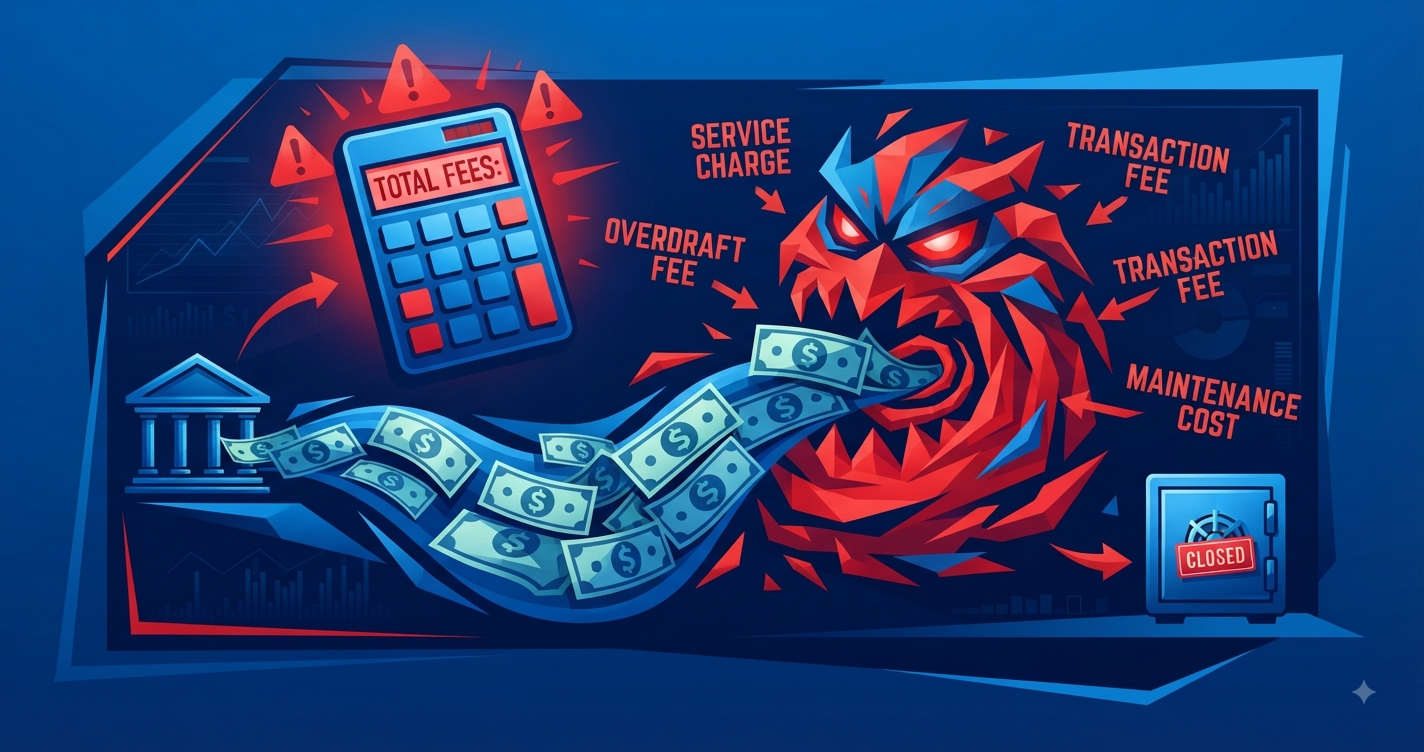
Did you know the average American pays over $329 per year in banking fees? That’s money disappearing from your account for things you might not even realize you’re being charged for.
Banks collected a staggering $8.4 billion in overdraft fees alone in 2023, according to the Consumer Financial Protection Bureau. Add monthly maintenance fees, ATM charges, wire transfer costs, and dozens of other “convenience” fees, and you’re looking at hundreds—sometimes thousands—of dollars annually.
The worst part? Most of these fees are completely avoidable.
Banks count on customers not reading the fine print or understanding their fee schedules. They design complex fee structures that catch even financially savvy people off guard. A single oversight—like letting your account dip $5 below the minimum balance—can trigger a cascade of charges.
But here’s the good news: once you understand the most common banking fees and how they work, you can easily sidestep them and keep that money where it belongs—in your pocket.
In this comprehensive guide, you’ll discover the 15 most common banking fees, exactly how to avoid each one, and which banks offer truly fee-free alternatives.
Let’s stop giving away your hard-earned money.
The True Cost of Banking Fees
Before diving into specific fees, let’s understand the bigger picture.
How Much Are Banking Fees Really Costing You?
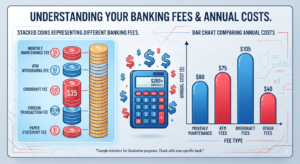
According to a 2024 Bankrate study, here’s what the average consumer pays annually:
- Monthly maintenance fees: $180 ($15/month × 12 months)
- Overdraft fees: $105 (3 incidents × $35)
- ATM fees: $72 (out-of-network usage)
- Minimum balance fees: $60
- Wire transfer fees: $45
- Miscellaneous charges: $67
Total Average Annual Banking Fees: $529
That’s more than most Americans have in their savings account! Over 10 years, these fees could cost you $5,290—money that could be earning interest instead.
Why Banks Charge So Many Fees
Banks aren’t just providing services—they’re profit-driven businesses. Fee income represents a significant revenue stream:
- Predictable Revenue: Unlike interest rates that fluctuate, fees provide consistent income
- Low Customer Awareness: Many people don’t monitor small charges closely
- Competitive Pressure: Low interest rates forced banks to find alternative revenue sources
- Psychological Pricing: Small monthly fees seem less painful than higher interest rates
Understanding this helps you realize: banks design fee structures to maximize their profits, not your financial health.
The 15 Most Common Banking Fees (And How to Avoid Them)
1. Monthly Maintenance Fees ($10-$35/month)
What It Is:
A recurring charge simply for keeping your account open, regardless of whether you use it.
Average Cost: $15/month = $180/year
How to Avoid It:
✅ Choose fee-free banks: Many online banks like Ally, Discover, and Capital One 360 charge zero monthly fees
✅ Meet minimum balance requirements: Traditional banks often waive fees if you maintain $1,500-$5,000 balance
✅ Set up direct deposit: Most banks waive fees with regular direct deposits ($500-$1,500/month)
✅ Link multiple accounts: Some banks waive fees when you have checking, savings, and credit cards together
✅ Student/senior accounts: Many banks offer fee-free accounts for students under 24 or seniors over 62
Pro Tip: If you’re paying monthly fees, call your bank and ask them to waive them. Many will—especially if you threaten to switch banks. Read our guide to the best fee-free bank accounts for 2025 for alternatives.
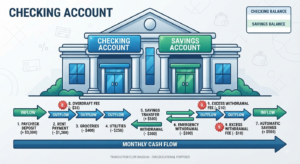
2. Overdraft Fees ($25-$38 per transaction)
What It Is:
A charge when you spend more money than you have in your account and the bank covers the transaction.
Average Cost: $35 per occurrence (some people get hit multiple times in one day)
The Hidden Trap: Banks process largest transactions first, maximizing the number of overdrafts. Example:
- You have $100 in your account
- You make three $20 purchases and one $80 purchase
- Bank processes the $80 first, then each $20 triggers a separate $35 fee
- Result: 3 overdraft fees = $105 in charges for spending $40 over your limit
How to Avoid It:
✅ Opt out of overdraft protection: This prevents charges from going through if you lack funds (better a declined card than $35 fee)
✅ Link to savings account: Most banks offer free transfers from savings to cover overdrafts
✅ Set up low balance alerts: Get text/email when balance drops below your threshold
✅ Use budgeting apps: Apps like Mint or YNAB help track spending in real-time
✅ Keep a buffer: Mentally treat $100 as your “zero” balance
✅ Choose banks with no overdraft fees: Ally Bank, Discover, and Chime don’t charge overdraft fees at all
Recent Changes: As of 2024, many major banks reduced overdraft fees or eliminated them entirely due to regulatory pressure. Check if your bank has updated policies.
3. Non-Sufficient Funds (NSF) Fees ($25-$38)
What It Is:
Similar to overdraft, but the bank declines the transaction and still charges you.
Average Cost: $34 per occurrence
How to Avoid It:
✅ Same strategies as overdraft fees
✅ Monitor your account daily: Set up mobile banking and check each morning
✅ Use real-time banking apps: Many apps show pending transactions immediately
✅ Build an emergency buffer: Keep an extra $100-300 you don’t touch
Important Note: As of 2024, the CFPB has proposed limiting NSF fees to $8. Check if your bank has adopted these changes.
4. ATM Fees ($2.50-$5.00 per transaction)
What It Is:
Two-part charge when using out-of-network ATMs:
- Your bank charges you ($2-3)
- The ATM owner charges you ($2-3)
Average Cost: $4.73 per out-of-network withdrawal
How to Avoid It:
✅ Use only in-network ATMs: Check your bank’s ATM locator app
✅ Get cash back at stores: Free with debit card purchases at grocery stores, pharmacies
✅ Choose banks with ATM reimbursement: Schwab Bank, Ally, and some credit unions refund ALL ATM fees worldwide
✅ Plan cash needs: Withdraw larger amounts less frequently from in-network ATMs
✅ Use digital payments: Apple Pay, Google Pay, Venmo reduce cash needs
Best for Frequent Travelers: If you travel internationally, Schwab Bank’s checking account reimburses ALL worldwide ATM fees and charges no foreign transaction fees. Learn more about high-yield savings accounts with great checking features.
5. Minimum Balance Fees ($5-$15/month)
What It Is:
A monthly charge if your average daily balance falls below the required minimum (typically $500-$5,000).
Average Cost: $12/month = $144/year
How to Avoid It:
✅ Switch to no-minimum banks: Online banks rarely have minimum balance requirements
✅ Link accounts: Transfer money from savings before the monthly calculation
✅ Understand calculation periods: Know if your bank uses daily average, monthly average, or end-of-month balance
✅ Set up alerts: Get notified when approaching minimum threshold
Reality Check: If maintaining a $5,000 minimum balance to avoid a $15 fee, you’re essentially earning 0.3% annual return on that money. A high-yield savings account at 4-5% would earn you $200-250 annually instead.
6. Wire Transfer Fees ($15-$50 per transfer)
What It Is:
Charges for sending or receiving money electronically, especially internationally.
Typical Costs:
- Domestic outgoing: $25-35
- International outgoing: $35-50
- Incoming wires: $10-15
How to Avoid It:
✅ Use ACH transfers instead: Free and only take 1-3 days (vs instant wires)
✅ Use Zelle, Venmo, or Cash App: Free for domestic transfers
✅ Use Wise (formerly TransferWise): Much cheaper for international transfers ($5-15 vs $45)
✅ Ask the sender to use alternatives: If receiving money, suggest fee-free methods
✅ Negotiate with your bank: Some will waive fees for premium account holders
When You Might Need Wires: Real estate closings, large business transactions, or urgent international transfers. For everything else, free alternatives work fine.
7. Paper Statement Fees ($2-$5/month)
What It Is:
Monthly charge for receiving paper statements by mail instead of electronic delivery.
Average Cost: $3/month = $36/year
How to Avoid It:
✅ Go paperless: Sign up for e-statements (better for environment too!)
✅ Download PDFs monthly: Save statements to your computer for records
✅ Use account aggregators: Apps like Mint store transaction history
Bonus: Many banks offer small bonuses ($25-50) for switching to paperless statements.
8. Excessive Transaction Fees ($5-$10 per transaction)
What It Is:
Federal Regulation D previously limited savings account withdrawals to 6 per month. While the rule was suspended in 2020, some banks still charge fees for “excessive” transactions.
Average Cost: $10 per transaction over the limit
How to Avoid It:
✅ Know your bank’s policy: Check if they still enforce transaction limits
✅ Use checking for frequent transactions: Keep spending money in checking, savings for… saving
✅ Plan transfers strategically: Move money in fewer, larger transfers
✅ Automate wisely: Set up automatic transfers that don’t count toward limits
9. Foreign Transaction Fees (1-3% of purchase)
What It Is:
A percentage charged when you use your debit card for purchases in foreign currencies or from international merchants.
Average Cost: 3% of every international purchase
Example: $2,000 vacation spending = $60 in fees
How to Avoid It:
✅ Use fee-free debit cards: Schwab, Capital One 360, and Discover charge no foreign transaction fees
✅ Use credit cards instead: Many travel credit cards have no foreign transaction fees and offer better fraud protection
✅ Withdraw local currency smartly: Use ATMs over currency exchange kiosks (better rates)
✅ Notify your bank: Prevents your card being frozen for “suspicious” international activity
For Frequent Travelers: The Schwab Bank Investor Checking account has zero foreign transaction fees AND reimburses all ATM fees worldwide.
10. Account Closure Fees ($25-$50)
What It Is:
A fee charged when closing your account, especially if you close it within 90-180 days of opening.
Average Cost: $25-50
How to Avoid It:
✅ Keep accounts open for 6+ months: Most fees only apply to early closures
✅ Ask before closing: Some banks will waive fees if you ask
✅ Transfer to zero-balance: Some banks allow you to leave account dormant instead
✅ Read terms when opening: Know the early closure policy upfront
Tip: If you opened an account for a bonus, check the fine print for minimum holding periods.
11. Replacement Card Fees ($5-$25)
What It Is:
Charge for replacing lost, stolen, or damaged debit cards, especially expedited delivery.
Typical Costs:
- Standard replacement: Often free
- Expedited shipping: $15-25
How to Avoid It:
✅ Use standard shipping: Free but takes 7-10 days
✅ Use digital wallets: Apple Pay/Google Pay work even without physical card
✅ Keep card secure: Prevention is best—use card holder, regularly check wallet
✅ Ask for fee waiver: If it’s your first replacement, many banks won’t charge
12. Cashier’s Check or Money Order Fees ($5-$15)
What It Is:
Fee for issuing certified bank checks, often required for large purchases or deposits.
Average Cost: $10 per check
How to Avoid It:
✅ Use personal checks: Free for everyday use
✅ Premium accounts: Often include free cashier’s checks
✅ Credit unions: Typically charge less ($3-5) than big banks
✅ Electronic transfers: ACH or wire transfers may be cheaper for some purposes
When You Need Them: Real estate deposits, car purchases, or when a recipient requires guaranteed funds.
13. Stop Payment Fees ($20-$35)
What It Is:
Fee charged to stop a check you’ve written from being cashed.
Average Cost: $30 per stop payment order
How to Avoid It:
✅ Use electronic payments: Can be cancelled before processing
✅ Be careful with checks: Only write them when certain
✅ Close account if necessary: Sometimes cheaper than multiple stop payments (though creates other issues)
✅ Negotiate: Banks sometimes waive fees for fraud situations
14. Dormant Account Fees ($5-$20/month)
What It Is:
Monthly fee charged on accounts with no activity for 6-12 months.
Average Cost: $10/month (can drain entire account!)
How to Avoid It:
✅ Make small transactions: Even $1 deposit/withdrawal resets the clock
✅ Set up automatic transfers: $10 monthly transfer between accounts
✅ Close unused accounts: Better to close than let fees accumulate
✅ Set calendar reminders: Check all accounts quarterly
Warning: Some states have “abandoned property” laws where dormant accounts get turned over to the state. Keep accounts active!
15. Account Research or Statement Copy Fees ($5-$25 per request)
What It Is:
Fee for requesting old statements, transaction histories, or account research beyond normal timeframes.
Average Cost: $5 per statement, $25 for detailed research
How to Avoid It:
✅ Download statements regularly: Save monthly PDFs to your computer
✅ Use bank’s online history: Most banks provide 12-24 months free online
✅ Keep tax-related records: Save relevant statements during tax season
✅ Screenshot important transactions: Quick reference without formal requests
Special Fee Considerations for Different Account Types
Business Account Fees
Business accounts typically have MORE fees than personal accounts:
- Monthly maintenance: $15-30
- Transaction fees: $0.30-0.50 per transaction over limit
- Cash deposit fees: $5-10 per deposit
- Check deposits: $0.10-0.30 per check
How to Minimize:
- Use business accounts designed for small businesses (lower limits)
- Consider online business banking (fewer fees)
- Bundle services for fee waivers
Student Account Fees
Student accounts usually have FEWER fees:
- Often no monthly maintenance until age 24-25
- Lower minimum balances
- Free checks sometimes included
What to Watch:
- Automatic conversion to regular account when you graduate
- Fee schedule changes after age limit
Senior Account Fees
Senior accounts (typically 55-65+) often feature:
- Waived monthly fees
- Free checks
- Free cashier’s checks
- Lower minimum balances
Best Banks for Seniors:
- Credit unions often have best senior programs
- Regional banks may offer better terms than national banks
How to Negotiate Banking Fees
Banks often waive fees if you simply ask. Here’s how:
The Fee Waiver Script
For one-time fees (overdraft, NSF):
“Hello, I’m a loyal customer and this is my first [fee type] in [timeframe]. I’ve already taken steps to prevent this happening again. Would you be willing to waive this fee as a courtesy?”
Success rate: 60-70% for first offense
For recurring fees (monthly maintenance):
“I’m reviewing my banking costs and noticed I’m paying $[amount] monthly in maintenance fees. I see [competitor bank] offers similar accounts with no fees. I’d prefer to stay with you—can you match their offer or suggest a fee-free option?”
Success rate: 40-50% depending on your relationship and bank policies
When to Escalate
If the first representative says no:
- Politely ask to speak with a supervisor or retention specialist
- Mention specific competitor offers by name
- Reference your account history (years as customer, total deposits, etc.)
- Be prepared to actually switch if they won’t budge
Best Time to Call: Mid-week mornings (Tuesday-Thursday, 10am-2pm) when call volume is lower and representatives are less rushed.
The Best Fee-Free Banking Alternatives
If you’re tired of fighting fees, consider these genuinely fee-free options:
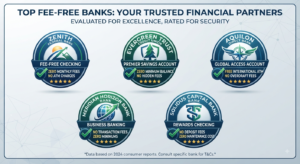
Top Online Banks with No Fees
1. Ally Bank
- $0 monthly maintenance
- $0 overdraft fees
- Reimburses up to $10/month in ATM fees
- 0.25% APY on checking, 4.00% APY on savings
- Read our full review of the best bank accounts
2. Capital One 360
- No monthly fees
- No minimum balance
- Free overdraft protection
- 70,000+ fee-free ATMs
3. Discover Bank
- No monthly fees on checking or savings
- Rebates all ATM fees nationwide
- $0 stop payment fees
- $0 cashier’s checks
4. Chime
- Zero fees across the board
- No overdraft fees (SpotMe feature covers up to $200)
- Get paid 2 days early with direct deposit
- 60,000+ fee-free ATMs
5. SoFi
- No account fees
- Up to 4.00% APY on checking with direct deposit
- Fee-free ATMs worldwide
- $0 overdraft fees
Credit Union Advantages
Credit unions typically charge 30-40% lower fees than traditional banks:
- Lower or no monthly maintenance fees
- Smaller overdraft fees ($20-28 vs $35)
- Free cashier’s checks
- Better loan rates
How to Find One:
Visit MyCreditUnion.gov to find credit unions you’re eligible to join based on location, employer, or affiliations.
Creating Your Fee-Free Banking Strategy
The 30-Day Fee Elimination Plan
Week 1: Audit Current Fees
- Download last 3 months of statements
- Highlight every fee charged
- Calculate annual cost
- Identify your 3 biggest fee sources
Week 2: Research Alternatives
- Compare best bank accounts for 2025
- Check high-yield savings options
- Read current customer reviews
- Make a shortlist of 3 alternatives
Week 3: Negotiate or Switch
- Call current bank with specific requests
- If unsuccessful, open new account (keep old one open initially)
- Transfer direct deposits and automatic payments
- Set up new account monitoring
Week 4: Complete Transition
- Ensure all transfers to new account are working
- Verify no pending transactions on old account
- Close old account (if switching)
- Set up fee prevention systems (alerts, buffers, etc.)
Essential Fee Prevention Systems
1. Account Alerts
Set up notifications for:
- Balance drops below $100
- Any fee charged
- Large transactions over $X
- Weekly account summaries
2. Buffer Strategy
- Keep $100-300 “invisible” buffer you never touch
- Mentally treat this as your $0 balance
- Reduces overdraft risk dramatically
3. Automatic Monitoring
- Link to Mint, Personal Capital, or YNAB
- Review weekly (5-minute habit)
- Reconcile monthly
4. Calendar Reminders
- Quarterly account review (check for new fees)
- Annual bank shopping (ensure you still have best deal)
- Review fee schedule changes (banks must notify you)
Understanding Bank Fee Disclosures
How to Read Fee Schedules
Banks are legally required to disclose fees, but they don’t make it easy.
Where to Find Full Fee Disclosures:
- “Fee Schedule” or “Pricing Information” on bank’s website
- “Terms and Conditions” document
- Account agreement paperwork
- Ask representative for “complete fee schedule”
Red Flags to Watch For:
- “Up to” language (fee could be higher)
- “May charge” (discretionary fees)
- Complex calculation methods
- Fees for services that should be free
Your Legal Rights Regarding Fees
Regulation E (Electronic Fund Transfer Act):
- Banks must disclose all fees before you open account
- You must consent to overdraft coverage
- Right to opt-out of overdraft protection
- Banks must notify you of fee schedule changes
Truth in Savings Act:
- Banks must clearly disclose APY and fees
- Can’t advertise “free checking” if monthly fees apply
- Must provide annual percentage yield (APY) accurately
Your Rights:
✅ Receive fee schedule before opening account
✅ Opt out of overdraft “protection”
✅ 60 days to dispute unauthorized charges
✅ Notification of fee increases
Frequently Asked Questions About Banking Fees
Can banks charge fees without warning?
For existing accounts, banks must notify you 30 days before implementing new fees or increasing existing ones. However, they can bury this notice in your statement, so review carefully. For new accounts, all fees must be disclosed before you open the account.
Are online banks safer than traditional banks?
Yes, if they’re FDIC insured (look for FDIC logo and verify at FDIC.gov). Online banks are actually less likely to charge fees because they have lower overhead costs. Many online banks offer BETTER security features like 2-factor authentication and biometric login.
What’s the difference between overdraft and NSF fees?
Both occur when you don’t have enough money, but:
- Overdraft fee: Bank covers the transaction and charges you ($35)
- NSF fee: Bank declines the transaction and still charges you ($35)
Same cost, different outcomes. Both are avoidable by opting out of overdraft coverage and monitoring your balance.
Can I get past fees refunded?
Sometimes! Banks typically refund:
- First-time overdraft fees (60-80% success rate)
- Fees caused by bank errors (always)
- Multiple fees in one day (sometimes they’ll refund all but one)
Call customer service, be polite, explain the situation, and ask specifically for a “courtesy refund.” The answer is always no unless you ask.
Do credit unions have fewer fees than banks?
Generally yes. Studies show credit unions charge:
- 29% lower overdraft fees on average
- 60% less likely to charge monthly maintenance fees
- Lower or zero minimum balance requirements
Because credit unions are member-owned nonprofits, they return profits to members through lower fees and better rates.
How often do banking fees change?
Banks review fee structures annually, with changes typically implemented in January or July. However, regulatory changes can trigger mid-year adjustments. Check your statements quarterly for “Important Changes to Your Account” notices.
What should I do if charged an unfair fee?
- Call the bank first: Ask for a refund (often works for first occurrence)
- File a formal complaint: Use bank’s complaint process
- Report to CFPB: ConsumerFinance.gov for federal oversight
- Report to OCC: HelpWithMyBank.gov for national banks
- Switch banks: Vote with your wallet
The Future of Banking Fees
Regulatory Changes Coming in 2024-2025
CFPB Proposed Rules:
- Overdraft fees capped at $8 (down from $35 average)
- NSF fees potentially eliminated entirely
- Stricter disclosure requirements
- Limits on “junk fees”
What This Means for You:
Major banks are already preemptively reducing or eliminating fees to avoid regulation. Good time to negotiate!
The Rise of Fee-Free Banking
Market trends show:
- 67% increase in fee-free checking accounts since 2020
- Online banks capturing more market share (14% in 2024, up from 8% in 2020)
- Traditional banks creating fee-free tiers to compete
- Fintech apps (Chime, SoFi) forcing industry changes
Bottom Line: Banking is becoming more consumer-friendly, but you still need to be proactive. The best deals don’t automatically apply—you have to seek them out.
Quick Reference: Banking Fee Cheat Sheet
| Fee Type | Average Cost | Easiest Avoidance Strategy |
|---|---|---|
| Monthly Maintenance | $15/month | Switch to online bank |
| Overdraft | $35/occurrence | Opt out + link to savings |
| ATM (Out-of-network) | $4.73/use | Cash back at stores |
| Wire Transfer | $30/transfer | Use Zelle or ACH instead |
| Minimum Balance | $12/month | Choose no-minimum bank |
| Paper Statements | $3/month | Go paperless |
| Foreign Transaction | 3% of purchase | Use fee-free debit/credit card |
| Stop Payment | $30/request | Use electronic payments |
Take Action Today: Your Fee Elimination Checklist
Immediate Actions (Next 30 Minutes):
- Download your last 3 months of bank statements
- Calculate total fees paid
- Sign up for account balance alerts
- Go paperless to eliminate statement fees
- Bookmark best bank accounts comparison
This Week:
- Review your bank’s complete fee schedule
- Compare with high-yield savings alternatives
- Opt out of overdraft coverage
- Link savings account as backup
- Set up account monitoring app
This Month:
- Call bank to negotiate/waive recurring fees
- Open fee-free alternative account if needed
- Transfer direct deposit and automatic payments
- Close old account if switching
- Set up quarterly review reminder
Quarterly:
- Review for any new fees
- Check if better accounts available
- Verify fee-free status maintained
- Adjust alerts and buffers as needed
Conclusion: Stop Giving Away Your Money
Banking fees are optional expenses that you can eliminate almost entirely with the right approach. The average American pays over $500 annually in avoidable bank charges—that’s money you could invest, save, or spend on things you actually value.
The core strategies are simple:
✅ Choose the right bank: Fee-free options exist—use them
✅ Monitor actively: Check your accounts weekly
✅ Set up protections: Alerts, buffers, and automatic systems
✅ Negotiate boldly: Banks will waive fees if you ask
✅ Vote with your wallet: Switch if your bank won’t cooperate
Remember: Banks profit when you’re passive. They count on fees slipping by unnoticed, on you not reading the fine print, on inertia keeping you from switching. Break that pattern.
Take control today. Audit your fees, implement the prevention strategies in this guide, and consider switching to a truly fee-free bank. Your future self—with hundreds of extra dollars in the bank account—will thank you.
Ready to optimize your entire banking strategy? Check out these related guides:
- Best Bank Accounts for 2025: Checking, Savings & Money Market – Find the perfect fee-free account
- High-Yield Savings Accounts: Maximize Your Interest Earnings – Earn 4-5% APY instead of paying fees
- Best Budgeting Apps (Coming soon) – Track spending to avoid fee triggers
- Online Banks vs Traditional Banks (Coming soon) – Complete comparison
Leave a Reply